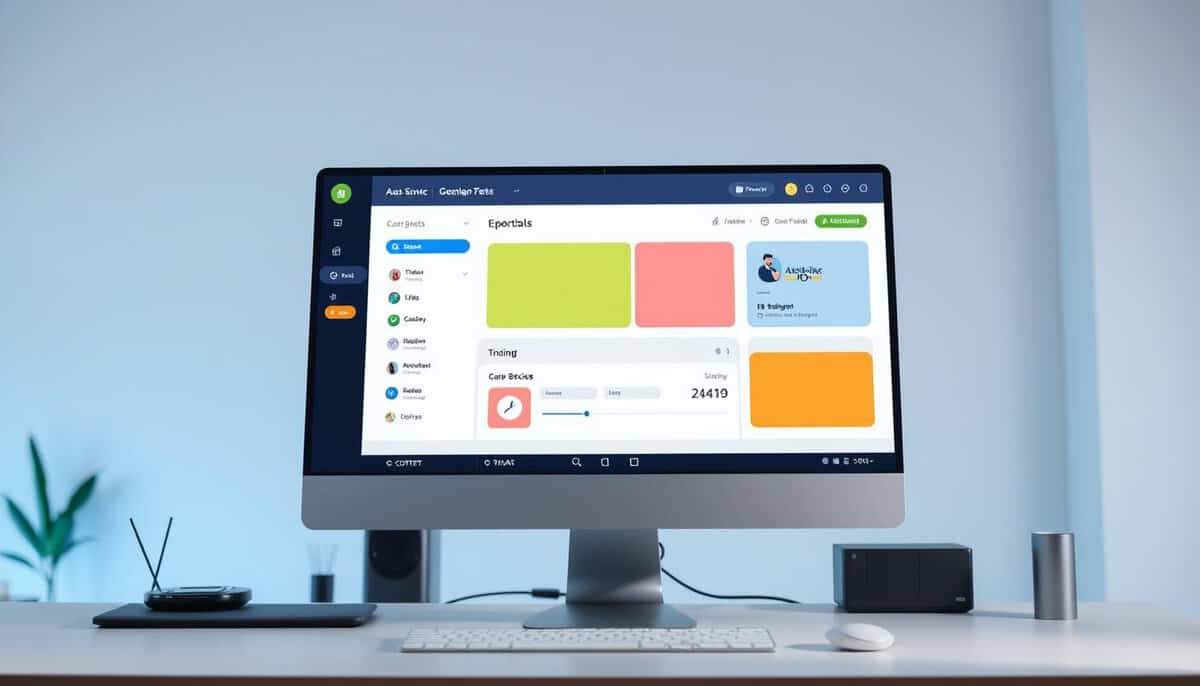
In the 1990s, Nielsen and Molich created 10 user interface guidelines. These guidelines are key in how we design graphic user interfaces today. They help us make interfaces that are easy to use and understand, improving how users interact with digital platforms. A good user interface combines beauty with practicality, making it simple for people to use software or apps.
Key Takeaways
- Nielsen and Molich’s guidelines are still relevant in modern graphic user interface design, guiding designers towards more intuitive interfaces.
- Incorporating these established principles can enhance usability, utility, and desirability in software applications.
- User interface design should focus on minimizing user effort and maximizing satisfaction.
- Consistency and familiarity in layout and terminology help users acclimate quickly to new interfaces.
- Effective feedback mechanisms and error prevention are crucial in creating a smooth user experience.
Introduction to GUI Design
In the tech world, GUI design matters a lot for creating useful and good-looking apps. Knowing the basic principles helps designers make interfaces that improve user experiences. This support also builds brand loyalty.
What is GUI Design?
GUI design means working on the visual parts of a user interface. Designers create elements like menus and buttons that are straightforward and simple to use. The Apple Macintosh, which brought icons and mouse clicks, set the standard high.
The Importance of Intuitive Interfaces
Intuitive interfaces make it easier for users to do tasks. They also play a big role in a product’s and company’s success. Take the Xerox Star: it was first with a GUI but failed in the market. But Steve Jobs took inspiration from it for the Apple Lisa and Macintosh, which were hits. Note how the Windows’95 GUI, despite its complaints, stressed the need for smart design.
It’s also key to understand concepts like affordance. Affordance means something looks usable, while false affordance leads users astray. Nielsen and Molich’s guidelines stress lessening mental strain and keeping things consistent. This makes interfaces easy to get used to.
Following these design rules helps make applications focused on the user. They not only work better but also make users happier and more loyal. The goal, no matter the system, is smooth interaction and a great experience for the user.
Key Principles of GUI Design
Creating user-friendly digital products starts with good Graphical User Interface (GUI) design. This involves providing intuitive and engaging visual interfaces. It focuses on making the user’s experience better.
Simplicity
Simplicity in GUI design means keeping everything straightforward. This makes for smooth user interactions. Interfaces are easy to use when they’re not cluttered. Designers aim for this simplicity. It helps users explore without feeling overwhelmed.
Keeping design simple boosts user satisfaction. This is true for both websites and apps. Simplicity ensures users enjoy their time on the digital platform.
Consistency
Consistency matters a lot in GUI design. It’s about keeping things uniform. This includes color schemes, typography, and icons. When these elements are consistent, users feel more at ease. This helps them navigate better.
Good design maintains this consistency everywhere. This should be the case in both web and app design. It’s how you keep users happy and less frustrated.
Feedback
Feedback is a key part of GUI design. It lets users know the results of their actions. This could be through visuals, sounds, or vibrations. Good feedback helps users feel in control.
It builds trust by creating intuitive experiences. Users need this to navigate confidently.
Hierarchy
Hierarchy guides users to what’s important. It uses size, color, and placement for emphasis. This makes it easier for users to understand and act.
Having a strong visual hierarchy is essential. It allows users to quickly get information and decide.
The rest of this article is reserved for members
To limit scraping bots (currently 40,000 hits per day!),
we had to restrict access to full articles and tools to registered members only.
to access all the rest.
FAQ
What is GUI Design?
GUI Design focuses on creating interactive visual elements. Its goal is to make these elements both easy to use and good-looking. This enhances the user’s experience.
What are the fundamental principles of GUI design?
Key principles include keeping things simple and consistent. Providing clear feedback and having a clear layout are also important. These help guide users to what’s important.
What is a user-centered design approach?
This approach involves getting to know the users well. It means creating personas to represent them and designing flows that meet their needs. It ensures the GUI works well for the users.
How does visual hierarchy improve GUI design?
Visual hierarchy uses size, color, and placement to show what’s most important. It makes navigating and using the interface easier. This improves the user experience.
How can whitespace be effectively used in GUI design?
Whitespace makes the interface clean and focused. It avoids clutter, making things more readable. This helps users concentrate on their tasks.
Why is consistency important in GUI design?
Consistency makes interfaces predictable and easier to use. It helps build trust with users. This leads to a better and smoother experience.
What are feedback mechanisms in GUI design?
Feedback mechanisms include visual or auditory cues. They show users their actions have been noted. This helps guide them on how to use the interface correctly.
Why is testing important in GUI design?
Testing reveals how users interact with the interface. It allows for improvements based on user feedback. This ensures the GUI meets users’ needs.
How can designers balance aesthetics with functionality in GUI?
Designers aim to create GUIs that look good and work well. A beautiful interface draws users in, but function keeps it easy to use.
What role do microinteractions play in GUI design?
Microinteractions, like animations, make interacting fun and informative. They offer feedback in a subtle way. This helps users complete their tasks more easily.
What are common mistakes to avoid in GUI design?
Overwhelming users with information is a mistake. So is being inconsistent. These can confuse users and harm the experience.
External Links on Ergonomics ans User Interfaces
International Standards
(hover the link to see our description of the content)
Glossary of Terms Used
Asynchronous Transfer Mode (ATM): a high-speed networking technology that uses fixed-size cells for data transmission, enabling efficient and flexible communication across various media types. It supports multiple service types, including voice, video, and data, facilitating Quality of Service (QoS) management.
Conversion Rate (CR): the percentage of visitors to a website or landing page who complete a desired action, such as making a purchase or signing up for a newsletter, calculated by dividing the number of conversions by the total number of visitors.
Graphical User Interface (GUI): a visual interface that allows users to interact with electronic devices through graphical elements such as windows, icons, buttons, and menus, enabling intuitive navigation and control without the need for text-based commands.
Human-Computer Interaction (HCI): a multidisciplinary field focused on the design, evaluation, and implementation of interactive computing systems for human use, emphasizing usability, user experience, and the study of user behavior and preferences in relation to technology.
Point of Sale (POS): a system that facilitates transactions between a customer and a retailer, typically involving hardware and software to process payments, manage inventory, and generate sales reports. It often includes components like cash registers, card readers, and receipt printers.
User experience (UX): the overall satisfaction and perception of a user when interacting with a product, system, or service, encompassing usability, accessibility, design, and emotional response throughout the entire interaction process.
User Interface (UI): a system that enables interaction between users and software applications, encompassing visual elements, controls, and overall layout to facilitate user tasks and enhance experience.