Lire un brevet document presents a unique challenge for those unfamiliar with its structure and specialized terminology. Patent language often employs precise, legally defined terms, specific phrasing for claim construction, and a formalistic style that can seem arcane to the uninitiated. Understanding the interplay between the claims, the detailed description, and the drawings, along with interpreting the significance of cited état de la technique and prosecution history, requires a familiarity with conventions and legal doctrines that go beyond ordinary technical reading. It’s a system with its own internal logic and subtleties, where the omission or inclusion of a single word can drastically alter the scope and meaning, demanding a careful and informed approach to decode its true implications.
While a avocat spécialisé en brevets is strongly recommended for any patent action, this post aims at explaining most that the basics for R&D and innovation équipes.
Key Takeaways:
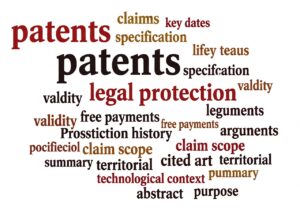
- patents Claims define the exact legal protection.
- Specification explains and supports claims.
- Les dates clés déterminent la validité et la durée de vie.
- Verify current legal status and fee payments.
- Prosecution history arguments limit claim scope.
- Cited art reveals known technological context.
- Patent rights are strictly territorial.
- Abstract/summary outline purpose, not legal scope.
The 15 Most Important Points to Analyze in a Patent
- par ordre décroissant d'importance -
L'ordre d'importance ci-dessous est "typique", mais il peut varier considérablement en fonction de l'objectif spécifique de l'analyse du brevet. Autres approches :
- An infringement analysis: the Claims (1) become overwhelmingly paramount, as they define the legal scope of what is protected. The Specification (2) and Prosecution History (7) immediately follow in importance for claim construction and identifying any disclaimers.
- A freedom-to-operate (FTO) search (i.e., determining if your planned product might infringe someone else’s patent): the Claims (1) of potentially blocking patents, their Legal Status (4), and Geographic Coverage (8) take precedence to ascertain current, relevant threats.
- A investment due diligence or patent valuation: si les revendications restent essentielles, le cessionnaire/propriétaire actuel (5), le statut juridique (4) (y compris les taxes de maintien en vigueur), la famille de brevets (13) (indiquant l'étendue du marché) et les citations (12) (suggérant l'impact) peuvent gagner en importance immédiate pour évaluer la solidité de l'actif, la clarté de la propriété et la valeur perçue sur le marché.
- A broad state-of-the-art search or seeking a quick technical understanding: you might initially prioritize the Abstract (9), Drawings (within Specification, 2), Summary of the Invention (10), and IPC/CPC Classifications (15) to quickly sift through many documents and grasp the technology before delving deep into claims.
- Licensing-in a technology: here, understanding the Claims (1) to know what rights are offered, the Assignee (5) to identify the licensor, and the Legal Status (4) and Patent Family (13) to confirm enforceability and geographic reach are primary.
- Competitive intelligence: Le suivi du cessionnaire (5), des dates de dépôt (3) et des classifications IPC/CPC (15) peut être plus immédiatement révélateur des orientations de la R&D des concurrents et de l'orientation du marché, l'analyse détaillée des revendications pouvant suivre pour les brevets spécifiques qui nous intéressent.
1. The Claims
Specifically: Independent Claims first, then Dependent Claims
This section is the absolute heart of the patent. The claims legally define the boundaries of the invention and what the patent owner can exclusively prevent others from making, using, vente, offering for sale, or importing. Infringement is determined *solely* by comparing an accused product/process against the claim language.
L'étendue, la clarté et la défendabilité des revendications sont directement liées à la valeur et à la force du brevet. Broad claims cover more ground, while narrow claims are easier to defend but offer less protection.
Conseil: Pour un demandeur, la définition de l'étendue du champ d'application est essentielle et c'est notamment là que l'intervention d'un avocat/conseil en brevets professionnel est utile : pour avoir l'expérience de l'étendue du champ d'application qui peut être élargie... et éventuellement la défendre plus tard ou la restreindre sans tout perdre, en fonction de la structure des revendications.
- For infringement analysis: you determine if a product/process includes *every single element* listed in an independent claim (or its equivalents).
- For validity analysis: you check if the claimed invention is novel and non-obvious over the prior art.
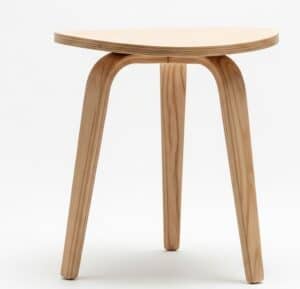
A frequent cited example: si une revendication énonce "Une chaise comprenant un siège, un dossier et quatre pieds", un tabouret ne comportant qu'un siège et trois pieds ne serait pas littéralement contrefait.
Structure:
-
- Préambule : il présente l'invention (par exemple, "A méthode pour la communication...", "Un appareil comprenant...").
- Transitional Phrase: crucial for scope.
- "Comprenant" (ou "incluant", "contenant") : ouvert, signifiant "ayant au moins ces éléments, mais peut-être plus". Ce terme est généralement préféré pour élargir le champ d'application.
- "Consistant en" : fermé, signifiant "n'ayant que ces éléments et rien d'autre". Très restrictif.
- "Consistant essentiellement en" : partiellement fermé, ce qui signifie qu'il comprend les éléments énumérés et d'autres éléments qui n'affectent pas matériellement les caractéristiques fondamentales et nouvelles de l'invention.
- Body: lists the essential elements and their limitations and relationships.
- Independent vs. dependent claims:
- Revendications indépendantes : elles sont autonomes (par exemple, la revendication 1 : "Un gadget comprenant A et B."). Elles définissent la portée la plus large d'un concept inventif particulier.
- Revendications dépendantes : elles renvoient à une revendication précédente et la limitent davantage (par exemple, "Revendication 2 : le gadget de la revendication 1, comprenant en outre C."). Elles réduisent le champ d'application mais peuvent fournir des positions de repli si des revendications plus larges sont invalidées.
Other points to watch for:
- Terminology: precise meaning of each word. Are terms defined in the specification? Are they used consistently?
- Base antécédente : s'assurer que lorsqu'un élément est mentionné (par exemple, "ledit levier"), il a été préalablement introduit (par exemple, "un levier").
- Éléments "moyen plus fonction" ou "étape plus fonction" (35 U.S.C. § 112(f)) : par exemple, "moyen pour attacher X à Y". La portée d'un tel élément est limitée à la structure, au matériel ou aux actes correspondants décrits dans la spécification et leurs équivalents.
Conseil: multiple independent claims can cover different aspects or embodiments of the invention (e.g., an apparatus, a method of using the apparatus, a system incorporating the apparatus).
Conseil: diagram the claims. Break them down into individual elements and limitations. This helps visualize the scope and compare it against other products or prior art. Note any particularly broad or unusually narrow terms.
The rest of this article is reserved for members
To limit scraping bots (currently 40,000 hits per day!),
we had to restrict access to full articles and tools to registered members only.
to access all the rest.