Reading a براءة اختراع document presents a unique challenge for those unfamiliar with its structure and specialized terminology. Patent language often employs precise, legally defined terms, specific phrasing for claim construction, and a formalistic style that can seem arcane to the uninitiated. Understanding the interplay between the claims, the detailed description, and the drawings, along with interpreting the significance of cited الفن السابق and prosecution history, requires a familiarity with conventions and legal doctrines that go beyond ordinary technical reading. It’s a system with its own internal logic and subtleties, where the omission or inclusion of a single word can drastically alter the scope and meaning, demanding a careful and informed approach to decode its true implications.
While a محامي براءات الاختراع is strongly recommended for any patent action, this post aims at explaining most that the basics for R&D and innovation الفرق.
Key Takeaways:
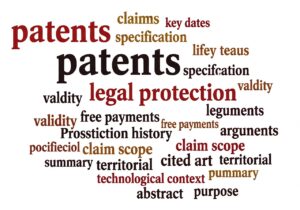
- patents Claims define the exact legal protection.
- Specification explains and supports claims.
- Key dates determine validity and عمر.
- Verify current legal status and fee payments.
- Prosecution history arguments limit claim scope.
- Cited art reveals known technological context.
- Patent rights are strictly territorial.
- Abstract/summary outline purpose, not legal scope.
The 15 Most Important Points to Analyze in a Patent
– by decreasing order of importance –
Below is a “typical” order of importance, but it can significantly shift depending on the specific goal of the patent analysis. Other approaches:
- An infringement analysis: the Claims (1) become overwhelmingly paramount, as they define the legal scope of what is protected. The Specification (2) and Prosecution History (7) immediately follow in importance for claim construction and identifying any disclaimers.
- A freedom-to-operate (FTO) search (i.e., determining if your planned product might infringe someone else’s patent): the Claims (1) of potentially blocking patents, their Legal Status (4), and Geographic Coverage (8) take precedence to ascertain current, relevant threats.
- A investment due diligence or patent valuation: while claims are still vital, the Assignee/Current Owner (5), Legal Status (4) (including maintenance fees), Patent Family (13) (indicating market breadth), and Forward Citations (12) (suggesting impact) might rise in immediate importance to assess the asset’s strength, ownership clarity, and perceived market value.
- A broad state-of-the-art search or seeking a quick technical understanding: you might initially prioritize the Abstract (9), Drawings (within Specification, 2), Summary of the Invention (10), and IPC/CPC Classifications (15) to quickly sift through many documents and grasp the technology before delving deep into claims.
- Licensing-in a technology: here, understanding the Claims (1) to know what rights are offered, the Assignee (5) to identify the licensor, and the Legal Status (4) and Patent Family (13) to confirm enforceability and geographic reach are primary.
- معلومات استخباراتية تنافسية: tracking the Assignee (5), Filing Dates (3), and IPC/CPC Classifications (15) can be more immediately revealing of competitors’ R&D directions and market focus, with detailed claim analysis perhaps following for specific patents of interest.
1. The Claims
Specifically: Independent Claims first, then Dependent Claims
This section is the absolute heart of the patent. The claims legally define the boundaries of the invention and what the patent owner can exclusively prevent others from making, using, بيع, offering for sale, or importing. Infringement is determined *solely* by comparing an accused product/process against the claim language.
The breadth, clarity, and defensibility of the claims directly correlate to the patent’s value and strength. Broad claims cover more ground, while narrow claims are easier to defend but offer less protection.
نصيحة: for an applicant, defining the scope width this is key and is among others where a pro patent lawyer / attorney has its value: to have the experience how wide the scope can be enlarged … and eventually later defend it or restrict it without loosing all, depending on the claims are structured.
- For infringement analysis: you determine if a product/process includes *every single element* listed in an independent claim (or its equivalents).
- For validity analysis: you check if the claimed invention is novel and non-obvious over the prior art.
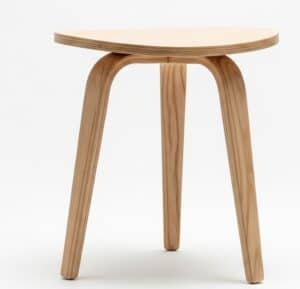
A frequent cited example: if a claim recites “A chair comprising a seat, a backrest, and four legs,” a stool with only a seat and three legs would not literally infringe.
Structure:
- Preamble: it introduces the invention (e.g., “A method for communication…”, “An apparatus comprising…”).
- Transitional Phrase: crucial for scope.
- “Comprising” (or “including,” “containing”): open-ended, meaning “having at least these elements but possibly more.” This is generally preferred for broader scope.
- “Consisting of”: closed, meaning “having only these elements and nothing more.” Very restrictive.
- “Consisting essentially of”: partially closed, meaning it includes the listed elements and other elements that do not materially affect the basic and novel characteristics of the invention.
- Body: lists the essential elements and their limitations and relationships.
- Independent vs. dependent claims:
- Independent claims: stand alone (e.g., Claim 1: “A widget comprising A and B.”). They define the broadest scope for a particular inventive concept.
- Dependent claims: refer back to and further limit a preceding claim (e.g., “Claim 2: The widget of claim 1, further comprising C.”). They narrow the scope but can provide fallback positions if broader claims are invalidated.
Other points to watch for:
- Terminology: precise meaning of each word. Are terms defined in the specification? Are they used consistently?
- Antecedent Basis: ensure that when an element is referred to (e.g., “said lever”), it has been previously introduced (e.g., “a lever”).
- “Means-plus-function” or “Step-plus-function” elements (35 U.S.C. § 112(f)): e.g., “means for attaching X to Y.” The scope of such an element is limited to the corresponding structure, material, or acts described in the specification and their equivalents.
نصيحة: multiple independent claims can cover different aspects or embodiments of the invention (e.g., an apparatus, a method of using the apparatus, a system incorporating the apparatus).
نصيحة: diagram the claims. Break them down into individual elements and limitations. This helps visualize the scope and compare it against other products or prior art. Note any particularly broad or unusually narrow terms.
2. Specification
Detailed Description of the Invention & Drawings
This is the “teaching” part of the patent. It يجب fulfill several legal requirements:
- Enablement: describe the invention in enough detail so that a “Person Having Ordinary Skill In The Art” (PHOSITA) could make and use the invention without undue experimentation. Lack of enablement can invalidate claims.
- Written description: the specification must show that the inventor was “in possession” of the claimed invention as of the filing date. This means describing the claimed features adequately.
- Best Mode: (requirement in the U.S., though its enforceability has changed) disclose the best way the inventor knew to carry out the invention at the time of filing.
- Context for claims: the specification provides the dictionary for terms used in the claims. If a term is ambiguous, its meaning is often derived from its usage in the specification.
- Support for amendments: during patent prosecution, claim amendments must find support in the original specification. New matter cannot be introduced.
Depending of your objective, what you must look for:
- Clarity and completeness: is the description clear, detailed, and comprehensive? Does it explain how all the claimed elements function and interact?
- Embodiments and examples: how many different versions (embodiments) or specific examples of the invention are described? More examples can support broader claim interpretation and demonstrate enablement. Example: if claims cover a chemical compound, are specific synthesis examples provided?
- Drawings: are there drawings? Do they clearly illustrate the claimed elements and their relationships? Are all drawing figures referenced and explained in the text?
- Consistency: are terms used consistently between the specification and the claims?
- Definitions: does the specification explicitly define any terms, especially those in the claims? These definitions will override common dictionary meanings.
- Range of values: if claims recite ranges (e.g., “temperature between 50-100°C”), does the specification support the entire range or just specific points?
نصيحة: read the specification *after* an initial review of the independent claims. This helps you understand what the inventor considered important and how they intended the terms to be understood. If the specification describes something as “critical” or “essential,” it might be read into the claims.
Red flag: the specification describes only one very narrow embodiment, but the claims are very broad. This could indicate a potential written description or enablement problem.
3. Filing Date, Priority Date(s), and Grant Date

These 3 dates below are cornerstones for determining patent validity and term:
- Priority date: the earliest effective filing date for the claimed subject matter (often from a provisional application or a foreign filing). Prior art published *before* this date can be used to challenge novelty and non-obviousness.
- Filing date: the date the non-provisional application was filed. Important for patent term calculation.
- Grant date: the date the patent was officially issued. This is when the patent becomes enforceable.
These determine the patent’s lifespan (generally 20 years from the earliest non-provisional U.S. filing date, or from the PCT filing date if applicable). Affects which prior art is relevant.
“Related U.S. Application Data” or “Foreign Application Priority Data” sections are typically on the front page.
Continuity Data: is it a continuation, divisional, or continuation-in-part (CIP) of an earlier application? CIPs can introduce new matter. Claims relying on new matter in a CIP only get the benefit of the CIP filing date for that new matter.
You can calculate the potential expiration date. Be aware of potential term adjustments (PTA) or extensions (PTE) that can modify the standard term (especially for pharmaceutical patents).
نصيحة: always verify priority claims. An incorrect priority claim can dramatically change the relevant prior art landscape. Ensure the earlier application actually supports the claims in the later patent.
4. Legal Status

e.g. Pending, Granted, Expired, Lapsed, Revoked, Withdrawn
This directly indicates whether the patent currently provides enforceable exclusive rights. A patent that is not “in force” generally cannot be asserted for current infringement. A lapsed or expired patent means the invention is in the public domain (though past infringement during its term might still be actionable if within the statute of limitations). A pending application is not yet enforceable but provides notice of potential future rights.
Look for:
- Patent Office Databases:
- U.S.: USPTO Patent Center (formerly PAIR – Patent Application Information Retrieval).
- Europe: European Patent Register.
- Other national patent office databases.
- Maintenance fee payments (Annuities): have these been paid on time? Failure to pay leads to lapse/expiration. In the U.S., maintenance fees are due at 3.5, 7.5, and 11.5 years after grant. Many other countries require annual renewal fees.
- Litigation status: is the patent currently involved in litigation (e.g., infringement suit, invalidity challenge, Inter Partes Review – IPR)? This can be found in court databases or specialized patent litigation databases.
نصيحة: do not rely solely on the status printed on a patent copy, as it can change. Always check the official, up-to-date status from the relevant patent office.
5. Inventors and Assignee (Current Owner)
Correctly naming inventors is a legal requirement. Incorrect inventorship can be grounds for invalidation (though it’s often correctable). Assignee is the entity (usually a company) that owns the patent rights. This is crucial for licensing negotiations, infringement assertions, and understanding who controls the technology. It determines who has the right to sue for infringement and who can grant licenses. Important for tracking a company’s IP portfolio.
نصيحة: has the patent been sold or transferred? Track the assignments to identify the current owner. This can sometimes be complex.
نصيحة: always verify the current assignee through official assignment records, as ownership can change multiple times during a patent’s life. Look for any security interests or licenses recorded against the patent.
6. Prior Art Cited
These are documents (other patents, scientific articles, etc.) that the patent examiner considered when deciding whether the invention was new and non-obvious, or that the applicant brought to the examiner’s attention. They provide an insight into the “state of the art” at the time of invention. Can help understand the scope of the claims by seeing what the examiner thought the invention was *not* (i.e., how it was distinguished from this prior art).
This list is a good starting point if you are assessing the patent’s validity and novelty (only “A” or “X” ?), but a comprehensive search shall go beyond these.
One must distinguish between:
- Cited by Examiner: references the examiner found and considered, the most important ones.
- Cited by Applicant (in an IDS): references the applicant disclosed to the USPTO.

Relevance Codes (sometimes available in file wrapper or search reports):
- “X” category: particularly prejudicial, anticipates novelty or inventive step on its own.
- “Y” category: particularly prejudicial when combined with other documents.
- “A” category: defines general state of the art, not particularly prejudicial.
نصيحة: dates of the Cited Art … are they before the patent’s priority date?
نصيحة: if you are trying to invalidate a patent, look for prior art *not* cited by the examiner, as this might not have been considered and could be stronger. Remember that, while the examiner is experimented and usually in that field, he is not a specialist of *that* particularly domain as you and may not be aware of all common practices or prior art. Analyze how the applicant overcame rejections based on the cited art during prosecution (see point 7).
7. Prosecution History
This is the complete official record of the dialogue between the applicant (or their attorney) and the patent office during the examination process. It often involves multiple rounds of rejection and response. It contains important information about how the claims were interpreted and potentially narrowed. The arguments made to distinguish the invention from prior art can clarify the meaning and scope of claim terms and their validity.
“Prosecution History Estoppel”: statements or claim amendments made by the applicant during prosecution to overcome rejections can limit the scope of the claims and prevent the patentee from later recapturing surrendered subject matter through the doctrine of equivalents. The scope and application of this vary from country to country.
You should look for:
- Office actions: official letters from the examiner detailing rejections (e.g., based on novelty, obviousness, enablement).
- Applicant’s responses & amendments: how the applicant changed the claims or argued against the rejections. Pay close attention to *why* claims were amended.
- Statements made by applicant: any arguments or characterizations of the invention or prior art.
- Reasons for allowance: the examiner’s stated reasons why the claims were ultimately deemed patentable.
نصيحة: this is often a goldmine for understanding claim limitations. If a claim term was argued to have a specific meaning to overcome prior art, that meaning will likely stick. Download and review the “Image File Wrapper” from the USPTO Patent Center or equivalent services.
8. Geographic Coverage
Patent rights are strictly territorial.
أ patent granted by one country is only enforceable in that specific country. A U.S. patent provides rights only within the United States and its territories. To have rights in Japan, you need a Japanese patent; in Europe, a European patent or national patents in European countries. Look for:
- Issuing Authority: clearly stated on the front page (e.g., “United States Patent,” “Europäisches Patent,” “特許証” (Japanese Patent)).
- Patent Number Format: different countries have distinct patent number formats.
- Language of the Document: usually a strong indicator, though some offices publish in multiple languages or provide English translations.
نصيحة: do not assume a product seen in one country is covered by a patent found in another. For global products, companies often file for patents in multiple key market countries (see “Patent Family,” point 13).
9. Abstract
Intended as a brief (usually under 150 words) technical summary to allow readers to quickly grasp the nature and gist of the invention.
It’s primarily an aid for searching. The abstract does *not* define or limit the scope of the claims.
It cannot be used to interpret claim scope for infringement or validity purposes in the U.S.
نصيحة: use the abstract for initial screening of many patents. If it seems relevant, then dive into the claims and specification. Never rely on the abstract alone for any substantive legal or technical analysis. As one of the trick in our البحث عن براءات الاختراع tricks article, the Abstract can be written in order not to be found easily (See particularly the “Bonus” section in article listed below to overcome this trick).


10. Summary of the Invention
This section in the specification typically provides a broader, more narrative statement of the invention’s nature, objects, and advantages than the Abstract. It may paraphrase or broadly recite aspects of the claims. It can help bridge understanding between the concise Abstract and the very specific language of the Claims. May set forth the objects or goals the invention aims to achieve.
You will potentially find here:
- A author’s restatement of the invention’s core that often mirrors some of the broader independent claim language but in prose.
- Some stated advantages
نصيحة: while more detailed than the abstract, like the abstract, the summary does not define the legal scope of the claims. However, statements made here about the invention’s purpose or essential features can sometimes be used (though less directly than prosecution history) in claim interpretation arguments.
11. Background of the Invention
The background sets the stage for the invention. It usually describes the general field of the invention, discusses the existing problems or deficiencies in the prior art that the invention seeks to overcome, and sometimes briefly mentions existing solutions and their shortcomings. It helps understand *why* the invention was developed and what specific problem it addresses, like:
- Description of the “problem”: what issue in the relevant technical field does the invention solve?
- Discussion of prior art: what existing technologies or methods are mentioned? Are their drawbacks highlighted?
- “Objects of the invention”: sometimes explicitly stated here, outlining the goals.
نصيحة: be cautious: statements made in the Background disparaging prior art can sometimes be used by an examiner or a court to narrow the interpretation of the claims (arguing the invention must be different from what was criticized). Applicants are generally advised to be factual and objective here.
12. Forward Citations Patents

Patents that cite *this* patent
These are *later* patents or applications that reference the patent you are analyzing as relevant prior art. A high number of forward citations can indicate the analyzed patent’s technological significance or foundational nature. It suggests that the analyzed patent has influenced subsequent innovation or that others are working in a similar technological space and need to distinguish their inventions. Can be an indicator of commercial importance or licensing value.
It is advised here to look for:
- Obtained from Patent Databases: (e.g., Google Patents, USPTO Patent Center, commercial patent search platforms). This information is not on the face of the patent document itself.
- Number of Citations: a simple count. More is often better.
- Citing Companies/Assignees: who is citing this patent? Competitors? Companies in related fields? This can reveal market dynamics.
- Nature of Citing Patents: are they improvements, related technologies, or attempts to design around?
- Time lag: how quickly after publication was the patent cited? Rapid citation can indicate immediate impact.
نصيحة: analyze the *context* of the forward citations. Is the patent being cited to support or reject a claim in the later patent? Some tools offer “citation mapping” to visualize these relationships.
13. Patent Family
Related patents in other countries or related U.S. applications like continuations, divisionals
A patent “family” consists of multiple patent applications/grants filed in different countries (or related applications within the same country, like divisionals or continuations) that claim priority to the same original invention. It indicates the geographic scope of protection sought for the invention and often reflects the patent owner’s assessment of the invention’s commercial importance (more important inventions are often filed in more countries).
It reveals the patenting strategy (e.g., focusing on key markets, protecting different aspects of the invention through divisionals).
To analyse that strategy, you must look for:
- Priority Claims: the initial patent application often serves as a “priority document.”
- Database Tools: patent databases (Google Patents, Espacenet, commercial tools) are essential for identifying family members. Look for “INPADOC family” or similar indicators.
- Corresponding Patents: patents granted in different countries for the same core invention.
- U.S. Relationships:
- Continuations: pursue claims to the same invention disclosed in the parent, often after a restriction requirement or to get a second look.
- Divisionals: pursue claims to a distinct invention that was also disclosed in the parent application but had to be “divided out.”
- Continuations-In-Part (CIPs): add new matter to the disclosure of the parent application.
نصيحة: the scope of claims can vary significantly between family members in different countries due to different patent laws and examination practices. Do not assume claims are identical across a family.
14. Maintenance Fee Status / Annuities

For a granted patent to remain legally “alive” and enforceable throughout its potential term, periodic fees must be paid to the patent office. In the U.S., these are “maintenance fees”; in most other countries, they are “annuities” or “renewal fees”. Any failure to pay these fees by the deadline (plus any grace period) results in the patent lapsing or expiring prematurely, meaning the invention enters the public domain earlier than its full term. This is a direct and critical check on current enforceability.
Official Patent Office Databases are the only reliable source for this.
Payment Windows and Due Dates are specific and vary by jurisdiction. Example (U.S.): Due at 3.5, 7.5, and 11.5 years from the grant date.
Status: either “Active”, “Lapsed for non-payment”, or “Expired”.
نصيحة: always double-check this status if relying on a patent for any strategic decision (e.g., licensing, freedom-to-operate, investment). A company might strategically let less valuable patents lapse to save costs as worldwide patent costs for a full family and wide protection can be very high.
15. International Patent Classification (IPC) / Cooperative Patent Classification (CPC)
These are internationally standardized hierarchical classification systems used by patent offices worldwide to categorize patents based on their technical subject matter. Examiners assign these codes. IPC and/or CPC codes are usually listed in the front page of the patent.
The codes are essential tools for conducting patent searches (e.g., prior art searches, freedom-to-operate searches). Help in quickly understanding the broad (and sometimes very specific) technical area of the invention.
- CPC Scheme: more detailed than IPC, jointly managed by the EPO and USPTO. It’s becoming the global standard. (e.g., “H04L 67/02” relates to network protocols for client-server architectures).
- IPC Scheme: maintained by WIPO. (e.g., “A61K 31/00” relates to medicinal preparations containing specific organic active ingredients).
Codes range from general sections (e.g., “A” – Human Necessities) down to very specific subgroups.
نصيحة: use these codes in patent databases to find other patents in the same technological niche. Understanding the classification can help refine search strategies significantly. Examiners often search by classification.
خاتمة
Effectively reading a patent involves a methodical approach, focusing initially on the claims to grasp the protected scope, then using the specification for detailed understanding and term definition, while considering key dates, ownership, and legal status for context and validity; appreciating the document’s unique language and structure is foundational to accurately interpreting its technical and legal significance.
External Links on Patents and IP Protection
المعايير الدولية
(حرك الرابط لرؤية وصفنا للمحتوى)
مسرد المصطلحات المستخدمة
Carriage and Insurance Paid To (CIP): مصطلح شحن يشير إلى أن البائع يدفع تكاليف نقل وتأمين البضائع إلى وجهة محددة، وينقل المخاطر إلى المشتري بمجرد تسليم البضائع إلى شركة النقل.
Computed Tomography (CT): تقنية تصوير طبي تستخدم الأشعة السينية والمعالجة الحاسوبية لإنشاء صور مقطعية للجسم، مما يتيح تصورًا دقيقًا للهياكل والأنسجة الداخلية. تُعزز هذه التقنية قدرات التشخيص من خلال توفير صور ثلاثية الأبعاد من بيانات ثنائية الأبعاد.
Cost Per Click (CPC): نموذج تسعير للإعلانات الرقمية، حيث يدفع المعلنون رسومًا مقابل كل نقرة على إعلانهم. يقيس هذا النموذج فعالية الحملات الإعلانية من حيث التكلفة، ويُحسب بقسمة إجمالي الإنفاق الإعلاني على عدد النقرات.
Freedom to Operate (FTO): a legal assessment determining whether a product, process, or technology can be developed, manufactured, or sold without infringing on existing الملكية الفكرية rights held by others.
Initial Public Offering (IPO): عملية تقوم من خلالها شركة خاصة بعرض أسهمها على الجمهور لأول مرة، مما يسمح لها بجمع رأس المال من المستثمرين العموميين أثناء تداولها علنًا في بورصة الأوراق المالية.
Public Domain: وضع قانوني يُشير إلى تحرر الأعمال من قيود حقوق النشر، مما يسمح لأي شخص باستخدامها وتعديلها وتوزيعها دون إذن أو مقابل. قد ينشأ هذا الوضع نتيجة انتهاء صلاحية حقوق النشر، أو إهداء صريح من المُبدع، أو عدم أهلية العمل لحقوق النشر.
Unique Selling Point (USP): ميزة أو فائدة مميزة تجعل المنتج أو الخدمة متميزًا عن المنافسين، وتهدف إلى جذب العملاء من خلال معالجة احتياجات أو تفضيلات محددة.
United States Patent & Trademark Office (USPTO): الوكالة الفيدرالية المسؤولة عن منح براءات الاختراع وتسجيل العلامات التجارية في الولايات المتحدة، وتشجيع الابتكار وحماية حقوق الملكية الفكرية. تفحص الطلبات، وتصدر براءات الاختراع، وتحتفظ بقاعدة بيانات للعلامات التجارية المسجلة.
Work in Progress (WIP): العناصر التي تُنجز جزئيًا في عملية الإنتاج، بما في ذلك المواد الخام والعمالة والتكاليف العامة المتكبدة حتى نقطة معينة. هذه الأصول ليست منتجات جاهزة بعد، وهي ضرورية لتتبع كفاءة الإنتاج وإدارة المخزون.