Product Design, Manufacturing & Innovation Resources
Heim » Grenzen des Ökobilanzsystems: Cradle-to-Grave vs. Cradle-to-Gate

Grenzen des Ökobilanzsystems: Cradle-to-Grave vs. Cradle-to-Gate

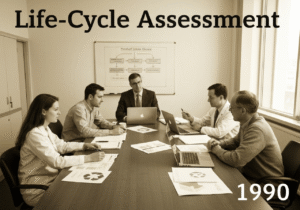
1990
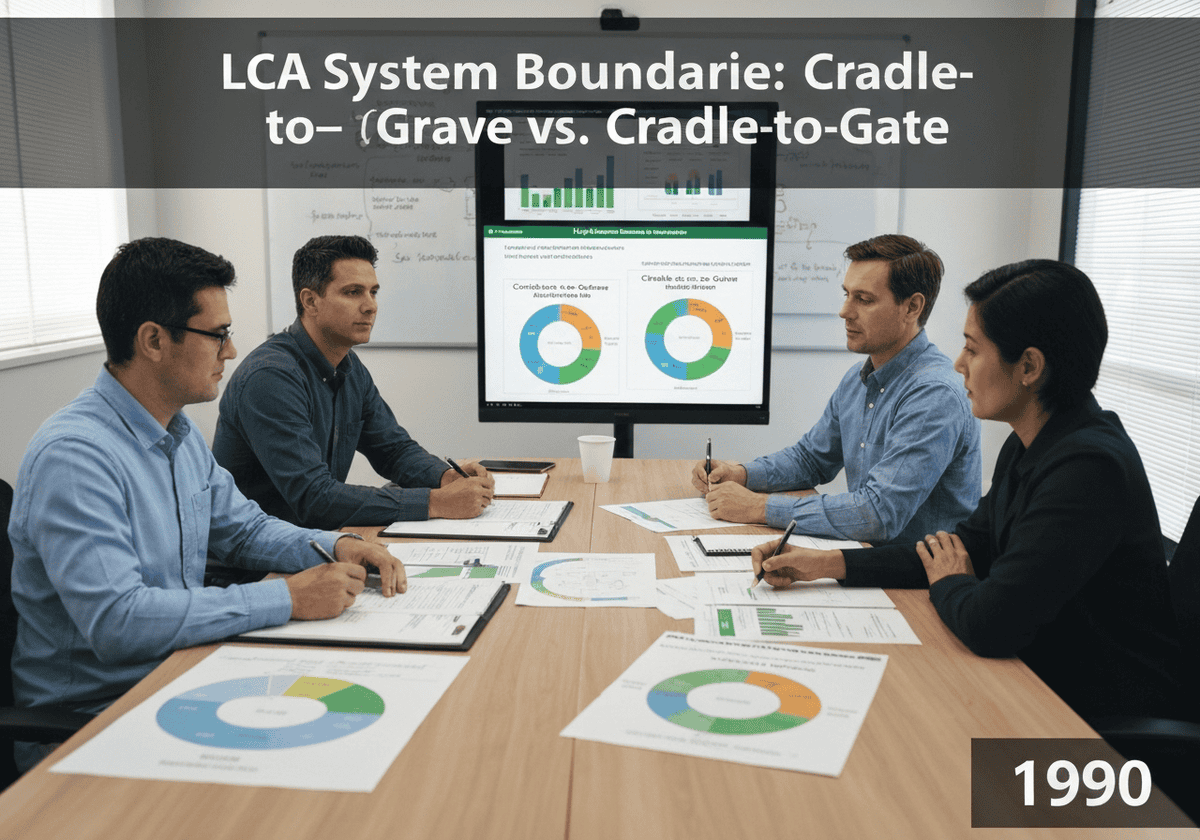
Umweltingenieure diskutieren in einem Büro über Methoden der Lebenszyklusanalyse.

(Abbildung dient nur zur Veranschaulichung)

Ökobilanz system boundaries define which Lebenszyklus Stufen in die Bewertung einbezogen werden. Eine “Cradle-to-Grave”-Analyse umfasst den gesamten Produktlebensdauer, from raw material extraction through Herstellung, use, and final disposal. In contrast, a “cradle-to-gate” assessment is a partial LCA that ends when the product leaves the factory gate, excluding the use and disposal phases.


The choice of system boundary is a critical decision in the ‘Goal and Scope Definition’ phase of an LCA and significantly impacts the results and their applicability. ‘Cradle-to-grave’ is the most comprehensive approach, providing a full picture of a product’s environmental footprint. It is essential for making claims about a product’s overall environmental superiority and for understanding impacts related to consumer behavior and waste management systems. However, it requires more data, especially for the use and end-of-life phases, which can be difficult to obtain and may involve significant assumptions. ‘Cradle-to-gate’ assessments are more common, particularly in B2B contexts where the manufacturer has no control over the product’s downstream life cycle. These studies are useful for comparing materials or intermediate products. Other common system boundaries include ‘cradle-to-cradle’, which assesses a circular economy model where the end-of-life disposal step is a recycling process that makes new products, and ‘gate-to-gate’, which looks at only a single process or manufacturing stage.

UNESCO Nomenclature: 3307
- Umwelttechnik

Typ

Abstraktes System

Störung

Wesentliche

Verwendung

Weitverbreitete Verwendung

Vorläufer

  • Prozessflussdiagramme in der chemischen Verfahrenstechnik
  • Methoden der Systemanalyse
  • Energiebilanzierungsrahmen aus den 1970er Jahren

Anwendungen

  • Business-to-Business (B2B)-Kommunikation von Umweltdaten (Cradle-to-Gate)
  • Umweltproduktdeklarationen (EPDs)
  • Vollständiger CO2-Fußabdruck des Produkts (von der Wiege bis zur Bahre)
  • Politikgestaltung im Bereich Abfallmanagement und erweiterte Herstellerverantwortung
  • Ökodesign mit Fokus auf die Nutzungs- bzw. End-of-Life-Phase

Patente:

NA

Potenzielle Innovationsideen

Aufgrund des hohen Datenverkehrs durch Web-Scraping-Bots, der derzeit mehr als 40.000 Anfragen pro Tag umfasst, ist dieser Inhalt ausschließlich Community-Mitgliedern vorbehalten.
> Anmelden < oder > Registrieren < (100% kostenlos) Zugriff darauf sowie auf alle anderen eingeschränkten Inhalte und Tools.

Verwandt mit: Systemgrenze, Cradle-to-Grave, Cradle-to-Gate, LCA, Lebenszyklusstadien, ökologischer Fußabdruck, Nutzungsphase, End-of-Life.

Historischer Kontext

Grenzen des Ökobilanzsystems: Cradle-to-Grave vs. Cradle-to-Gate

1986
1987-03
1990
1990
1990
1990
1990
1986
1987
1989
1990
1990
1990
1990
1990

(wenn das Datum unbekannt oder nicht relevant ist, z. B. „Strömungsmechanik“, wird eine gerundete Schätzung seines bemerkenswerten Auftretens bereitgestellt)

Verwandte Erfindungen, Innovationen und technische Prinzipien

Bilder in voller Größe und Downloads sind nur für registrierte Mitglieder 100% kostenlos verfügbar.

> Login <