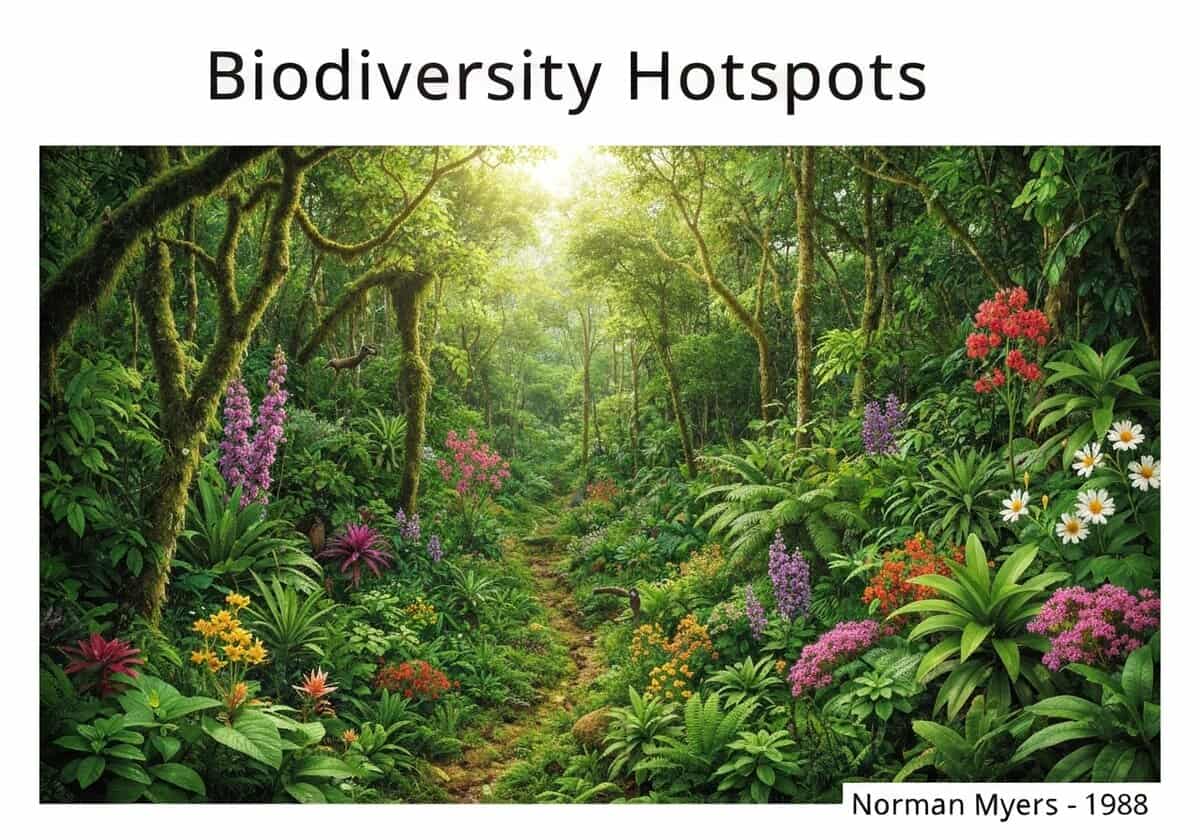
Das Biodiversitäts-Hotspot-Konzept identifiziert biogeografische Regionen, die sich durch eine außergewöhnliche Konzentration endemischer Arten auszeichnen und einen extremen Lebensraumverlust erleben. Um sich zu qualifizieren, muss eine Region mindestens 1.500 endemische Gefäßpflanzenarten aufweisen und mindestens 70 % ihrer ursprünglichen Primärvegetation verloren haben. Dieses Konzept priorisiert Schutzbemühungen in Gebieten mit hoher Unersetzlichkeit und Verletzlichkeit.
The concept of Biodiversität hotspots was first introduced by Norman Myers in two articles in “The Environmentalist” in 1988 and 1990, and was subsequently revised and updated. The core idea is to provide a clear, quantifiable method for identifying conservation priorities. The two strict criteria—high endemism and significant habitat loss—aim to pinpoint areas where conservation actions can protect the largest number of unique species for the least cost. Endemism refers to species that are found nowhere else on Earth, making their survival entirely dependent on the health of their single, native habitat. The threshold of 1,500 endemic vascular plants (which is 0.5% of the world’s total) was chosen as a robust indicator of overall species richness and endemism, as plants form the basis of most terrestrial ecosystems.
Das zweite Kriterium, der Verlust von mindestens 70 % des ursprünglichen Lebensraums, unterstreicht die Dringlichkeit der Bedrohung. Diese Regionen sind nicht nur reich an Leben, sondern stehen auch kurz davor, diesen Reichtum für immer zu verlieren. Die erste Analyse identifizierte 25 Hotspots, die zusammen 44 % der weltweiten Pflanzenarten und 35 % der terrestrischen Wirbeltierarten auf nur 1,4 % der Erdoberfläche beherbergen. Eine Neubewertung im Jahr 2004 erweiterte die Liste auf 34 Hotspots, und nachfolgende Aktualisierungen haben die Karte weiter verfeinert. Zu diesen Hotspots gehören bekannte Gebiete wie der Atlantische Regenwald Brasiliens, Madagaskars, der Philippinen und das Mittelmeerbecken. Das Konzept hat maßgeblich dazu beigetragen, Milliarden von Dollar in Naturschutzmaßnahmen zu lenken und so ein effektives „Triage-System“ für einen Planeten zu schaffen, der mit begrenzten Ressourcen vor einer Biodiversitätskrise steht.
Despite its success and widespread adoption, the hotspot concept is not without its critics. Some argue that it neglects other important biodiversity metrics, such as total species richness (not just endemics), ecosystem services, or marine and freshwater ecosystems. Others point out that it may overlook “coldspots” which, while less diverse, can harbor unique evolutionary lineages or play crucial roles in ecosystem function. Nevertheless, the hotspot approach remains a powerful and influential tool in global conservation strategy, providing a scientifically-defensible framework for making difficult decisions about where to focus limited conservation funds and actions.
Verwandte Themen: Biodiversitäts-Hotspot, Naturschutz, Endemismus, Lebensraumverlust, Norman Myers, Biogeographie, Conservation International, Prioritätsgebiete, Artenreichtum, bedrohte Arten.