Punti caldi della biodiversità
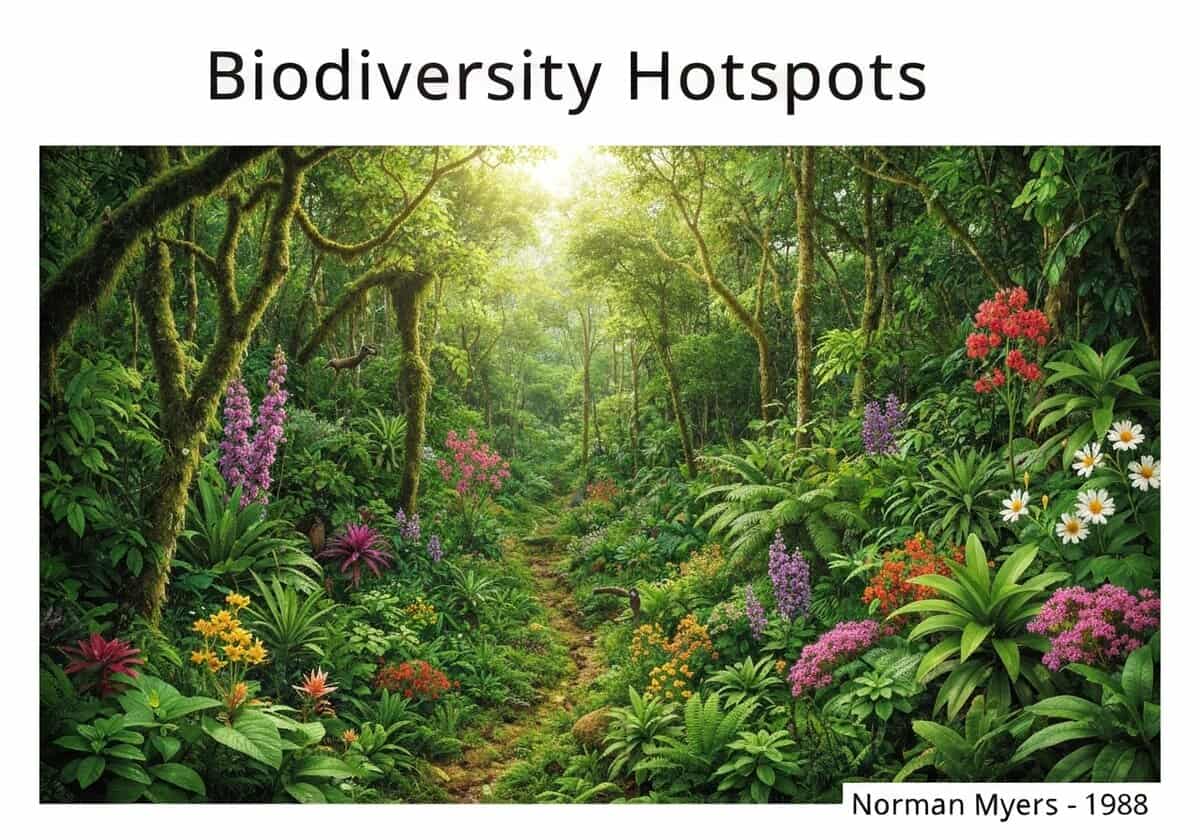
Il concetto di hotspot di biodiversità identifica regioni biogeografiche caratterizzate da concentrazioni eccezionali di specie endemiche e soggette a una perdita estrema di habitat. Per essere considerata tale, una regione deve contenere almeno 1.500 specie di piante vascolari endemiche e aver perso almeno il 70% della sua vegetazione primaria originaria. Questo quadro dà priorità agli sforzi di conservazione nelle aree ad elevata insostituibilità e vulnerabilità.
Il concetto di biodiversità hotspots was first introduced by Norman Myers in two articles in “The Environmentalist” in 1988 and 1990, and was subsequently revised and updated. The core idea is to provide a clear, quantifiable method for identifying conservation priorities. The two strict criteria—high endemism and significant habitat loss—aim to pinpoint areas where conservation actions can protect the largest number of unique species for the least cost. Endemism refers to species that are found nowhere else on Earth, making their survival entirely dependent on the health of their single, native habitat. The threshold of 1,500 endemic vascular plants (which is 0.5% of the world’s total) was chosen as a robust indicator of overall species richness and endemism, as plants form the basis of most terrestrial ecosystems.
Il secondo criterio, la perdita di almeno il 70% dell'habitat originario, evidenzia l'urgenza della minaccia. Queste regioni non sono solo ricche di vita, ma sono anche sull'orlo di perdere per sempre tale ricchezza. L'analisi iniziale ha identificato 25 hotspot, che insieme ospitavano il 44% delle specie vegetali mondiali e il 35% delle specie di vertebrati terrestri in appena l'1,4% della superficie terrestre. Una rivalutazione del 2004 ha ampliato l'elenco a 34 hotspot e i successivi aggiornamenti hanno ulteriormente perfezionato la mappa. Tra questi hotspot figurano aree ben note come la Foresta Atlantica del Brasile, il Madagascar, le Filippine e il Bacino del Mediterraneo. Il concetto si è rivelato fondamentale per convogliare miliardi di dollari in iniziative di conservazione, creando di fatto un sistema di "triage" per un pianeta che affronta una crisi di biodiversità con risorse limitate.
Despite its success and widespread adoption, the hotspot concept is not without its critics. Some argue that it neglects other important biodiversity metrics, such as total species richness (not just endemics), ecosystem services, or marine and freshwater ecosystems. Others point out that it may overlook “coldspots” which, while less diverse, can harbor unique evolutionary lineages or play crucial roles in ecosystem function. Nevertheless, the hotspot approach remains a powerful and influential tool in global conservation strategy, providing a scientifically-defensible framework for making difficult decisions about where to focus limited conservation funds and actions.
UNESCO Nomenclature: 2407
- Ecologia
Interruzione
Incrementale
Precursori
- theory of island biogeography by MacArthur and Wilson
- concept of endemism and centers of origin
- species-area relationship models
- early conservation movements focused on charismatic megafauna
Applicazioni
- guiding conservation investments by organizations like conservation international and the world bank
- informing national and international conservation policies
- prioritizing areas for the establishment of protected areas
- focusing scientific research on regions of high biodiversity under threat
Idee e potenziali innovazioni
- ai-driven dynamic hotspot mapping that updates in real-time based on satellite imagery and climate data
- integrating ‘phylogenetic diversity hotspots’ to prioritize areas with unique evolutionary history
- developing ‘ecosystem service hotspots’ to identify areas critical for human well-being, like water purification or sequestro del carbonio
- creating urban biodiversity hotspots to guide green infrastructure development in cities
- linking hotspot conservation with carbon credit markets to fund protection
- gamified mobile apps that allow citizen scientists to contribute data for hotspot monitoring
- using eDNA analysis in hotspot rivers to rapidly assess aquatic biodiversity health
- developing insurance products for countries to protect their hotspot regions against climate-related damages
- establishing ‘hotspot corridors’ to connect fragmented habitats and allow for species migration
- creating a global ‘hotspot seed bank’ focused exclusively on the most threatened endemic plants
Argomenti correlati: hotspot di biodiversità, conservazione, endemismo, perdita di habitat, Norman Myers, biogeografia, Conservation International, aree prioritarie, ricchezza di specie, specie minacciate.