Pontos críticos de biodiversidade
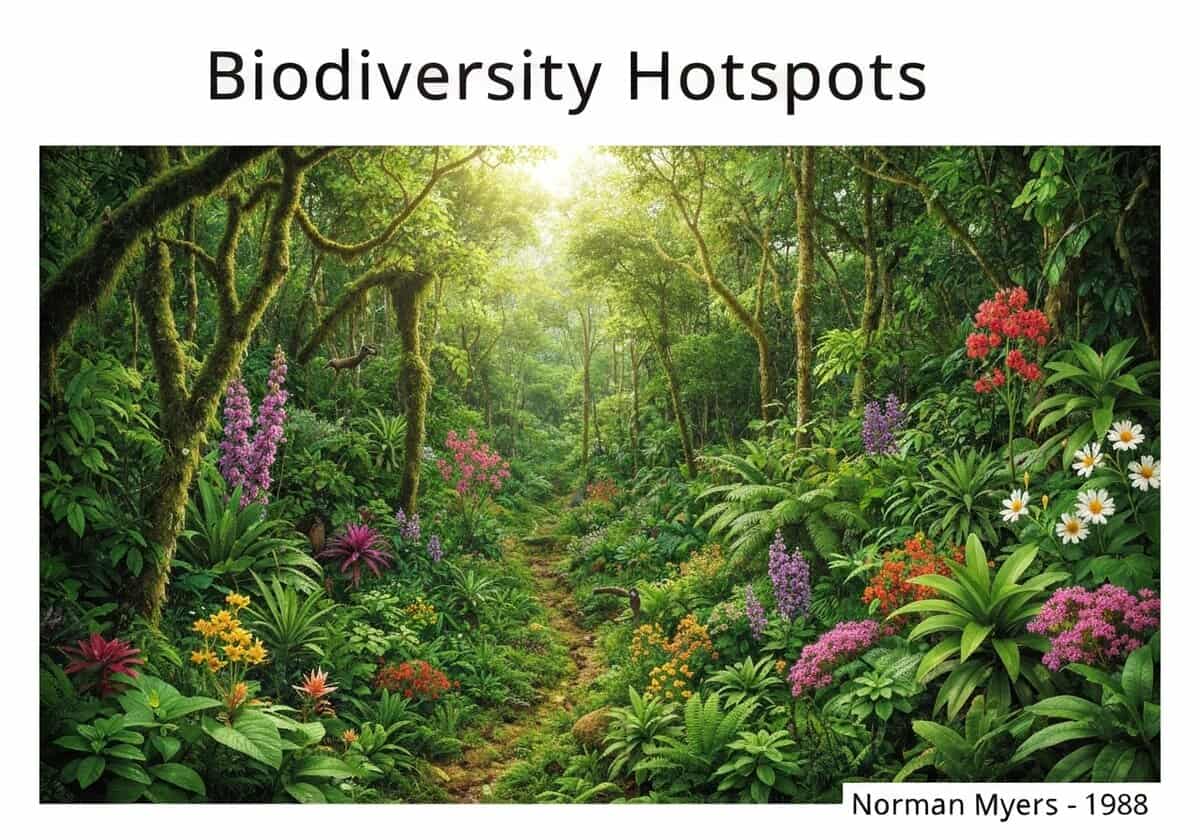
O conceito de hotspot de biodiversidade identifica regiões biogeográficas caracterizadas por concentrações excepcionais de espécies endêmicas e que sofrem perda extrema de habitat. Para se qualificar, uma região deve conter pelo menos 1.500 espécies de plantas vasculares endêmicas e ter perdido pelo menos 70% de sua vegetação primária original. Essa estrutura prioriza os esforços de conservação em áreas de alta insubstituibilidade e vulnerabilidade.
The concept of biodiversidade hotspots was first introduced by Norman Myers in two articles in “The Environmentalist” in 1988 and 1990, and was subsequently revised and updated. The core idea is to provide a clear, quantifiable method for identifying conservation priorities. The two strict criteria—high endemism and significant habitat loss—aim to pinpoint areas where conservation actions can protect the largest number of unique species for the least cost. Endemism refers to species that are found nowhere else on Earth, making their survival entirely dependent on the health of their single, native habitat. The threshold of 1,500 endemic vascular plants (which is 0.5% of the world’s total) was chosen as a robust indicator of overall species richness and endemism, as plants form the basis of most terrestrial ecosystems.
O segundo critério, a perda de pelo menos 70% do habitat original, destaca a urgência da ameaça. Essas regiões não são apenas ricas em vida; elas também estão à beira de perder essa riqueza para sempre. A análise inicial identificou 25 hotspots, que, em conjunto, abrigavam 44% das espécies de plantas e 35% das espécies de vertebrados terrestres do mundo em apenas 1,4% da superfície terrestre. Uma reavaliação em 2004 expandiu a lista para 34 hotspots, e atualizações subsequentes refinaram ainda mais o mapa. Esses hotspots incluem áreas bem conhecidas como a Mata Atlântica brasileira, Madagascar, as Filipinas e a Bacia do Mediterrâneo. O conceito tem sido fundamental para canalizar bilhões de dólares para esforços de conservação, criando efetivamente um sistema de "triagem" para um planeta que enfrenta uma crise de biodiversidade com recursos limitados.
Despite its success and widespread adoption, the hotspot concept is not without its critics. Some argue that it neglects other important biodiversity metrics, such as total species richness (not just endemics), ecosystem services, or marine and freshwater ecosystems. Others point out that it may overlook “coldspots” which, while less diverse, can harbor unique evolutionary lineages or play crucial roles in ecosystem function. Nevertheless, the hotspot approach remains a powerful and influential tool in global conservation strategy, providing a scientifically-defensible framework for making difficult decisions about where to focus limited conservation funds and actions.
UNESCO Nomenclature: 2407
Ecologia
Precursores
- teoria da biogeografia insular de MacArthur e Wilson
- conceito de endemismo e centros de origem
- modelos de relação espécie-área
- Os primeiros movimentos de conservação se concentraram na megafauna carismática.
Aplicações
- orientando investimentos em conservação por organizações como a Conservation International e o Banco Mundial.
- informando políticas de conservação nacionais e internacionais
- priorizar áreas para o estabelecimento de áreas protegidas
- O foco da pesquisa científica está em regiões de alta biodiversidade ameaçadas.
Ideias de Inovação Potencial
- ai-driven dynamic hotspot mapping that updates in real-time based on satellite imagery and climate data
- integrating ‘phylogenetic diversity hotspots’ to prioritize areas with unique evolutionary history
- developing ‘ecosystem service hotspots’ to identify areas critical for human well-being, like water purification or sequestro de carbono
- creating urban biodiversity hotspots to guide green infrastructure development in cities
- linking hotspot conservation with carbon credit markets to fund protection
- gamified mobile apps that allow citizen scientists to contribute data for hotspot monitoring
- using eDNA analysis in hotspot rivers to rapidly assess aquatic biodiversity health
- developing insurance products for countries to protect their hotspot regions against climate-related damages
- establishing ‘hotspot corridors’ to connect fragmented habitats and allow for species migration
- creating a global ‘hotspot seed bank’ focused exclusively on the most threatened endemic plants
Relacionado a: pontos críticos de biodiversidade, conservação, endemismo, perda de habitat, Norman Myers, biogeografia, Conservation International, áreas prioritárias, riqueza de espécies, espécies ameaçadas.