Product Design, Manufacturing & Innovation Resources
家 » 环氧乙烷(EtO)灭菌

环氧乙烷(EtO)灭菌

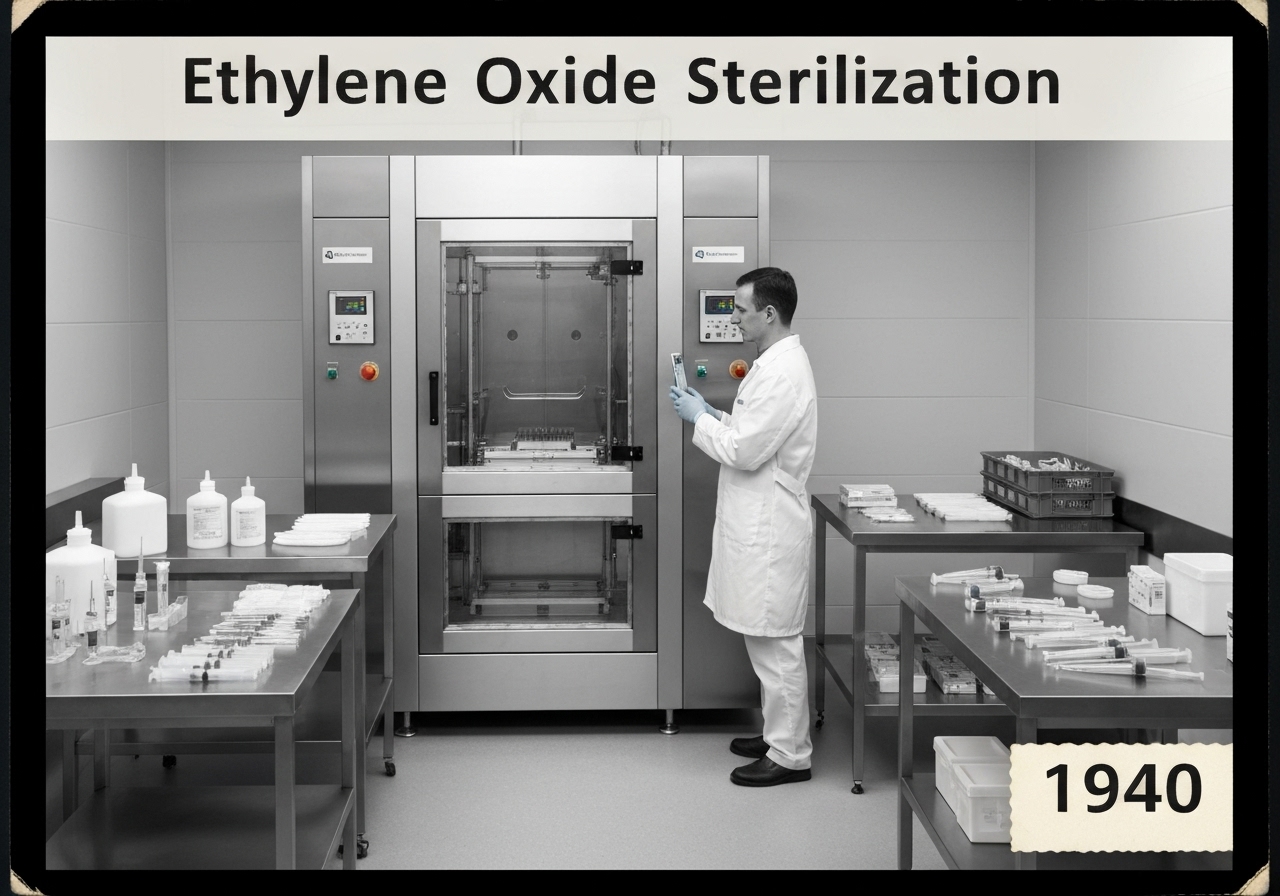
1940
Ethylene oxide sterilization chamber in a microbiology lab for medical devices.

(图片仅供参考)

一种利用环氧乙烷气体的低温化学灭菌方法。它能有效灭菌对热敏性和湿敏性材料,例如…… 塑料, electronic devices, and optical instruments. The process involves alkylation, where EtO disrupts the DNA and proteins of microorganisms, preventing their replication. It requires careful control of gas concentration, temperature, humidity, and exposure time. Before routine use, the sterilizer and its gas control system go through IQ and OQ validation, so that each cycle can be trusted to reach the required conditions.

Ethylene oxide (C2H4O) is a colorless, flammable, and highly reactive gas. Its effectiveness as a sterilant lies in its ability to act as a potent alkylating agent. The process works at a molecular level. The strained three-membered ring of the ethylene oxide molecule readily opens and reacts with nucleophilic groups in essential cellular components. It primarily targets sulfhydryl (-SH), amino (-NH2), carboxyl (-COOH), and hydroxyl (-OH) groups found in proteins and nucleic acids (DNA and RNA). By adding an alkyl group to these sites, EtO permanently modifies the molecules, blocking reactive sites, causing cross-linking, and ultimately preventing microbial metabolism and replication. This mechanism is effective against all forms of microorganisms, including highly resistant bacterial spores. A typical EtO sterilization cycle is complex and must be carefully controlled. It consists of several phases: preconditioning (adjusting temperature and humidity), gas injection (introducing the EtO), exposure or dwell time (holding the load under specified conditions for several hours), and aeration (removing residual EtO gas). Key parameters are gas concentration (typically 400–1200 mg/L), temperature (usually 37–63 °C), relative humidity (40–80%), and exposure time (1–6 hours). The lower temperature range makes it ideal for materials that would be damaged by the heat of autoclaving, such as polymers, electronics, and medical devices with complex designs. However, EtO is toxic, carcinogenic, and explosive, requiring stringent safety protocols and a lengthy aeration period to ensure residual gas is removed from the sterilized items to safe levels before they can be used.

虽然环氧乙烷最早于 1859 年由 Charles-Adolphe Wurtz 合成,但其强大的生物活性直到很久以后才被充分认识。20 世纪 20 年代,Lloyd L. Schrader 为其杀虫熏蒸剂申请了专利。20 世纪 40 年代,人们率先将其用作医疗用品的灭菌剂,并在 20 世纪 50 年代广泛应用,尤其是随着一次性塑料医疗器械的兴起。据报道,美国军方开发了设备灭菌工艺。这项创新具有革命性,因为它填补了一个关键的空白;在 EtO 出现之前,没有可靠的方法来对越来越多的热敏仪器和用品进行灭菌,而这些仪器和用品对现代医学至关重要。它实现了预包装、无菌、一次性设备的大规模生产和使用,从而显著降低了医疗相关感染的风险。

UNESCO Nomenclature: 2401
– Microbiology

类型

化学过程

中断

Revolutionary

用法

广泛使用

前体

  • 环氧乙烷的发现
  • 了解化学消毒剂和烷化剂
  • 需要对不兼容热或蒸汽的材料进行灭菌

应用程序

  • 一次性医疗器械(如注射器、导管)的灭菌
  • processing of spices to reduce 微生物 load
  • 精密手术器械的灭菌
  • 档案和博物馆文物保存

专利:

NA

潜在创新理念

  • closed-loop eto sterilization systems with integrated catalytic converters to neutralize 100% of the gas emissions
  • 开发高度专用的传感器,用于实时、包装内监测环氧乙烷浓度和残留量
  • 提供相同烷基化效果且毒性和致癌性较低的替代气体混合物
  • 微剂量环氧乙烷系统,用于对微电极等小型精密物品进行灭菌,且气体用量极少
  • 基因工程酶可以快速安全地中和灭菌产品上的残留环氧乙烷,缩短曝气时间
  • integration of eto sterilization chambers into 3d printers for in-situ sterilization of 医疗植入物 as they are fabricated
  • 开发智能包装,在灭菌周期后主动清除残留的环氧乙烷气体
  • 移动式环氧乙烷灭菌装置,用于灾难响应场景中医疗设备的现场处理
  • 计算流体动力学建模,优化复杂设备负载中的气体循环和渗透
  • 混合灭菌循环将低浓度环氧乙烷与汽化过氧化氢相结合,以提高灭菌效果并缩短循环时间
Related to: ethylene oxide, eto, chemical sterilization, low-temperature, alkylation, medical devices, plastics, toxicity, aeration, heat-sensitive.

历史背景

环氧乙烷(EtO)灭菌

1921
1930
1930
1940
1950
1951
1958
1920
1928
1930
1940
1950
1950
1954
1960

(如果日期未知或不相关,例如“流体力学”,则提供其显著出现的近似估计)

第十年 周年纪念日

只有注册会员才能免费获取完整尺寸的图片和下载内容。

> 登录 <