Product Design, Manufacturing & Innovation Resources
بيت » Aqueous Film-Forming Foam (AFFF)

Aqueous Film-Forming Foam (AFFF)

1960
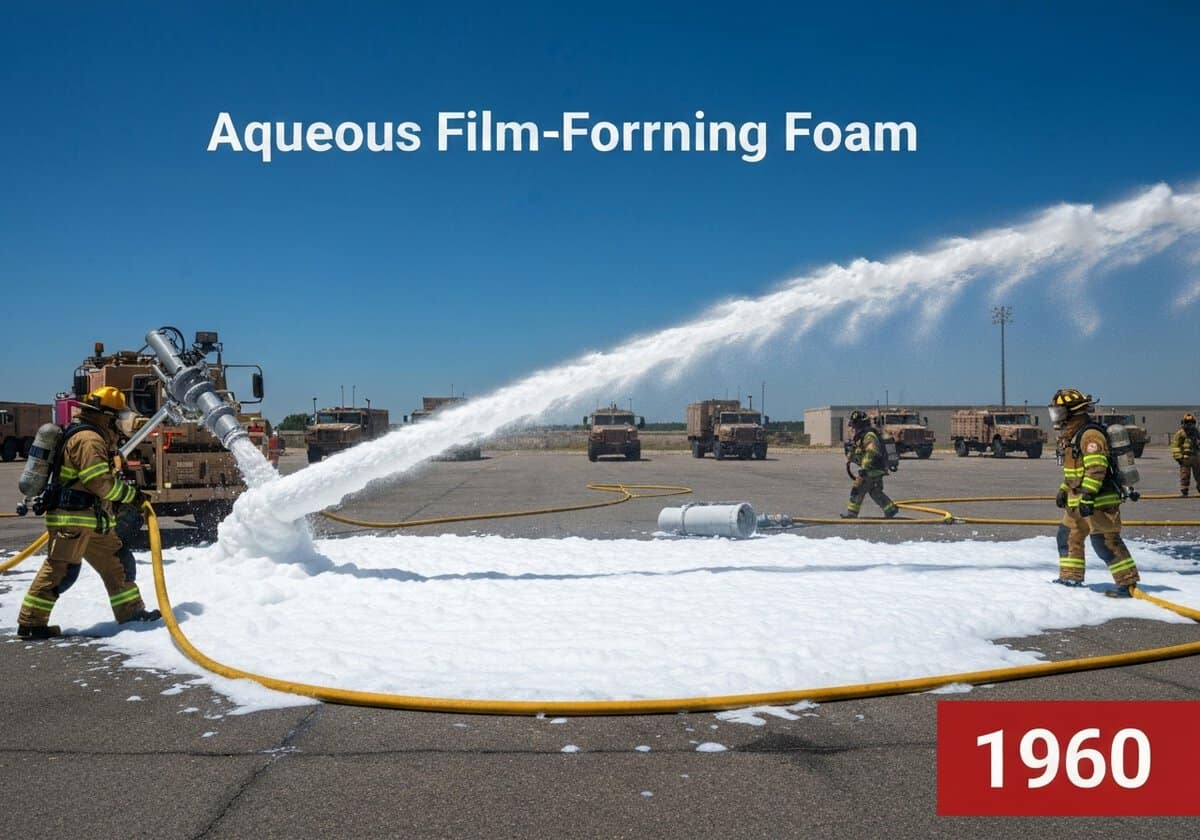
رجال الإطفاء يستخدمون رغوة تشكيل طبقة مائية أثناء التدريب على إخماد الحرائق من الفئة ب.

(صورة توضيحية فقط)

Aqueous film-forming foam (AFFF) is a highly effective fire suppressant for Class B fires (flammable liquids). Its effectiveness comes from PFAS-based fluorosurfactants, which dramatically lower the surface tension of water. This allows the foam to spread rapidly across the surface of a burning liquid, forming a vapor barrier that suffocates the fire and cools the fuel.


AFFF was a revolutionary development in firefighting technology. Before AFFF, protein-based foams were used, but they were less effective and slower to control large liquid fuel fires. The key innovation in AFFF is the use of fluorosurfactants. These molecules have a water-soluble (hydrophilic) head and a water-insoluble (hydrophobic) fluorocarbon tail. When mixed with water and aerated, they create a foam blanket. Crucially, as the foam drains, the fluorosurfactants create a thin aqueous فيلم that floats on the surface of the hydrocarbon fuel. This film has a surface tension lower than that of the fuel, allowing it to spread rapidly and reseal if disturbed. The film serves multiple purposes: it suppresses the release of flammable vapors, separates the fuel from oxygen, and the water content provides a cooling effect. This combination makes AFFF exceptionally fast and effective at extinguishing difficult-to-control liquid fires, which is why it became the standard for high-risk environments like airports and military installations. However, the environmental persistence and toxicity of the PFAS used in AFFF have led to it becoming a major source of groundwater contamination at training sites.

UNESCO Nomenclature: 3309
– Environmental engineering

يكتب

Chemical Product

خلل

Revolutionary

الاستخدام

استخدام واسع النطاق

مقدمات

  • اختراع رغاوي إطفاء الحرائق القائمة على البروتين في أوائل القرن العشرين
  • تركيب المواد الفعالة بالفلوروسورفاكتان بواسطة شركة 3م في الخمسينيات من القرن العشرين
  • فهم ظاهرة التوتر السطحي وتكوين الفيلم
  • الحاجة إلى تحسين إخماد الحرائق الناجمة عن حرائق وقود الطائرات في القوات العسكرية

التطبيقات

  • القواعد العسكرية والمطارات
  • المطارات المدنية
  • مصافي النفط ومصانع البتروكيماويات
  • إدارات الإطفاء للاستجابة لحوادث تسرب الوقود والحرائق

براءات الاختراع:

NA

أفكار ابتكارية محتملة

  • رغاوي مكافحة الحرائق الخالية من الفلور (f3) التي تستخدم مواد خافضة للتوتر السطحي وبوليمرات هيدروكربونية جديدة
  • أنظمة التقاط ومعالجة AFFF للاستخدام في مواقع التدريب على مكافحة الحرائق
  • تركيبات AFFF القابلة للتحلل الحيوي مع نقاط كسر هندسية
  • الموجات فوق الصوتية foam generation systems that require less concentrate
  • أنظمة مكافحة الحرائق الروبوتية التي يمكنها تطبيق الرغوة بدقة أكبر لتقليل الانبعاثات البيئية
  • تركيبات afff التي تستخدم PFAs قصيرة السلسلة ذات إمكانية التراكم البيولوجي المنخفضة (يتم التخلص منها الآن أيضًا)
  • عوامل AFFF مغلفة لا يتم إطلاقها إلا عند تعرضها لحرارة عالية
  • التوأم الرقمي models of fire scenarios to optimize foam application strategies
  • أنظمة كهروكيميائية محمولة لتدمير مركبات PFA في المياه الملوثة بـ AFFF في الموقع
  • الرغوات القائمة على المواد الخافضة للتوتر السطحي الحيوية والمشتقة من الكائنات الحية الدقيقة كبديل أخضر
Related to: afff, firefighting foam, fluorosurfactant, pfas, class b fire, flammable liquid, surface tension, vapor barrier, environmental contamination, fire suppression.

السياق التاريخي

Aqueous Film-Forming Foam (AFFF)

1960
1960
1960
1960
1960
1960
1962-10-09
1960
1960
1960
1960
1960
1960
1962
1963

(إذا كان التاريخ غير معروف أو غير ذي صلة، على سبيل المثال "ميكانيكا الموائع"، يتم توفير تقدير تقريبي لظهوره الملحوظ)

أحدث الإضافات

أهم المنشورات والمقالات

أفضل الأدوات الأصلية

السنة العاشرة عيد

الصور والتنزيلات بالحجم الكامل متاحة فقط، ومجانية تمامًا، للأعضاء المسجلين.