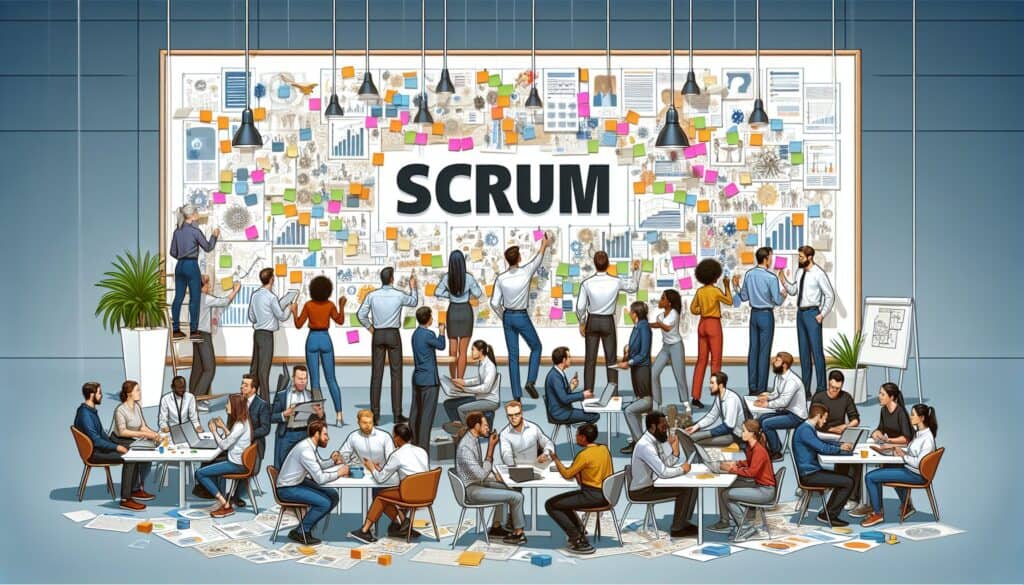
Scrum 可以有效地应用于软件开发以外的各个行业,例如制造业、医疗保健和产品设计。在这些行业中,团队面临着不可预测的挑战,并寻求通过迭代周期来提高产出质量。例如,在产品设计中,由设计师、工程师和市场营销人员组成的跨职能团队可以使用 Scrum 来创建原型,根据用户反馈调整设计,并确保最终产品与市场需求紧密契合。汽车和航空航天等行业已经采用 Scrum 原则来促进不同团队之间的协作,这些团队必须协调工程、设计和用户体验。Scrum 在需要快速适应和持续改进的项目环境中表现出色。 利益相关者的参与, such as during the early stages of 产品生命周期 development, where customer needs and market conditions may shift quickly. Scrum encourages participation from various stakeholders—such as customers, end-users, and business analysts—enabling a comprehensive collection of requirements that improves product offerings. Sprints serve as effective checkpoints for assessing progress and realigning goals, while events like Sprint Reviews provide a platform for showcasing work to stakeholders and gathering constructive feedback, promoting a culture of continuous improvement. Large organizations utilizing Scrum can see enhanced efficiency and faster delivery timelines, as smaller teams within different departments coordinate their efforts while staying aligned with strategic objectives. The iterative nature of Scrum supports the practice of testing ideas early and often, which is particularly beneficial in a fast-paced market where innovation is a necessity.