Product Design, Manufacturing & Innovation Resources
بيت » بطارية الرصاص الحمضية

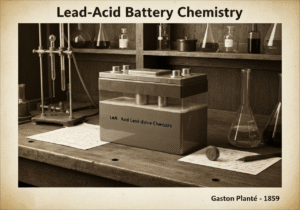
بطارية الرصاص الحمضية

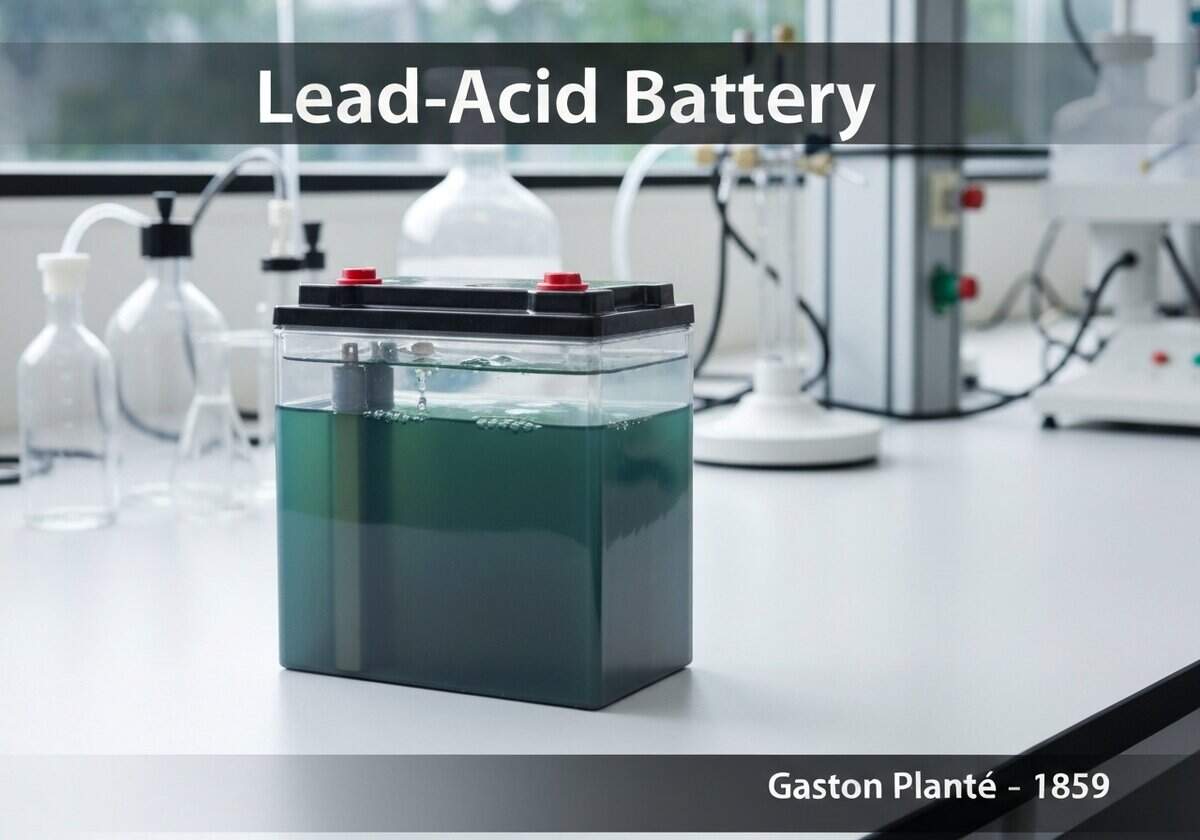
1859
  • Gaston Planté
Lead-acid battery with lead and lead dioxide electrodes in sulfuric acid electrolyte, electrochemistry.

(صورة توضيحية فقط)

بطارية الرصاص الحمضية هي أول بطارية قابلة لإعادة الشحن، اخترعها غاستون بلانتيه عام ١٨٥٩. تعمل باستخدام قطب موجب من الرصاص (Pb) وقطب سالب من ثاني أكسيد الرصاص (PbO₂) مغمورين في إلكتروليت حمض الكبريتيك (H₂SO₄). أثناء التفريغ، يتحول القطبان إلى كبريتات الرصاص (PbSO₄)، وهي عملية تُعكس أثناء الشحن، مما يسمح بتخزين الطاقة وإعادة استخدامها.

The lead-acid battery was a foundational invention in the field of electrical energy storage. French physicist Gaston Planté’s design in 1859 was simple yet effective, consisting of two lead sheets separated by rubber strips, rolled into a spiral, and submerged in a sulfuric acid solution. Its novelty lay in its reversibility. Unlike primary cells of the time, it could be recharged by passing a reverse current through it.

The electrochemical reactions are key to its operation. At the negative electrode (anode), lead reacts with sulfate ions from the electrolyte: [latex]Pb(s) + HSO_4^-(aq) rightarrow PbSO_4(s) + H^+(aq) + 2e^-[/latex]. At the positive electrode (cathode), lead dioxide reacts with hydrogen and sulfate ions: [latex]PbO_2(s) + HSO_4^-(aq) + 3H^+(aq) + 2e^- rightarrow PbSO_4(s) + 2H_2O(l)[/latex]. During charging, these reactions are reversed. The formation and dissolution of lead sulfate on the electrodes is the core mechanism for storing and releasing energy. Despite its low energy density and the environmental concerns of lead, its low cost, reliability, and high surge current capability have ensured its continued widespread use, particularly in automotive applications.

UNESCO Nomenclature: 2204
– Electrochemistry

يكتب

Physical Device

خلل

أساسيات

الاستخدام

استخدام واسع النطاق

مقدمات

  • Alessandro Volta’s invention of the Voltaic pile (1800)
  • Michael Faraday’s laws of electrolysis (1834)
  • understanding of electrochemical cells and galvanic corrosion

التطبيقات

  • بطاريات التشغيل والإضاءة والإشعال للسيارات (SLI)
  • مصادر الطاقة غير المنقطعة (UPS)
  • إضاءة الطوارئ
  • تخزين طاقة الشبكة
  • الغواصات

براءات الاختراع:

NA

أفكار ابتكارية محتملة

  • أقطاب كهربائية خفيفة الوزن من رغوة الرصاص للأدوات الكهربائية المحمولة
  • بطاريات فائقة المكثفات الهجينة من الرصاص والكربون لتحسين دورة الحياة في تطبيقات الشبكة
  • بطاريات الرصاص الحمضية المغلقة مع إلكتروليتات هلامية للاستخدام في أي اتجاه
  • smart battery management systems (bms) for lead-acid batteries to optimize عمر
  • recycling processes that recover over 99% of lead for a الاقتصاد الدائري
  • تصميمات بطاريات الرصاص الحمضية ثنائية القطب لكثافة طاقة أعلى
  • بطاريات تدفق الرصاص الحمضية للتخزين الثابت على نطاق واسع
  • إضافات إلكتروليتية ذاتية الشفاء لتقليل الكبريتات
  • أجهزة استشعار متكاملة لمراقبة الحالة الصحية في الوقت الفعلي
  • معززات الأداء في درجات الحرارة المنخفضة للتطبيقات القطبية الشمالية
Related to: lead-acid, Gaston Planté, rechargeable battery, electrochemistry, sulfuric acid, lead dioxide, anode, cathode, energy storage, SLI battery.

السياق التاريخي

بطارية الرصاص الحمضية

1850
1851
1854
1859
1861
1865
1868
1850
1851
1852
1859
1860
1861
1865
1869

(إذا كان التاريخ غير معروف أو غير ذي صلة، على سبيل المثال "ميكانيكا الموائع"، يتم توفير تقدير تقريبي لظهوره الملحوظ)

أحدث الإضافات

أهم المنشورات والمقالات

أفضل الأدوات الأصلية

السنة العاشرة عيد

الصور والتنزيلات بالحجم الكامل متاحة فقط، ومجانية تمامًا، للأعضاء المسجلين.