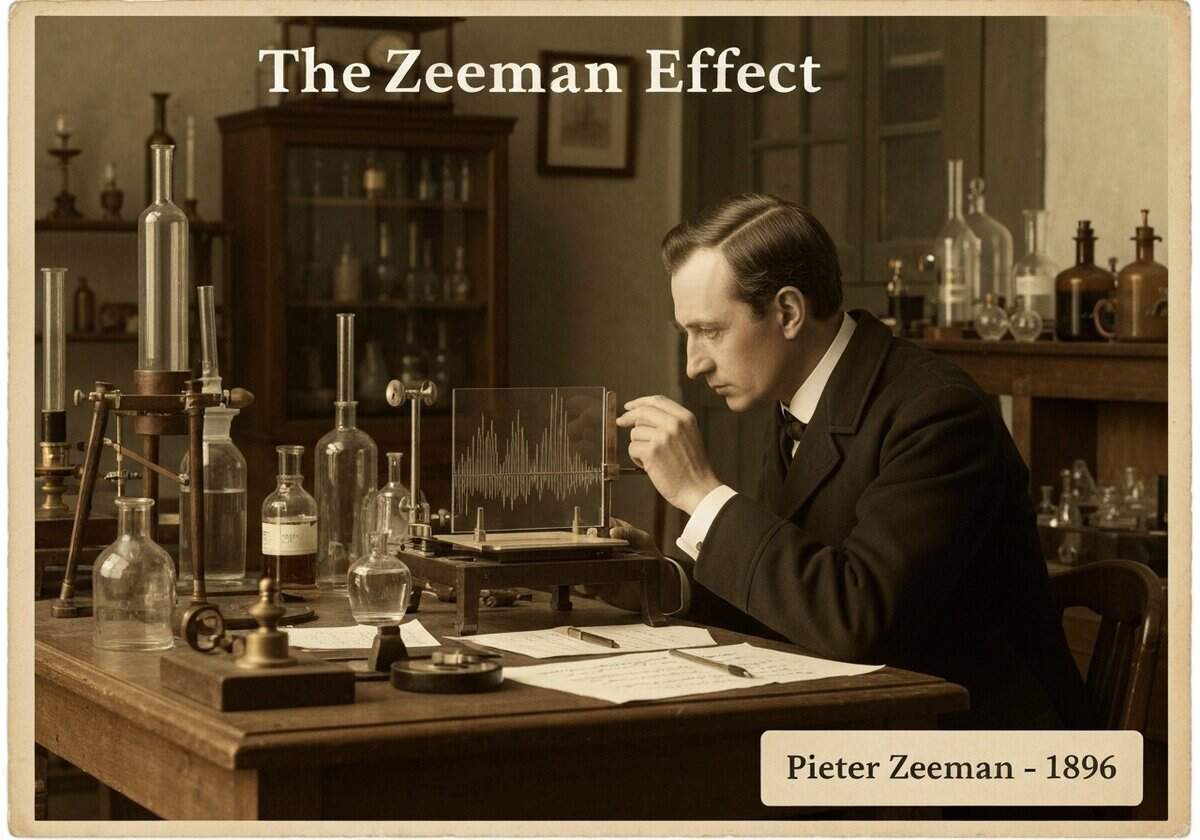
Discovered by Dutch physicist Pieter Zeeman in 1896, the Zeeman effect was a pivotal observation in the development of modern physics. When an atom is placed in a magnetic field, its energy levels, which are normally degenerate (having the same energy), are split. This is because the magnetic field interacts with the 磁矩 of the atom. This magnetic moment has two primary sources: the motion of electrons orbiting the nucleus (orbital angular momentum) and the intrinsic quantum property of electrons known as spin (spin angular momentum). The interaction lifts the degeneracy of states with different magnetic quantum numbers.