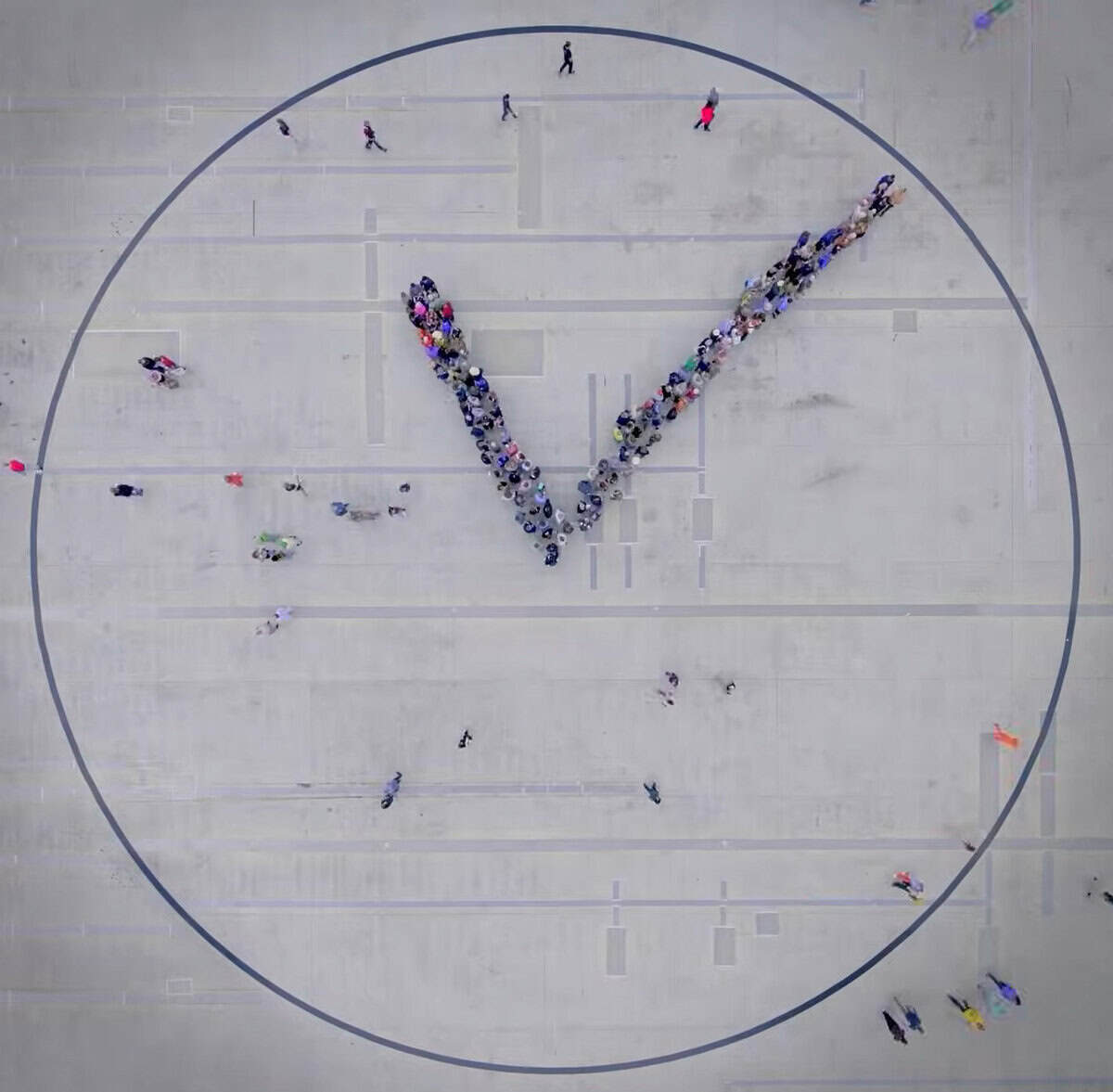
马尔滕·巴斯(Maarten Baas)的“人民时钟”是一件永久性艺术装置,于2026年4月在阿姆斯特丹史基浦机场1号候机厅揭幕,迎接前往申根区的旅客。这位荷兰设计师以其探索时间计量奇特性的“实时”系列作品而闻名。他招募了约一千名志愿者——其中大部分是史基浦机场的员工,包括安保人员、行李搬运工、航空公司工作人员和清洁工——用他们的身体组成巨型时钟的时针和分针,同时,一名身穿橙色服装的跑步者每分钟跑完一圈,描绘出秒针的轨迹。
在长达十二小时的拍摄过程中,一台高架摄像机记录了人群随着时间流逝不断变换队形的画面;这些影像如今循环播放,与真实时钟的走时同步,显示在安装在一个250 x 250 x 250厘米立方体上的四个屏幕上。这件作品延续了巴斯十年前在史基浦机场创作的小型时钟的理念,当时他独自一人反复手工绘制指针——而这件新作则将这一理念从一位艺术家的劳动扩展到了整个社区的共同努力。
“时钟”的视频:
这件作品在技术和人文层面都引人入胜,因为它完全颠覆了时钟的逻辑:巴斯并没有将机械装置隐藏在密封的外壳后面,而是将其努力展现出来——将我们通常一闪而过、匆匆一瞥就能读懂的东西,变成了一场持续的集体协调的奇观,这需要一千名普通的机场工作人员花费十二个小时的精心编排、耐心和善意,才能制作出一个逐分钟循环的画面。
Technically, it sits at the intersection of live performance and video engineering: real bodies, filmed once, are stitched into an endlessly repeating digital timepiece that 必须 stay perfectly synchronized to actual time, so the “human” clock is simultaneously utterly analog in spirit and precisely automated in execution. Humanly, its interest lies in who is doing the performing — not actors or dancers, but the cleaners, baggage handlers and security staff who normally move invisibly through the terminal’s background, now literally embodying the hours for the travelers who rush past them every day, turning a piece about timekeeping into a quiet tribute to the collective labor that keeps an airport, and time itself, running.
这真的很有意思:
































