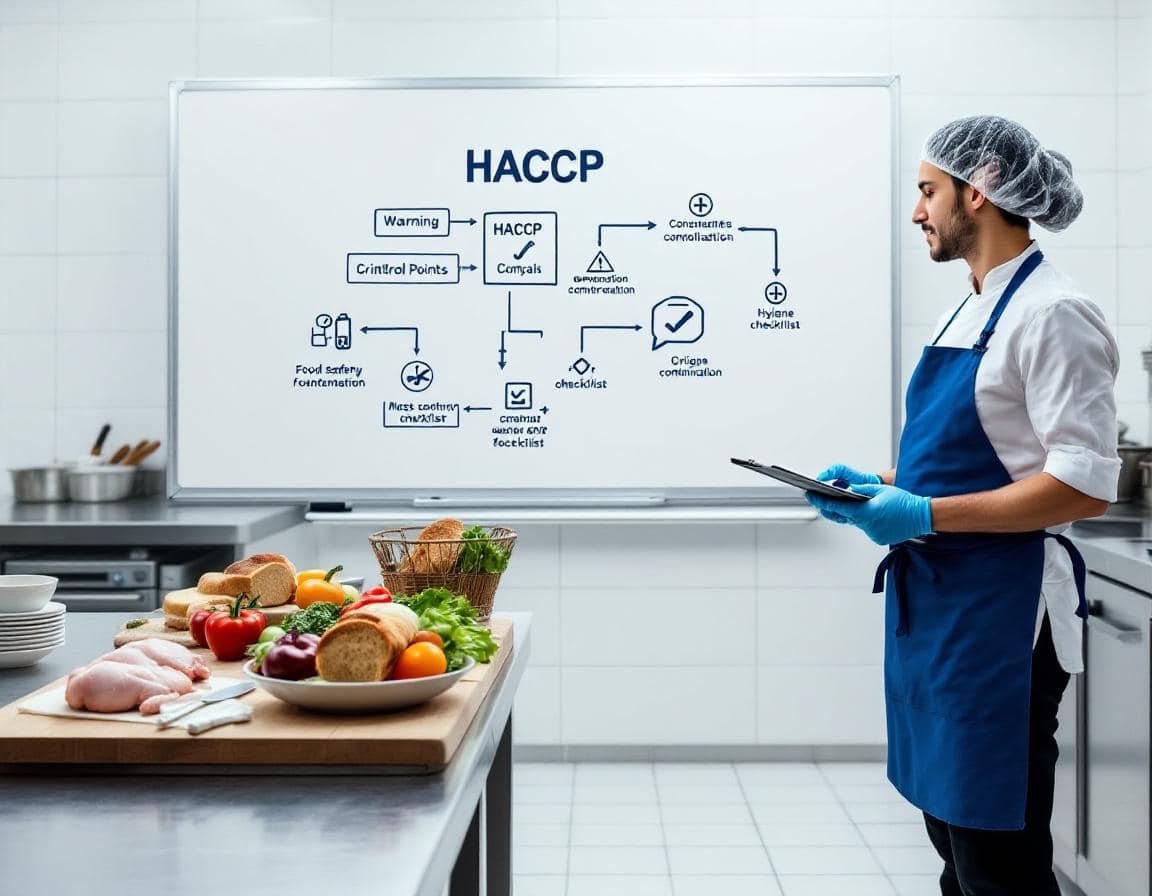
In the sectors of food manufacturing and processing, Hazard Analysis and Critical Control Points (HACCP) stands as a professional framework for ensuring safety and compliance in the food industry. Originating in the 1960s to safeguard astronauts’ food from contamination, HACCP has since transformed into a globally recognized standard that drives food safety practices across various industries, including restaurants and food service, and pharmaceutical manufacturing.. This article will provide a comprehensive overview of HACCP, detailing its history, the seven foundational principles, steps for developing and implementing a robust HACCP plan, and the identification of biological, chemical, and physical hazards.
핵심 요약

- HACCP는 체계적인 예방을 통해 안전한 식품을 보장합니다.
- 효과적인 위험 관리를 위한 7가지 원칙이 있습니다.
- CCP는 의사결정 체계를 통해 결정됩니다.
- 구현을 통해 위험을 줄이고 규정 준수를 지원할 수 있습니다.
- 필수 이수 프로그램은 전반적인 안전 프로세스를 강화합니다.
HACCP의 주된 목적은 생산 공정에서 위해 요소가 발생할 수 있는 중요 관리 지점을 식별하여 식품 안전을 보장하는 체계를 구축하는 것입니다. 검사보다는 예방에 중점을 둠으로써, 시설은 생물학적, 화학적, 물리적 위해 요소를 사전에 관리할 수 있습니다.
HACCP의 정의 및 역사
위해요소 분석 및 중요 관리점(HACCP)은 생산 공정 전반에 걸쳐 식품 안전 위해 요소를 식별, 평가 및 관리하기 위해 고안된 체계적인 접근 방식입니다.

1960년대 후반에 시작된 HACCP는 식품 안전을 보장하기 위한 예방 조치로 개발되었습니다. 미국 국립보건원(US National Health Commission)은 항공학 미국 항공우주국(NASA)은 우주비행사에게 제공되는 음식에 위해요소 분석 및 중요 관리점(HACCP)을 최초로 도입했습니다. 이는 임무 수행 중 우주비행사의 건강을 위협할 수 있는 모든 위험 요소를 제거하는 것이 무엇보다 중요했기 때문입니다. 오늘날 HACCP 원칙은 전 세계 다양한 식품 산업에 적용되고 있습니다.
통계에 따르면 HACCP 원칙을 적용하면 병원균으로 인한 식중독 발생률을 크게 줄일 수 있으며, 특정 식품 유형에서는 살모넬라균 감염률을 최대 25%까지 감소시킬 수 있는 것으로 나타났습니다.
역사적으로 HACCP는 다음과 같은 과정을 통해 국제적인 인정을 받았습니다. 코덱스 알리멘타리우스 위원회는 이를 식품 안전 관리 시스템의 표준으로 채택했습니다.
HACCP의 체계적인 특성 덕분에 식품 생산뿐만 아니라 안전이 최우선인 제약 및 화장품과 같은 다른 분야에도 적용할 수 있습니다.
The Seven Principles of HACCP

- Conduct a hazard analysis: identify potential biological, chemical, and physical hazards at each stage of the food production process—from raw material sourcing to final consumption. Assess the risks associated with these hazards and determine appropriate control measures. This includes biological, chemical, and physical hazards that may be present in the manufacturing or processing stage. A systematic approach entails gathering data on previous incidents, conducting risk assessments, and considering inputs from various stakeholders. For instance, analysis from the Centers for Disease Control and Prevention (CDC) shows that approximately 48 million Americans become ill from foodborne illnesses each year, highlighting the importance of hazard identification.
- Determine the Critical Control Points (CCPs) within the process: CCPs are steps where control can be applied to prevent, eliminate, or reduce food safety hazards to acceptable levels. These points are often identified through flow diagrams and expert consultations. For example, in a poultry processing plant, critical control points could include cooking temperatures and cooling times. If these parameters are not met, the risk of pathogen survival increases significantly.
- Establish critical limits: set maximum or minimum values (e.g., temperature, time, pH) for each CCP that must be met to ensure the hazard is controlled. These limits distinguish between safe and unsafe operating conditions. For example, the FDA advises that poultry must be cooked to an internal temperature of 165°F (74°C) to control salmonella and other bacteria, but local criteria or situation can request that to be higher. Compliance with these limits is essential for ensuring food safety and regulatory adherence.
- Establish monitoring procedures: develop and implement procedures to monitor each CCP to ensure they remain within defined limits. Effective monitoring can utilize tools like temperature logs and digital sensing equipment to track compliance. A study conducted among various food manufacturers showed that companies implementing consistent monitoring reduced non-compliance incidents by over 20%.
- Establish Corrective Actions: define actions to be taken when monitoring indicates a deviation from an established critical limit. Corrective actions ensure that no unsafe product reaches the consumer and that the process is brought back under control and does not happen again.
- Establish verification procedures: 기음arry out actions to ensure that the HACCP system is functioning properly. Verification can involve examining documentation, performing audits, and conducting tests to confirm that the system is delivering the expected results.
- Establish documentation and record-Keeping: maintain accurate and comprehensive records of all HACCP-related activities. Documentation should include hazard analyses, CCP monitoring, corrective actions, and verification procedures to demonstrate compliance and facilitate continuous improvement.
팁: utilize automated systems where possible to facilitate real-time monitoring and record-keeping, enhancing traceability and compliance with food safety regulations.
Identifying Hazards in a Process
Identifying hazards within a production process is critical for food safety and quality assurance. These hazards can be categorized into three main types: biological, chemical, and physical:
- Biological hazards include harmful microorganisms like bacteria, viruses, and parasites that can contaminate food. For example, Salmonella and Escherichia coli are commonly cited bacteria that can lead to foodborne illnesses, impacting consumer health and industry liability. It is statistically documented that approximately 48 million people get sick each year in the United States due to foodborne pathogens, underscoring the importance of effective hazard identification.
- Chemical hazards encompass harmful substances that may unintentionally enter food products. These can be residues from pesticides, cleaning agents, and additive compounds used during production. To mitigate these risks, it is crucial to monitor and test the presence of these chemicals. For instance, the Environmental Protection Agency (EPA) enforces strict limits on pesticide residues to ensure products remain safe for consumption. A report from the Food and Drug Administration (FDA) noted that approximately 1% of food samples tested exceeded permissible pesticide residue levels.
- Physical hazards, on the other hand, are foreign objects that can contaminate food items, such as glass, metal shards, bone fragments, or stones. The presence of such hazards can cause severe injury to consumers and can threaten brand integrity. Implementing comprehensive inspection measures, especially during critical phases of production and processing lines, is essential. Documented cases have shown that consumer complaints regarding foreign objects can lead to multi-million dollar lawsuits and product recalls, highlighting the need for diligent hazard detection.
The process of identifying potential hazards should include a thorough review of each stage of production. It involves examining the entire supply chain—from raw materials, processing methods, to final product packaging. Utilizing a flowchart can help in visualizing the steps and pinpointing where hazards may arise.
팁: it’s beneficial to 관계를 맺다 employees across various roles in this review, as they may offer insights into risks that may not be immediately visible to management.
| Type of Hazard | 예시 | Mitigation Strategies |
|---|---|---|
| Biological | Salmonella, E. coli | 정기적인 microbial testing, employee training on hygiene |
| Chemical | Pesticides, additives, machine lubricants | Supplier certifications, routine chemical analysis, dedicated restricted areas for chemicals storage, rule and roles for usage. Maintenance plans. |
| Physical | Glass, metal parts or chips | Screening for foreign objects, visual inspections, Maintenance plans. |
Determining Critical Control Points CCPs
Determining Critical Control Points (CCPs) involves identifying points in the production process where controls can be applied to prevent, reduce, or eliminate food safety hazards.
These CCPs points are not arbitrary; they arise from thorough analysis of the workflow and risk assessment.
For example, in a dairy production facility, a CCP may be the pasteurization stage, where it is crucial to reach a specific temperature and time combination to eliminate pathogenic bacteria such as Salmonella. Establishing such points is a systematic process guided by the flow diagram of operations.

To effectively determine CCPs, various evaluation methods can be applied. The most common approach is the decision tree method, which asks a series of questions that lead to identifying whether a control point is critical. These questions often revolve around whether a hazard can be controlled at that point and if a loss of control could lead to an unacceptable safety risk. For example, if a cooking step does not achieve adequate temperature, it can lead to potential pathogen survival, thereby qualifying it as a CCP.
Effective documentation is paramount during this phase. It is essential to keep detailed records that capture the rationale behind each identified CCP and the associated hazards. For instance, if a CCP is determined to be a specific 코팅 method in snack food production, records should outline the importance of maintaining the correct coating thickness, which directly affects the final product’s safety and quality. These records facilitate compliance with regulatory standards and serve as a reference for audits.
팁: regularly review and validate your CCPs as production processes may change over time or new hazards may emerge. Conducting routine hazard assessments every six months is beneficial for maintaining safety standards and adapting to evolving industry practices.
Benefits of Implementing HACCP and Role of Prerequisite Programs
Implementing HACCP provides multiple advantages, including enhanced food safety, reduced risk of contamination, and compliance with regulatory standards. By systematically addressing hazards, organizations protect public health while increasing consumer trust.
Furthermore, the integration of prerequisite programs—such as Good Manufacturing Practices (GMP) and sanitation measures—complements HACCP principles. These programs establish a strong baseline for hygiene, facility management, and employee training. When combined with HACCP, they create a robust framework that ensures critical control points are managed effectively. For instance, a comparison between food companies with and without such programs showed a 30% decrease in non-compliance incidents among those employing both HACCP and GMP protocols.
팁: regular training sessions on HACCP and prerequisite programs can significantly improve employee awareness and adherence to food safety standards. This proactive approach leads to a marked reduction in operational mishaps and creates a culture of safety within the organization.
Wrapping-Up
In the context of contemporary food safety, the adoption of Hazard Analysis and Critical Control Points (HACCP) represents not just a compliance measure but a profound commitment to public health and product integrity. The rigor embedded in its seven principles, along with a systematic approach to hazard identification and control, equips organizations to safeguard their consumers while maintaining high standards of food safety.
The importance of a well-structured HACCP framework transcends mere regulatory requirements, acting as a guiding force for innovation and quality assurance within diverse industries.
자주 묻는 질문
HACCP의 정의와 목적은 무엇인가요?
HACCP는 위해요소 분석 및 중요 관리점(Hazard Analysis and Critical Control Points)의 약자로, 식품 안전 위해 요소를 식별하고 관리하는 체계적인 접근 방식입니다. HACCP의 주된 목적은 생산 및 가공 과정에서 물리적, 화학적, 생물학적 위해 요소를 예방, 제거 또는 감소시켜 식품의 안전을 확보하는 것입니다.
HACCP의 7가지 원칙은 무엇인가요?
HACCP의 7가지 원칙은 위해 요소 분석 수행, 중요 관리점(CCP) 설정, 중요 한계 설정, 모니터링 절차 개발, 시정 조치 수립, 검증 절차 시행, 기록 유지입니다. 이러한 원칙들은 식품 안전 위해 요소를 체계적으로 관리하는 데 지침이 됩니다.
HACCP 계획을 수립하고 실행하는 단계는 무엇입니까?
HACCP 계획을 수립하려면 철저한 위해성 분석을 실시하고 중요 관리점(CCP)을 식별해야 합니다. 중요 한계치와 모니터링 절차를 설정한 후에는 시정 조치를 시행하고, 계획의 효과성을 보장하기 위해 검증 및 기록 유지 절차를 마련해야 합니다.
공정에서 생물학적, 화학적, 물리적 위험 요소를 어떻게 식별할 수 있을까요?
위험 요소는 생산 공정의 각 단계를 집중적으로 분석하여 파악할 수 있습니다. 이를 위해 과거 데이터 검토, 공정 흐름도 작성, 전문가와의 상담 등을 통해 생물학적, 화학적, 물리적 오염의 잠재적 원인을 규명해야 합니다.
중요 관리점(CCP)을 결정하는 데 사용할 수 있는 방법에는 어떤 것들이 있습니까?
의사결정 트리는 일반적으로 정해진 기준에 따라 각 단계의 중요도를 평가하여 CCP(핵심 관리점)를 식별하는 데 사용됩니다. 이 외에도 공정 흐름도 및 전문가 자문과 같은 방법을 활용하여 생산 공정에 대한 종합적인 평가를 수행할 수 있습니다.
HACCP를 지원하는 데 있어 필수 이수 프로그램은 어떤 역할을 합니까?
우수 의약품 제조 기준(GMP)과 같은 선행 프로그램은 기본적인 위생 및 안전 조치가 마련되어 있음을 보장함으로써 HACCP의 토대를 구축합니다. 이러한 프로그램은 식품 안전 위험으로 이어질 수 있는 조건을 해결함으로써 HACCP 계획의 효과성을 뒷받침합니다.
<div>In which industries is HACCP applicable?
HACCP is applicable across multiple industries, including food manufacturing, processing, restaurants, pharmaceuticals, cosmetics, and retail food operations. It provides a structured approach to ensuring safety and quality in products across these diverse fields.</div>
관련 주제
- 위험 평가 기법: 식품 안전 시스템 내 잠재적 위험을 평가하는 데 사용되는 방법.
- 환경 모니터링: 식품 생산 환경의 오염 수준을 평가하는 데 사용되는 기술.
- Supplier Audits: HACCP를 뒷받침하는 식품 안전 기준을 준수하는지 확인하기 위한 공급업체 평가.
- 추적성 시스템: 원료의 출처부터 최종 제품까지 추적하여 안전성을 보장하는 메커니즘.
- 식품 안전 문화: 조직 내 식품 안전에 관한 공유된 가치와 행동 양식.
- 위기 관리 계획: 식품 안전 비상사태 또는 제품 리콜을 효과적으로 관리하기 위한 전략.
- 품질 보증 프로그램: 식품 생산 공정의 품질과 안전을 유지하기 위한 체계적인 정책.
- 위생 수칙: 식품 생산 및 준비 과정에서 청결을 보장하는 프로토콜.
- 규정 준수: 지역, 국가 및 국제 식품 안전 규정 및 지침 준수.
- 프로세스 흐름도: 식품 제조 공정의 각 단계를 시각적으로 표현한 자료.
- Statistical Process Control: 식품 생산 공정을 모니터링하고 관리하기 위해 통계적 방법을 활용합니다.
External Links on Hazard Analysis And Critical Control Points (HACCP)
국제 표준
(링크 위에 마우스를 올려놓으면 콘텐츠에 대한 설명을 볼 수 있습니다.)
사용된 용어집
Critical Control Points (CCP): specific stages in a process where control can be applied to prevent, eliminate, or reduce food safety hazards to acceptable levels. Identifying these points is essential for effective hazard analysis and critical control management in food production systems.
Food and Drug Administration (FDA): a federal agency of the United States Department of Health and Human Services responsible for regulating food safety, pharmaceuticals, medical devices, cosmetics, and tobacco products to ensure public health and safety through scientific evaluation and enforcement of compliance standards.
Good Manufacturing Practice (GMP): a system ensuring products are consistently produced and controlled according to quality standards, minimizing risks involved in pharmaceutical production and related industries. It encompasses guidelines for manufacturing processes, facility conditions, personnel qualifications, and documentation practices to ensure product safety and efficacy.
Hazard Analysis and Critical Control Points (HACCP): a systematic approach to food safety that identifies, evaluates, and controls hazards at critical points in the production process to prevent foodborne illnesses and ensure product safety.
Network-attached storage (NAS): 하드디스크는 네트워크에 연결되어 여러 사용자와 장치 간에 데이터 접근 및 공유를 가능하게 하는 저장 장치로, 일반적으로 중앙 집중식 파일 저장, 백업 및 관리 기능을 제공합니다. 하드디스크는 컴퓨터와 독립적으로 작동하며 표준 네트워크 프로토콜을 통해 접근할 수 있습니다.
Statistical Process Control (SPC): a method of quality control that employs statistical techniques to monitor and control a process, ensuring it operates at its full potential by identifying variations and maintaining consistent output within specified limits.