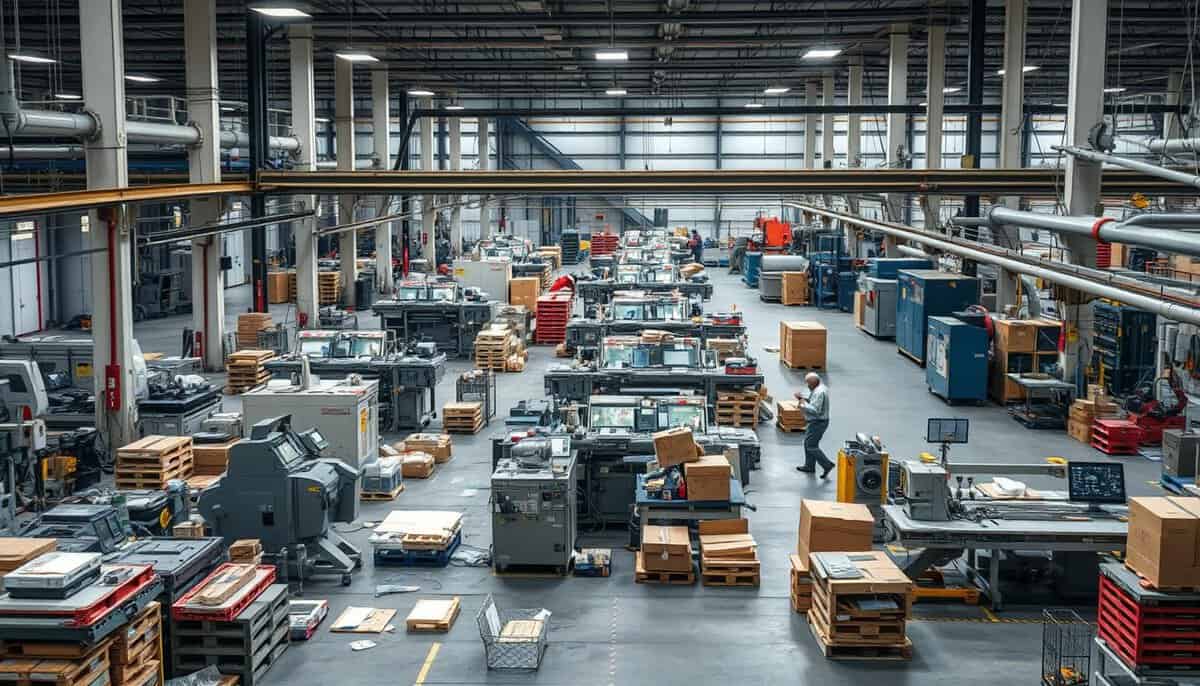
Did you know that a company’s inventory waste might lock away 30-40% of its cash? This is just one issue in 린 제조이는 수익과 효율성을 저해하는 7가지 유형의 낭비 중 하나입니다. 이러한 아이디어는 다이이치 오노의 생각에서 비롯되었습니다. 도요타 생산 시스템여기에는 운송, 재고, 동작, 대기, 과잉 생산, 과잉 처리, 결함, 그리고 최근에 추가된 8번째 항목인 미활용 직원 잠재력이 포함됩니다. 목표는 제조 과정에서 가치를 더하지 않는 활동을 찾아 제거하는 것입니다.
린 제조 방식은 낭비를 줄이고 지속 가능하고 효율적인 생산을 촉진하는 것을 목표로 합니다. 모든 유형의 낭비는 자원을 소모하고 제품이나 서비스에 큰 도움이 되지 않는 비용을 발생시킵니다. 이러한 낭비를 해결함으로써 기업은 운영 방식을 크게 개선하고 비용을 절감하며 생산 품질을 향상시킬 수 있습니다.
핵심 요약
- 재고 낭비는 회사의 운전자본 중 최대 30~40%를 묶어둘 수 있습니다.
- 생산 과정에서의 대기 시간은 전체 생산 시간의 최대 90%를 비부가가치 시간으로 만들 수 있습니다.
- 과잉생산은 제조 현장에서 전체 생산 비용의 약 15~30%를 차지할 수 있습니다.
- 제품 결함으로 인해 특정 산업에서 총 매출의 5~20%에 달하는 재작업 비용이 발생할 수 있습니다.
- 직원의 잠재력을 활용하지 못하면 업종에 따라 10~30%의 생산성 손실이 발생할 수 있습니다.
린 제조 및 낭비 소개
린 제조 방식은 비용 절감을 목표로 합니다. 린 프로세스 낭비 높은 생산성을 유지하면서. 그것은 다음과 같이 시작되었습니다. 도요타 생산 시스템 (티피스시게오 신고와 타이이치 오노 덕분에 발전했습니다. 핵심은 프로세스를 끊임없이 개선하는 것인데, 이를 '카이젠'이라고 합니다.
핵심은 낭비를 없애고, 품질을 향상시키고, 비용을 절감하고, 시간을 절약하는 것입니다. 이를 통해 제조 효율이 높아집니다.
린 제조란 무엇인가요?
린 제조는 품질 좋은 제품을 생산하고 낭비를 제거하는 것입니다. 도요타와 같은 일본 기업들이 이 분야를 선도하고 있습니다. 존 크래프칙은 1988년에 '린 제조'라는 용어를 널리 알렸습니다. 제임스 워맥, 대니얼 T. 존스, 대니얼 루스는 1990년에 출간한 저서에서 이 개념을 더욱 자세히 다루었습니다.
주요 목표는 프로세스를 간소화하는 것입니다. 이를 통해 인력, 자재, 시간과 같은 자원을 덜 사용하면서 가치를 높일 수 있습니다.
린 제조에서 낭비 이해하기
낭비, 또는 '무다'는 고객에게 가치를 제공하지 않는 모든 것을 의미합니다. 도요타 생산 시스템에 따르면 낭비에는 운송, 재고, 동작, 대기, 과잉 생산, 과잉 처리, 불량의 7가지 유형이 있습니다. 각각의 낭비는 비용을 증가시키고 효율성을 저하시킵니다. 예를 들면 다음과 같습니다.
- 폐기물 운송필요 이상으로 자재를 이동시키면 생산 시간과 비용이 증가합니다.
- 재고 낭비재고가 너무 많으면 가치 없이 돈과 공간만 낭비하게 됩니다.
- 모션 웨이스트작업자들의 비효율적인 움직임은 생산 속도를 늦출 수 있습니다.
- 대기 낭비준비가 안 되면 모든 게 멈춰버린다.
- 생산 과잉너무 많이 생산하면 재고가 늘어나고 보관 비용이 증가합니다.
- 과도한 처리고객이 원하지 않는 추가 기능은 가치를 더하지 않고 생산 비용만 증가시킵니다.
- 결함결함이 있는 제품은 수리하거나 폐기해야 하므로 재료비와 인건비가 더 많이 듭니다.
이러한 린 폐기물 관리 문제를 해결함으로써 기업은 운영을 더욱 원활하고 저렴하며 효율적으로 만들 수 있습니다.
린 제조에서 운송 폐기물
린 제조에서 운송 낭비란 시설 내에서 제품과 자재를 불필요하게 이동시키는 것을 의미합니다. 이러한 이동은 부가가치를 창출하지 못합니다. 이러한 유형의 낭비는 빈번하게 발생하여 생산 속도를 늦추고 효율성을 떨어뜨립니다.
운송 폐기물의 사례
운송 과정에서 발생하는 낭비의 예는 많습니다. 예를 들어, 지게차를 사용하여 제품 팔레트를 옮기는 것이 그 예입니다. 또 다른 예로는 트럭을 이용하여 여러 작업 현장 간에 제품을 운반하는 것이 있습니다. 서비스 분야에서는 서명을 받기 위해 사내 우편으로 서류를 보내는 것도 낭비의 한 형태입니다.
Healthcare sees it when patients are moved too much between rooms. These movements are costly and don’t help create value. Thus, they lead to waste in 린 생산 practices.
운송 폐기물 감소 전략
폐기물을 줄이려면 기업은 스마트한 전략을 세워야 합니다. 시설 레이아웃을 더욱 효율적으로 만들어 작업대 간 거리를 줄일 수 있습니다. 컨베이어나 자동화 차량과 같은 자재 취급 방식을 개선하는 것도 도움이 됩니다.
또한, 5S 활동을 도입하면 사소한 낭비를 발견하고 제거할 수 있습니다. 이는 생산성을 크게 향상시킵니다. 이러한 조치들은 공정을 더욱 원활하고 빠르게 만들어 전체 생산 라인에 이점을 제공합니다.
Inventory Waste: The Hidden Cost
Inventory waste often goes unnoticed in lean waste analysis. It is the excessive stock, materials, or work-in-progress that uses space and money needlessly. It happens in physical business areas and in digital spaces like email or cloud storage. Cutting down on inventory waste is key to improving a business’s efficiency and finances.
it extremely frequent, and a natural behavior to have operators saying: “I currently have a bit of spare time, i will assemble additional products and stock them ASIDE FOR LATER”
Impact of Excess Inventory on Business
Having too much inventory hurts a business in many ways:
- It ties up a lot of working capital that could be used for growth.
- It leads to warehousing costs, including space, insurance, and handling fees.
- It causes stock items to lose value through depreciation or expiration.
- It can result in having to write off or dispose of outdated inventory.
“Inventory is money sitting around in a different form.” – Rhonda Adams
But it’s not just physical goods that can create waste. Digital storage and management costs can also add up. Managing data efficiently is crucial to avoid these extra expenses. So, using lean waste reduction strategies is essential.
Methods to Manage and Reduce Inventory Waste
To tackle inventory waste, lean waste analysis pinpoints where it occurs. Here are some ways to deal with it:
- 적시 생산 (JIT) Production: Order materials only when necessary, minimizing unused raw materials and products.
- 가치 흐름 맵핑 (VSM): This tool visualizes waste in the production process to eliminate unnecessary stock.
- Engagement of Frontline Workers: Getting suggestions from workers can find new ways to cut inventory waste.
Using these strategies helps cut costs and streamline business operations. Reducing excess inventory lowers both internal and external expenses. This leads to a more profitable and sustainable business.
Reducing Waste in Lean: Motion
In lean manufacturing, motion waste means unnecessary employee movements. These movements can happen because workspaces are set up poorly. Fixing this boosts productivity by cutting down on wasted action.
The main goal in lean is to remove waste, especially actions that don’t add value for the customer. Motion waste can be repetitive tasks or poor production floor routes. By improving layouts, we can get rid of most motion waste.
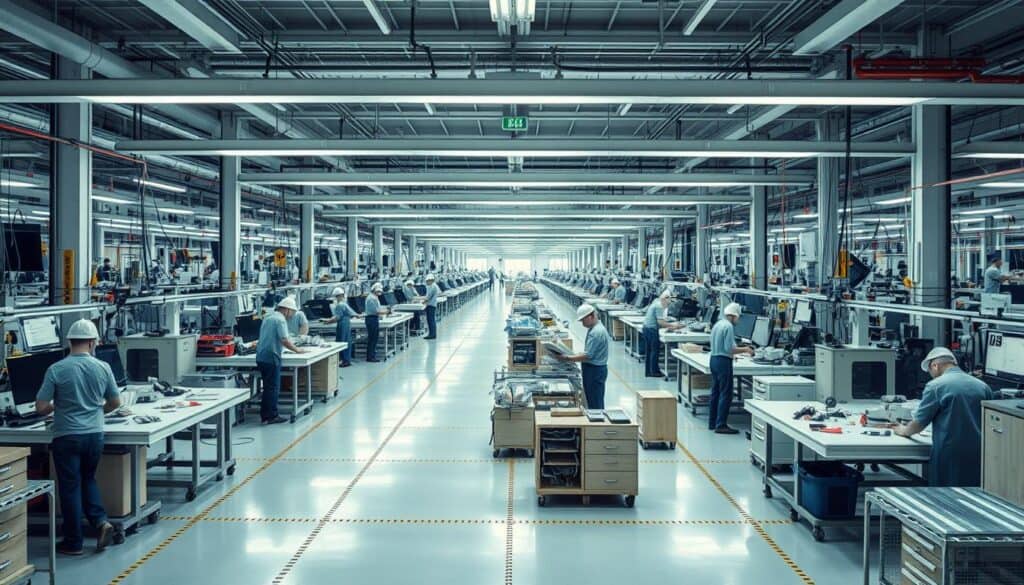
To fight motion waste, lean uses several tactics. Value stream mapping helps by showing processes and spotting wasteful steps. The 5S principles keep places tidy and efficient.
사용 ergonomic setups also helps reduce motion waste. It makes work easier by limiting how far people have to walk and awkward positions they must avoid. This streamlines production, raising productivity and lowering costs.
Here are some common ways to reduce motion waste:
- Workplace Design: Keep tools close to reduce extra steps.
- Equipment Organization: Place machines to cut down on walking.
- Standardized Work: Make clear rules to simplify movements and boost efficiency.
We aim to make every motion in the workplace efficient. This reduces waste and increases productivity in manufacturing.
See how different lean strategies improve efficiency:
| Strategy | 애플리케이션 | Efficiency Gain |
|---|---|---|
| 5S Organization | Organizing tools and materials | Reduces searching time, enhances layout efficiency |
| Ergonomic Setup | Designing workstations ergonomically | Minimizes physical strain, enhances worker productivity |
| 가치 흐름 맵핑 | Visualizing workflow | Identifies and eliminates motion waste steps |
By focusing on eliminating motion waste, businesses become more efficient. This improves productivity and fulfills customer needs better.
Understanding Waiting Waste and How to Eliminate It
Waiting waste is a big problem in old-style manufacturing. It happens when there is idle time between production steps. This inactivity uses up a lot of money, making things more expensive. Lean manufacturing tries to cut down or get rid of this waste by planning and working together better.
Causes of Waiting Waste
There are many types of waiting waste. For example, parts or full products can be stuck waiting, or workers might wait for materials. Other times, machines are not used, or finished goods sit too long before shipping. Reasons include unexpected downtime, jams in production, long setup times, or making too much based on guesses. These issues slow down the process, highlighting the need for better waste management.
Implementing Solutions to Reduce Waiting Waste
To fix these issues, companies can change how they do things to keep production moving smoothly. They should have clear instructions and train workers in different jobs. By improving how jobs are scheduled and kept up, waiting times drop. This helps lessen waste. Smart Factory Analytics can give tips on making these improvements in both the factory and the office.
The eight wastes, with waiting waste included, are important for companies to focus on. Cutting out waiting waste helps in many areas. It’s key for bettering profit and lowering costs. So, managing lean waste is very important for strategy.
The Problem with Overproduction
Overproduction is the biggest issue among the seven wastes in lean manufacturing. Toyota, the car maker, found it to be the main kind of waste in their system. It means making more goods than customers need right now. This creates too much inventory, which uses up money in stock, raw materials, and goods not yet sold. Companies might end up with goods made for an entire year just sitting there.
Overproducing leads to big losses for businesses. For instance, companies might have to write off 5% of their stock because it’s outdated. There was this one company that almost went under. They were losing money for three years because they made too much. The money needed to fix this problem was very small compared to the extra goods they had.
Many things cause overproduction waste. If it takes a long time to set up machines, companies make lots of items at once to use the machines well. Sometimes, if they don’t trust their machines or suppliers, they make extra just to be safe.
But there are ways to stop overproduction using lean manufacturing ideas. Knowing the value stream, making goods just in time, using the Kanban system, and making setup times shorter with 스메드 can help a lot. These methods can greatly lower or even get rid of overproduction.
- Lean Manufacturing Solutions:
- Understanding Value Stream
- Just-in-Time Manufacturing
- Kanban System Implementation
- SMED Technique for Setup Time Reduction
Overproducing doesn’t just mean having too much stock. It brings more problems, like needing more space, materials, energy, and work. This goes against the idea of making what’s needed when it’s needed.
| Consequences of Overproduction | 세부 |
|---|---|
| Capital Tied Up | Stock, Raw Materials, Work in Progress, Finished Goods |
| Product Obsolescence | 5% or More Stock Written Off Annually |
| Excess Inventory | Over One Year’s Production in Stock |
| Operational Inefficiencies | Long Machine Setup Times |
| Loss of Business | Company Closure after Three Years of Losses |
It’s vital to reduce waste from overproduction. When companies match their production closely with what customers want and predict demand better, they can avoid the unnecessary costs and inefficiencies of overproducing.
Overprocessing: Doing More Than Necessary
Overprocessing happens when the work done exceeds what the customer needs. This often leads to using more resources or materials than necessary, which can make things less efficient and increase costs. Lean Manufacturing suggests making processes simpler, more standard, and error-free to stop this waste. This approach makes operations smoother and reduces expenses.
Identifying Overprocessing in Your Operations
To fight overprocessing, it’s key to look closely at how things are made and what customers really want. Overprocessing can show up as painting parts no one sees, making things shinier than needed, or using tighter tolerances than necessary. Doing a waste walk, or gemba walk, can spotlight where too much processing happens. This allows for a closer look at each step.
Steps to Minimize Overprocessing Waste
There are key steps to cut down on overprocessing waste:
- Implementing Standard Operating Procedures (SOP): set clear rules and expectations to keep things consistent and avoid doing more than needed.
- Reviewing Designs with Value Engineering: look for ways to take out parts or steps that don’t add value for the customer.
- Analyzing Process Routes: check the steps taken to make a product to find expensive or complex processes that could be made simpler or replaced.
These actions follow Lean Manufacturing ideas to help eliminate waste in lean practices and create a culture where improvement is continuous.
Defects: The Obvious Waste
Defects stand out as a big issue in the lean manufacturing world. They cost a lot and show us where we’re inefficient. Now, with Industry 4.0 and the Industrial Internet of Things (산업용 사물인터넷(IIoT)), we can tackle these problems better. Achieving an Overall Equipment Effectiveness (OEE) of 80 is the goal, yet many are at 60 or more.
To cut down on defects, integrating quality control is key. Using data analytics helps find and fix key defects. This is crucial for constant improvement. The Pareto principle shows us that most defects come from a few process issues. By focusing on these main problems, we can make the product better and operations more efficient.
The True Cost of Defects
Defects cost more than just materials and time. They also lead to unhappy customers and harm the brand. In some industries, like poultry, products are sorted by quality from premium to C-grade. Even though defective items can be sold through scratch and dent retailers, their earnings are lower. Generally, you multiply the scrap cost by ten to see the real loss.
Quality Control Measures to Reduce Defects
Using quality control measures is crucial for reducing waste in lean manufacturing. Defects often come from poor standards, weak documentation, or not enough quality checking. Tools like autonomation and Pokayoke are crucial in stopping defects. Removing defects improves quality, makes operations smoother, cuts costs, and boosts profits.

| Issue | 원인 | 영향 | Solution |
|---|---|---|---|
| Lack of Process Standards | Non-standard operations | High defect rate | Implement standardized procedures |
| Poor Documentation | Undefined processes | Inconsistent output quality | Establish clear documentation practices |
| Inadequate Quality Controls | Insufficient monitoring | Missed defects | Enhance quality control measures |
By tackling these common issues and improving quality control, manufacturers can significantly cut down on waste. They achieve better efficiency this way.
Case Studies of Lean Manufacturing Waste Reduction
Across different sectors, 린 원칙 have shown great success in cutting waste. This has led to significant cost savings and better efficiency. This section highlights examples through lean waste analysis. It shows how industries have effectively minimized waste.
A mid-sized appliance manufacturer in North America faced higher raw material costs and lower market share. They used Value Stream Mapping (VSM) to find unnecessary activities. By managing inventory better and enhancing production, they cut waste and increased market share by 5%.
A U.S. healthcare equipment provider saw rising production costs and shrinking profit margins. They found too much transportation was a big problem through lean waste analysis. A new centralized distribution system reduced transportation waste, which cut production costs by 7% and improved profits.
An electricity distribution company dealt with increasing operational costs. Lean waste analysis helped them see the need for more efficient administrative processes and scheduling. Making these changes cut operational costs significantly, enhancing their financial stability.
An aerospace equipment manufacturer faced a 20% rise in inefficiencies. Using lean methodologies, they updated their manufacturing and added quality controls. This reduced defects and boosted productivity, balancing the initial rise in inefficiencies.
A transportation company providing scenic tours faced high fuel and maintenance costs. They used lean principles to focus on reducing movement waste and keeping equipment well-maintained. This greatly lowered their operational costs and improved their financial situation.
A garden equipment company in North America was inefficient and losing market share. Lean analysis showed overproduction was a big issue. Adopting a demand-based pull system reduced this waste, enhancing market response and efficiency.
A leather goods manufacturer experienced higher raw material and labor costs. Lean principles helped by reducing unnecessary inventory and making labor processes more efficient. This effectively managed the cost pressures and protected their profits.
A textile mill specializing in specialty fabrics struggled with inefficiency and competition, reducing profits by 20%. Implementing in-line quality control and 전체 생산 유지보수 (TPM) reduced defects and machine downtime. This improved productivity and restored profitability.
These case studies waste reduction show how lean manufacturing tackles waste in various industries. It promotes sustainable growth and better efficiency.
Creating a Waste Reduction Team
A dedicated team is crucial for waste reduction in any lean management effort. This team streamlines work, focusing on finding and eliminating waste. It leverages collective knowledge to improve operations significantly.

Best Practices for Building an Effective Team
To build an effective waste reduction team, follow these best practices:
- Cross-Functional Collaboration: gather team members from different departments for a range of views and skills.
- Clear Role Definitions: make sure everyone knows their role and what they need to do in reducing waste.
- Continuous Training: update the team on new techniques and strategies with regular training sessions.
- 프로세스 매핑: use process mapping as a visual tool to spot and understand waste areas.
- Involvement of Process Owners: involving those in charge of processes helps make fast decisions and apply improvements.
Roles and Responsibilities within the Team
It’s vital to define everyone’s role in the waste reduction team:
- Team Leader: the leader guides the team, sets goals, and aligns them with the company’s objectives.
- Process Analysts: they map processes and look for areas that are not efficient.
- Improvement Specialists: these members focus on creating strategies to cut down waste found by analysts.
- Data Analysts: they watch the team’s progress, analyze data, and report on strategy success.
- Trainers: responsible for team training, ensuring skills are up-to-date with the latest in lean management.
Following these practices and defining roles well, a lean management team can greatly improve productivity and efficiency. This allows for better waste reduction strategies within the company.
Unused Employee Potential: A Critical Eighth Waste
In the more recent years, a 8th waste was frequently added to the traditional 7 lean wastes.
Unused employee potential is a big waste in lean waste management. Organizations miss out on growth and innovation by not using their employees’ skills fully.
How Employee Potential is Often Wasted
Many factors lead to wasting employee potential. Research by Hosseini et al. shows that fear makes some companies limit employee growth. They worry skilled employees will leave for better jobs or ask for more money. Companies not rewarding talent see fewer good ideas succeed. Preventing employee growth can cause more staff to leave. This also means companies have to pay more for some positions.
Tapping into Employee Potential for Maximum Efficiency
Using talent well can make employees happier and more likely to stay. For example, IBEW electricians from Local Union 20 are proud of their work. Leaders should respect employees’ skills, give them what they need, and clear instructions. This can help save a lot of time.
- Encourage skills development through continuous training programs.
- Introduce task variation to keep work interesting and use different skills.
- Involve staff in decision-making processes for better insights and ownership.
- Recognize and use individual strengths and talents.
| 요인 | Impact of Not Addressing | Improvement Strategy |
|---|---|---|
| Limited Employee Development | Higher turnover rates and need for higher compensation | Offer regular training and advancement opportunities |
| Resistance to Talent Rewarding | Less effective ideas turned into productive outcomes | Implement a culture of recognizing and rewarding talents |
| Under-utilization of Skills | Lower morale and engagement | Utilize clear and simple directions, respect employee expertise |
Empowering employees helps make the most of their training. It ensures that the organization benefits from their unique skills and views. By focusing on this, companies can improve their lean waste management. They can also make their employees much more efficient.
결론
Our guide on lean waste reduction has taught us a lot. We’ve seen how cutting out inefficiency is key in many operations. Knowing the seven main wastes—like unneeded transport and excess inventory—helps lean followers fix these issues. This makes work more productive and valuable.
We also talked about new lean ideas, including the value of everyone’s skills. Finding and stopping wasteful actions is essential, no matter the field. Whether in making things or managing projects, tools like 겐바 walks and 5 whys are great. They uncover hidden waste, letting companies make their work smoother.
In the end, sticking to lean manufacturing ideas is crucial for any company that wants to grow and beat their competition. By focusing on getting better all the time and using all employees’ talents, firms can do more than just cut waste. They create a culture of ongoing innovation and top-notch operations.
자주 묻는 질문
린 생산 방식의 7가지 낭비 요소는 무엇인가요?
린 생산 방식의 7가지 낭비는 오노 타이이치의 도요타 생산 시스템에서 유래했습니다. 이 7가지 낭비는 운송, 재고, 동작, 대기, 과잉 생산, 과잉 처리, 불량으로, 줄여서 TIMWOOD라고 합니다. 여기에 여덟 번째 낭비가 있는데, 이는 직원의 잠재력을 충분히 활용하지 못하는 것입니다.
조직은 린(Lean) 낭비를 어떻게 효과적으로 관리할 수 있을까요?
린 생산 방식에서 발생하는 낭비를 관리하는 것은 적시 생산(JIT), 지속적인 개선 노력, 그리고 직원 교육을 통해 가능합니다. 또한, 낭비를 심층적으로 분석하고 낭비 감소를 위한 전담팀을 구성하면 효율성을 크게 향상시킬 수 있습니다.
린 제조에서 운송 낭비란 무엇을 의미하는가?
운송 낭비란 제품이나 자재가 특정 장소 내에서 지나치게 많이 이동하는 것을 말합니다. 이는 제품의 품질 향상에 아무런 도움이 되지 않습니다. 긴 운송 경로, 잦은 환적, 부적절한 배치 등이 이러한 낭비를 초래할 수 있습니다.
린 생산 방식에서 과잉 재고가 낭비로 여겨지는 이유는 무엇일까요?
과도한 재고는 비용을 낭비하고 공간을 차지하며, 결국 제품이 사용되지 않는 결과를 초래할 수 있습니다. 기업은 자원을 더욱 현명하게 사용하는 것이 좋습니다. 적시생산(JIT)과 같은 전략은 재고 낭비를 줄이는 데 도움이 됩니다.
린 생산 환경에서 동작 낭비를 유발하는 요인은 무엇일까요?
동작 낭비는 작업 공간이 제대로 구성되지 않아 사람들이 필요 이상으로 움직이게 될 때 발생합니다. 작업 공간을 더욱 효율적으로 만들고 더 나은 디자인으로 설계하면 이러한 낭비를 줄일 수 있습니다.
린 제조 방식에서 대기 시간 낭비를 어떻게 없앨 수 있을까요?
대기 시간으로 인한 낭비는 작업 흐름을 원활하게 하고, 일정을 더 잘 관리하고, 장비를 양호한 상태로 유지하고, 생산 라인의 균형을 맞추는 등의 조치를 통해 줄일 수 있습니다. 이를 통해 작업 중단을 초래하는 지연이나 문제를 방지할 수 있습니다.
과잉생산이란 무엇이며, 린 생산 방식에서 왜 해로운가?
과잉생산이란 고객이 원하는 것보다 더 많은 제품을 만드는 것을 의미합니다. 이는 재고 과잉과 보관 비용 증가로 이어집니다. 고객의 실제 필요에 맞춰 생산하고 예측 정확도를 높이면 이러한 과잉생산을 방지할 수 있습니다.
린 제조에서 과잉 처리를 어떻게 식별하고 줄일 수 있을까요?
과잉처리란 고객이 요구한 것보다 제품에 더 많은 작업이 수행되는 것을 말합니다. 생산 단계와 고객의 요구 사항을 자세히 살펴보면 과잉처리 여부를 파악할 수 있습니다. 프로세스를 단순화하고 고객의 요구에 집중하면 과잉처리를 줄일 수 있습니다.
린 생산 방식에서 결함으로 인해 발생하는 실제 비용은 무엇일까요?
결함은 자재와 시간 낭비를 의미할 뿐만 아니라 고객 불만을 야기할 수 있으며, 회사의 평판 문제가 발생할 수 있습니다. 결함 발생 가능성을 낮추려면 강력한 품질 관리 시스템을 구축하고, 공정을 면밀히 관찰하며, 직원들을 잘 교육하는 것이 중요합니다.
사례 연구는 린(Lean) 낭비 감소를 이해하는 데 어떻게 도움이 될 수 있을까요?
사례 연구는 린(Lean) 원칙이 낭비를 줄이는 데 실제로 어떻게 도움이 되었는지 보여줍니다. 다양한 산업 분야에서 이러한 원칙을 적용했을 때 얻을 수 있는 이점과 사례를 제시합니다.
효과적인 폐기물 감축팀을 구축하기 위한 최적의 방법은 무엇일까요?
서로 다른 부서의 사람들로 팀을 구성하고, 모든 구성원이 자신의 역할을 명확히 알고 있도록 하세요. 직업그리고 지속적으로 교육을 제공해야 합니다. 팀은 모든 것을 감독하고, 개선 방안을 찾고, 조직 전체가 계속 발전할 수 있도록 도와야 합니다.
조직은 어떻게 직원들의 활용되지 않은 잠재력을 활용하여 효율성을 높일 수 있을까요?
직원들을 의사 결정 과정에 참여시키고, 교육을 제공하고, 다양한 업무를 맡겨보고, 각자의 강점을 파악해 보세요. 모든 직원이 진정으로 잘할 수 있는 일을 활용하면 전체 운영이 훨씬 원활해질 것입니다.
제조 과정에서 발생하는 폐기물 감소에 관한 외부 링크
국제 표준
(링크 위에 마우스를 올려놓으면 콘텐츠에 대한 설명을 볼 수 있습니다.)
사용된 용어집
Gemba Walk: 리더가 업무 현장을 직접 방문하여 프로세스를 관찰하고, 직원들과 소통하며, 개선 기회를 파악함으로써 지속적인 개선과 문제 해결 문화를 조성하는 경영 방식입니다.
Industrial Internet of Things (IIoT): 산업 환경에서 상호 연결된 장치 및 센서 네트워크는 데이터를 수집, 교환 및 분석하여 운영 효율성을 높이고 의사 결정을 개선하며 제조, 공급망 및 기타 산업 공정의 자동화를 가능하게 합니다.
Integrated Development Environment (IDE): 코드 편집기, 디버거, 컴파일러 및 빌드 자동화 도구를 포함하여 소프트웨어 개발에 필요한 모든 기능을 하나의 인터페이스에 통합하여 생산성을 향상시키고 개발 프로세스를 간소화하는 소프트웨어 애플리케이션입니다.
Internet of Things (IoT): 센서, 소프트웨어 및 기타 기술이 내장된 상호 연결된 장치 네트워크로, 인터넷을 통해 데이터를 수집하고 교환할 수 있어 다양한 프로세스와 시스템의 자동화, 모니터링 및 제어를 용이하게 합니다.
Just In Time (JIT): 제조 공정에서 필요할 때만 자재를 공급받아 재고 비용을 절감하고, 낭비를 최소화하며 효율성을 높이는 생산 전략.
Just-In-Time (JIT): 제조 공정에서 필요한 시점에 정확하게 자재와 부품이 도착하도록 일정을 계획함으로써 재고 비용을 절감하고, 낭비를 최소화하며 효율성을 높이는 생산 전략.
Overall Equipment Effectiveness (OEE): 제조 공정의 효율성을 평가하는 데 사용되는 지표로, 가용성, 성능 및 품질 비율을 곱하여 계산됩니다. 이를 통해 손실을 파악하고 생산성 및 운영 효율성을 개선할 수 있습니다.
Single Minute Exchange of Dies (SMED): 린 제조 기법은 장비 설정 시간을 10분 미만으로 단축하여 생산 공정 간 전환을 신속하게 하고, 프로세스를 간소화하고 가동 중지 시간을 최소화하여 전반적인 효율성을 높이는 것을 목표로 합니다.
Standard Operating Procedure (SOP): a set of step-by-step instructions created to help workers carry out routine operations consistently and efficiently, ensuring compliance with regulations and quality standards.
Total Productive Maintenance (TPM): 장비 유지보수에 대한 총체적인 접근 방식으로, 모든 직원이 참여하여 생산성을 극대화하고 가동 중지 시간을 줄이며 지속적인 개선과 팀워크를 통해 전반적인 장비 효율성을 향상시키는 사전 예방 조치를 강조합니다.
Toyota Production System (TPS): 폐기물 감소, 지속적인 개선, 효율적인 생산 흐름을 강조하는 제조 방법론으로, 적시생산(Just-In-Time) 및 지도가(Jidoka)와 같은 기술을 활용하여 품질과 운영 효율성을 향상시킵니다.
Value Engineering (VE): 프로젝트의 기능을 분석하고 비용을 절감하며 품질이나 신뢰성을 희생하지 않고 성능을 향상시켜 프로젝트의 가치를 높이는 체계적인 방법입니다. 이는 비용 효율적인 대안을 파악하고 실행하기 위해 여러 분야의 전문가가 협력하는 팀워크를 포함합니다.
Value Stream Mapping (VSM): 프로세스 내 자재 및 정보 흐름을 분석하고 최적화하는 데 사용되는 시각적 도구로, 부가가치 활동과 비부가가치 활동을 식별하여 효율성을 개선하고 낭비를 줄입니다.
Work in Progress (WIP): 원자재, 인건비, 간접비 등 생산 공정에서 일정 시점까지 발생한 비용을 포함하여 생산 과정 중 부분적으로 완성된 품목을 자산으로 간주합니다. 이러한 자산은 아직 완제품이 아니며 생산 효율성 추적 및 재고 관리에 필수적입니다.
































