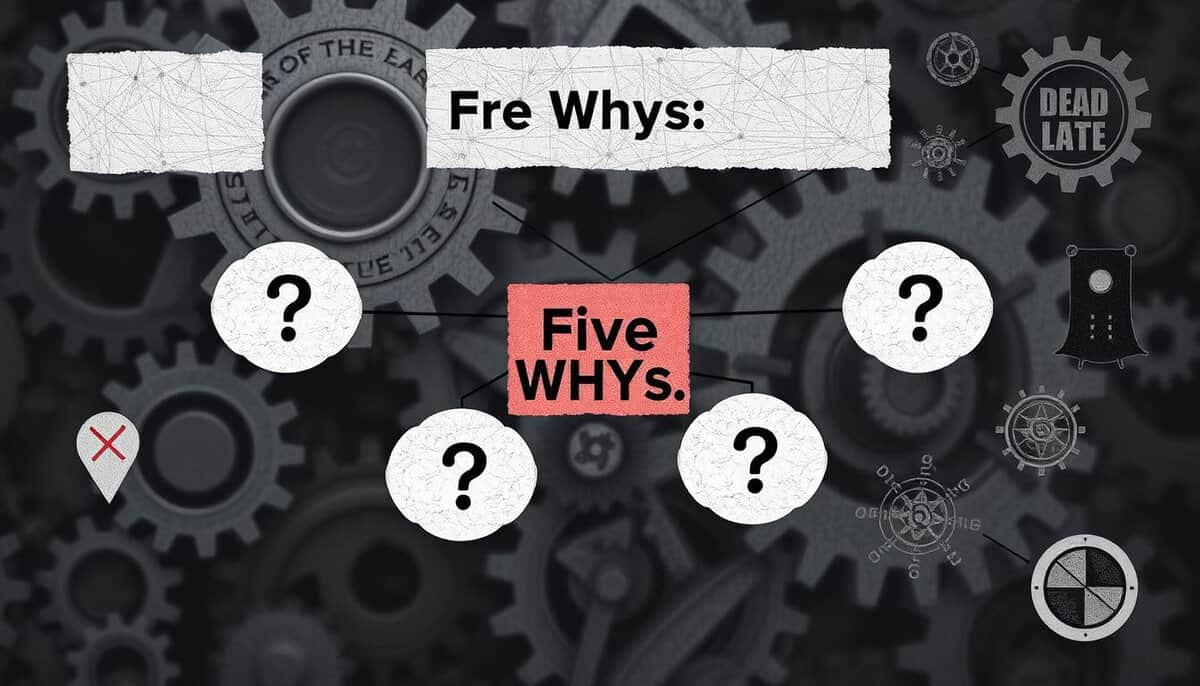
5가지 왜(Five Whys) 기법만으로 복잡한 문제의 진정한 원인을 찾아낼 수 있을까요?
5가지 왜(Five Whys) 기법은 간단한 문제를 해결하는 쉽고 인기 있는 방법입니다. 이 기법은 다음과 같은 인물에 의해 만들어졌습니다. 도요타문제의 근본 원인을 파악하려면 "왜?"라는 질문을 다섯 번 반복해야 합니다. 하지만 존 올스포와 같은 전문가들과 ARMS Reliability 같은 단체들은 복잡한 문제에는 이런 방법이 통하지 않을 것이라고 생각합니다.
5가지 왜 분석법의 가장 큰 문제점은 단 하나의 주요 원인만 찾는다는 것입니다. 이러한 접근 방식은 복잡한 문제의 핵심을 파악하지 못할 수 있습니다. 특히 끊임없이 개선을 추구하는 상황에서는 더욱 그렇습니다.
또 다른 문제는 누가 조사하느냐에 따라 결과가 달라진다는 점입니다. 올바른 질문을 해야 하는데, 그게 쉽지 않죠. 따라서 결과가 크게 달라질 수 있고, 신뢰할 만한 답변이 필요한 상황에서는 위험할 수 있습니다.
핵심 요약
- 5가지 왜 분석법은 간단한 문제에는 효과적이지만 복잡한 문제에는 어려움을 겪습니다.
- 표면적인 문제에만 집중하다 보면 근본적인 원인을 놓치는 경우가 많습니다.
- 그 효과가 얼마나 좋은지는 조사관의 능력과 질문에 달려 있습니다.
- 사람마다 결과가 다를 수 있으므로 신뢰성에 영향을 미칠 수 있습니다.
- 이러한 단순한 접근 방식은 더 복잡한 문제에는 적합하지 않을 수 있습니다.
5가지 왜 기법 소개
5가지 왜(Five Whys) 기법은 도요타 산업의 창립자인 도요다 사키치에게서 유래했습니다. 1900년대 초에 설립된 도요타는 모터 기업은 이를 적극적으로 수용했습니다. 이는 숨겨진 문제점을 찾아내는 데 있어 단순하면서도 효과적인 것으로 알려져 있습니다.
그래서, 5가지 왜(Five Whys) 근본 원인 분석 기법이란 무엇인가요?이는 문제의 핵심에 도달하기 위해 '왜?'라는 질문을 다섯 번 던지는 것을 의미합니다. '왜?'라는 질문의 실제 횟수는 문제의 규모에 따라 달라질 수 있습니다. 이 접근 방식은 여러 원인이 어떻게 서로 연결되는지 파악하는 데 도움이 됩니다.
5가지 왜 분석법의 핵심 이점은 문제의 근본 원인을 찾아내는 데 있습니다. 이를 통해 팀은 문제의 징후가 아닌 실제 문제를 해결할 수 있습니다. 방법은 다음과 같습니다.
- 문제점을 파악하세요.
- '왜?'라고 묻고 답을 제시하세요.
- 이전 답변을 참고하여 '왜?'라고 다시 질문하세요.
- "왜?"라고 다섯 번 물어볼 때까지 반복하세요.
For example, a business might discover that weird water pressure levels come from ignored control valves. Asking why they were overlooked can reveal bigger issues. This way, teams can solve deep-rooted problems.
또한, 5가지 왜 분석 기법은 이시카와 다이어그램과 같은 도구와 결합하여 더욱 철저한 분석을 수행할 수 있습니다. 이러한 조합은 원인과 결과를 명확하게 파악하여 분석의 질을 향상시키는 데 도움이 됩니다.
단순함과 사용 편의성
The Five Whys technique is known for being simple and easy to use. It comes from Toyota and is a big part of 린 제조. All you have to do is ask “Why?” five times or more to find the main issue. This method lets teams tackle problems quickly without complex tools.
이 방법의 가장 큰 장점은 문제의 근본 원인을 신속하게 파악하는 데 있습니다. 하지만 조사를 주도하는 사람은 숙련된 전문가여야 합니다. 문제를 더 깊이 파고들어 해결하는 능력을 향상시키기 위해서는 훈련이 필수적입니다.

이 기법은 다양한 산업 분야에서 효과적이며, 여러 가지 문제에 유연하게 대처할 수 있습니다. 현장 관찰을 추가하면 문제를 더 잘 이해할 수 있습니다. EasyRCA와 같은 도구는 기술과 전통적인 방법을 결합하여 프로세스를 더욱 정밀하게 만들어 줍니다.
The simplicity of the Five Whys is a big plus in finding solutions. Yet, the outcome can vary based on who is using it. This shows the need for proper training and experience. Adding risk assessment makes the method even more effective, as it helps deal with potential risks fully.
Potential for Missing the Root Cause
The Five Whys root cause analysis technique is a key part of Six Sigma’s DMAIC methodology. It’s great at identifying the main factors behind issues. But, it sometimes doesn’t do well with complex vs simple problems.
The 5 Whys technique asks “Why?” over and over to find the root cause. It works well for issues with human factors without needing complex stats. But its simple approach might miss deeper causes in complex problems. These problems can have many layers that the Five Whys doesn’t catch.
The Five Whys needs few resources, so it’s easy and cheap to use. You usually ask “Why?” three to five times to find the cause. But complex issues might need more questions. For complicated problems, using a broader tool like the fishbone diagram helps find hidden causes.
Albert Einstein once said, “If I had an hour to solve a problem, I’d spend 55 minutes defining it and 5 minutes solving it.”
Einstein’s advice shows why understanding problems fully is crucial. Just asking “Why?” may not be enough for complicated issues. We might have to use other tools with the Five Whys. This helps us get a complete picture and solve the problem well. Knowing the Five Whys’ limits helps us pick the best tool for the 직업.
Oversimplification Risks
The Five Whys technique is simple and easy to use but it can have downsides. Its design to dig deep into problems can sometimes oversimplify complex issues. Using the Five Whys alone might lead to shallow solutions that don’t fix the real problem.
One major issue is that it can focus on quick fixes instead of thorough analysis. This is risky in situations where deep review is vital. For example, blaming an equipment failure solely on maintenance mistakes might miss bigger issues, leading to more failures later.
To avoid oversimplification, critical thinking is key. It’s important to look beyond the Five Whys and use other methods for a full picture. Adding techniques like Failure Mode and Effects Analysis (FMEA) or Root Cause Failure Analysis (RCFA) helps support and strengthen your findings.
Bringing together a diverse team can help counteract oversimplification. This approach ensures different viewpoints are considered in tackling the problem. Using a mix of analytical tools with the Five Whys can make root cause analysis more effective and sustainable, addressing deep-rooted issues effectively over time.
관련 참고 문헌 및 방법론
- Root Cause Analysis (RCA): a systematic process for identifying the root causes of problems or events and an approach for responding to them.
- Fishbone Diagram (Ishikawa Diagram): a visual tool used to systematically identify and present possible causes of a problem, categorized into various factors.
- Failure Mode and Effects Analysis (FMEA): a proactive method for evaluating a process to identify where and how it might fail and assessing the relative impact of different failures.
- Pareto Analysis: a statistical technique that applies the Pareto Principle (80/20 rule) to identify the most significant factors in a dataset.
- 결함수목분석(FTA): a top-down, deductive failure analysis that maps the pathways within a system that can lead to a potential failure.
- 8D (여덟 가지 규율 문제 해결): a problem-solving methodology primarily used in the automotive industry, focusing on product and process improvement.
- PDCA Cycle (Plan-Do-Check-Act): an iterative four-step management method used for the control and continuous improvement of processes and products.
자주 묻는 질문
5가지 왜(Five Whys) 근본 원인 분석 기법이란 무엇인가요?
5가지 왜(Five Whys) 기법은 간단하지만 특히 도요타와 같은 린 생산 방식에서 널리 사용됩니다. 이 기법은 '왜'라는 질문을 여러 번 반복하여 문제의 근본 원인을 신속하게 찾아냅니다.
5가지 왜(Five Whys) 방법의 장점은 무엇인가요?
5가지 왜(Five Whys) 방법은 사용하기 쉽고 문제의 원인을 빠르게 찾아냅니다. 지속적인 개선에 매우 효과적이며, 적용하는 데 특별한 기술이 필요하지 않습니다.
5가지 왜 기법의 한계는 무엇인가요?
이 기법은 복잡한 시스템에서는 제대로 작동하지 않을 수 있습니다. 근본적인 문제를 해결하지 못하는 단순한 해답으로 이어질 수 있기 때문입니다. 따라서 보다 정교한 도구가 필요할 수 있습니다.
5가지 왜(Five Whys) 기법은 어떻게 지나친 단순화로 이어질 수 있을까요?
5가지 질문 기법만 사용하는 것은 문제를 지나치게 단순화할 수 있습니다. 이로 인해 근본적인 문제를 해결하지 못하는 임시방편적인 해결책만 내놓게 되어 문제가 반복될 수 있습니다.
5가지 질문 기법과 함께 보다 폭넓은 분석 기법을 사용하는 것이 왜 중요할까요?
복잡한 상황에서는 5가지 왜 분석법을 다른 방법론과 결합하는 것이 중요합니다. 이를 통해 문제를 완벽하게 해결할 수 있으며, 복잡한 문제를 더욱 효과적으로 처리할 수 있습니다.
5가지 질문(Five Whys) 기법은 간단한 문제 해결과 복잡한 문제 해결 모두에 유용할 수 있을까요?
5가지 왜 분석법은 간단한 문제와 빠른 해결책에는 효과적입니다. 하지만 복잡한 문제에는 충분하지 않습니다. 이러한 상황에서는 근본 원인을 찾기 위해 더 심층적인 분석이 필요합니다.
근본 원인 분석 관련 외부 링크
(링크 위에 마우스를 올려놓으면 콘텐츠에 대한 설명을 볼 수 있습니다.)
사용된 용어집
Define Measure Analyze Improve Control (DMAIC): 식스 시그마에서 프로세스 개선을 위해 사용되는 데이터 기반 품질 전략으로, 문제 식별, 현재 성과 측정, 원인 파악을 위한 데이터 분석, 분석 결과를 바탕으로 프로세스 개선, 그리고 개선 사항 유지를 위한 향후 성과 관리의 다섯 단계로 구성됩니다.
Eight Disciplines Problem Solving (8D): 반복되는 문제를 식별, 수정 및 제거하기 위해 사용되는 구조화된 문제 해결 방법론으로, 팀 구성, 문제 설명, 문제 확산 방지 조치, 근본 원인 분석, 시정 조치, 실행, 예방 및 팀 노력 인정의 8단계로 구성됩니다.
Failure Mode and Effects Analysis (FMEA): a systematic method for evaluating potential failure modes within a system, process, or product, assessing their effects on performance, and prioritizing risks to improve reliability and safety through corrective actions.
Fault Tree Analysis (FTA): 시스템 오류의 원인을 식별하고 분석하는 체계적이고 시각적인 방법으로, 트리 구조로 표현됩니다. 부울 논리를 사용하여 이벤트를 연결하고 바람직하지 않은 결과 발생 확률을 평가함으로써 위험 관리 및 안전성 평가에 도움을 줍니다.
Plan Do Check Act (PDCA): 목표 계획, 계획 실행, 기대치 대비 결과 평가, 성과 및 프로세스 개선을 위한 시정 조치라는 네 가지 반복 단계로 구성된 지속적인 개선 모델.
Root Cause Analysis (RCA): 문제나 실패로 이어지는 근본적인 요인을 체계적으로 파악하는 과정으로, 단순히 증상만 치료하는 것이 아니라 근본적인 문제를 해결하고 제거하는 것을 목표로 합니다.
Root Mean Square (RMS): 일련의 값들의 제곱 평균의 제곱근을 계산하는 데 사용되는 통계적 측정값으로, 신호 처리 및 전기 공학에서 다양한 양의 실효값을 결정하는 데 자주 사용됩니다.