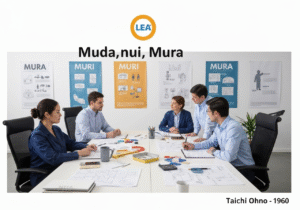
Reduces stress on employees and equipment; Improves predictability and stability of operations; Helps to expose and eliminate other wastes (ムダ and Muri); Enables better flow.
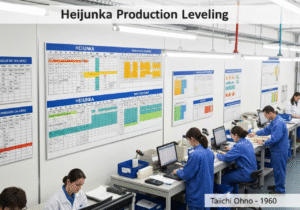
Mura, as a Lean methodology, finds extensive application in various sectors ranging from manufacturing to healthcare and logistics, where workload inconsistencies can lead to inefficiencies. In automotive production, for instance, implementing Heijunka can balance the assembly line output, ensuring that a steady pace is maintained, which in turn minimizes equipment strain and worker fatigue. Within the context of software development, Agile methodologies promote iteration and incremental delivery to evenly distribute tasks among teams, thereby preventing bottlenecks and ensuring a smoother workflow. This approach is similarly beneficial in supply chain management, where Just-In-Time principles can be adopted to synchronize supply and demand, allowing organizations to respond promptly to market changes while avoiding excess inventory. Project managers, team leaders, and operations supervisors are typically the initiators of Mura reduction efforts, engaging multi-disciplinary teams to analyze workflow patterns and implement leveling strategies. Participation often extends to all employees as their insights into daily operations can surface hidden variations that contribute to uneven workloads. By using tools like バリューストリームマッピング, organizations can visualize the flow of materials and information, making it easier to pinpoint fluctuations and devise strategies to address them. Combined with continuous feedback loops and performance metrics, addressing Mura not only enhances operational efficiency but also cultivates a work environment conducive to employee well-being and satisfaction.