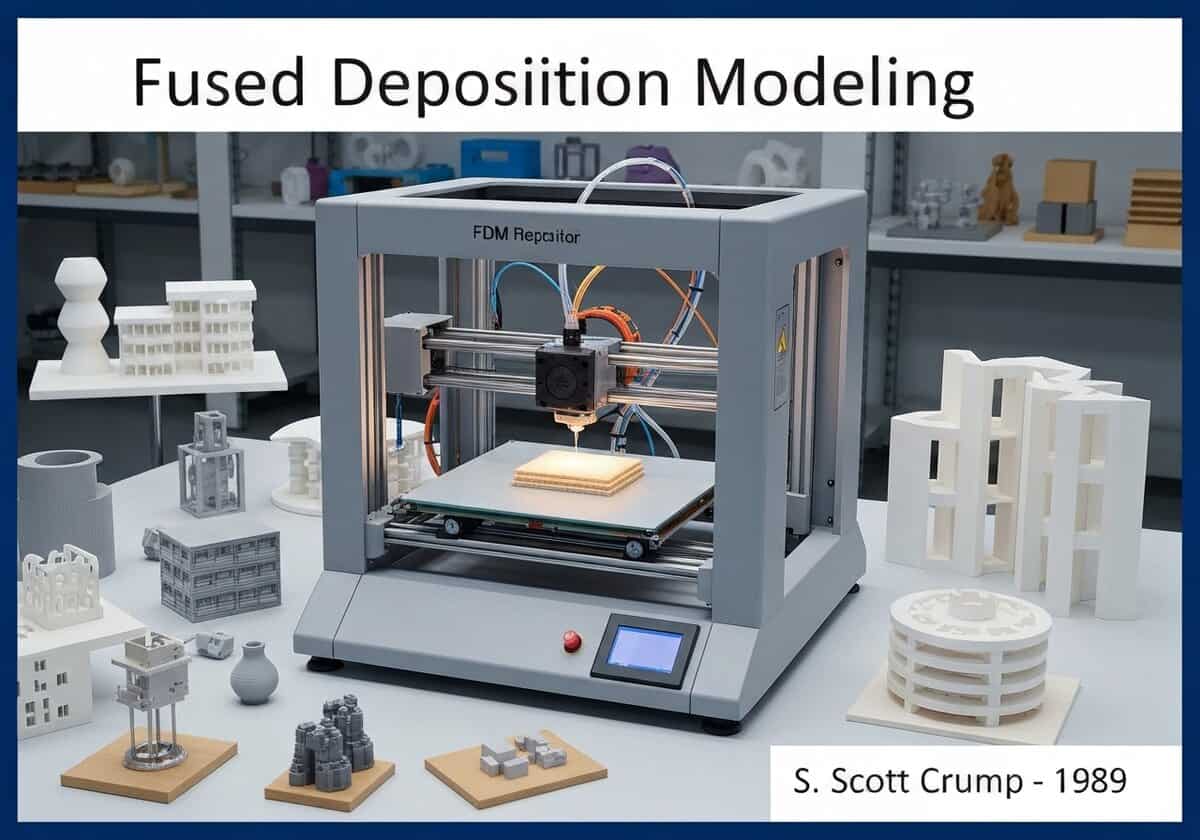
溶融堆積モデリング(FDM)、または溶融フィラメント製造(FFF)とも呼ばれるこの技術は、材料押出成形の一種で、溶融した材料をあらかじめ決められた経路に沿って層ごとに選択的に堆積させることで造形物を作成します。熱可塑性フィラメントはコイルから巻き出され、加熱された押出ノズルを通して供給されます。ノズルはフィラメントを溶融させ、造形プラットフォーム上に堆積させます。そこでフィラメントは冷却・固化し、下の層と融合します。


(画像はイメージです)
溶融堆積モデリング(FDM)、または溶融フィラメント製造(FFF)とも呼ばれるこの技術は、材料押出成形の一種で、溶融した材料をあらかじめ決められた経路に沿って層ごとに選択的に堆積させることで造形物を作成します。熱可塑性フィラメントはコイルから巻き出され、加熱された押出ノズルを通して供給されます。ノズルはフィラメントを溶融させ、造形プラットフォーム上に堆積させます。そこでフィラメントは冷却・固化し、下の層と融合します。
FDMプリンターでは、押出ヘッドや造形プラットフォームの動きは、スライスされた3Dモデルを解釈するコンピューターによって制御されます(Gコード). The head moves in the X and Y axes, while the platform typically moves in the Z axis after each layer is complete. The process relies on precise thermal management: the ‘hot end’ of the extruder must keep the plastic at a temperature that allows it to flow but not degrade, while the deposited material must cool quickly enough to hold its shape. Layer adhesion is critical for part strength and is highly dependent on temperature, speed, and material properties. FDM parts are not fully dense; their internal structure is often a pre-defined infill pattern (e.g., grid, honeycomb) to save material and print time while providing structural support. Common materials include polylactic acid (PLA), acrylonitrile butadiene styrene (ABS), ポリエチレン terephthalate glycol (PETG), and various engineering-grade polymers. The expiration of the original FDM patent in 2009 was a 触媒 オープンソースのRepRapプロジェクトと、それに続く手頃な価格の一般消費者向け3Dプリンターの爆発的な普及により、この技術は広く利用可能となった。
溶融堆積モデリング(FDM)
(日付が不明または関連性がない場合、例えば「流体力学」などでは、その注目すべき出現時期の概算値が提示されます。)

フルサイズの画像とダウンロードは、登録会員のみが100%無料で利用できます。
> ログイン <