Product Design, Manufacturing & Innovation Resources
家 » 人間工学の3つの領域

人間工学の3つの領域

1990
  • International Ergonomics Association (IEA)
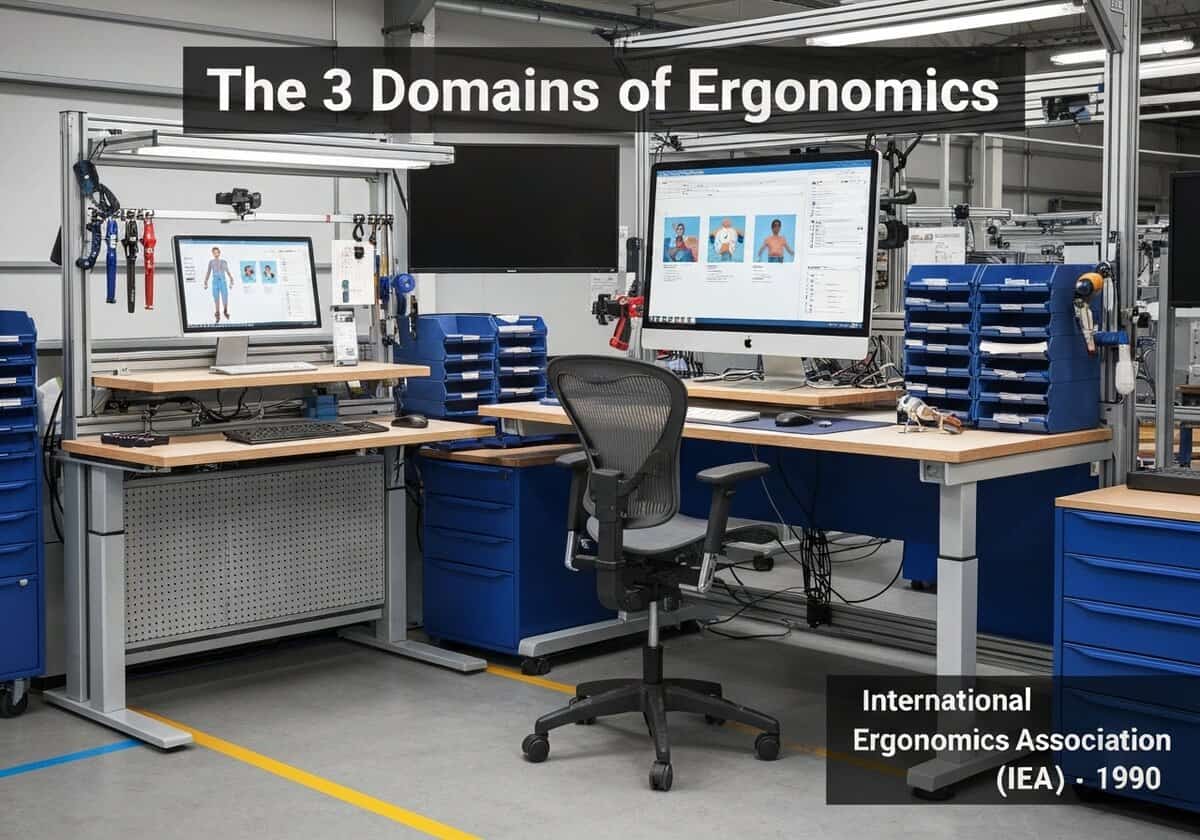
製造業における身体的および認知的エルゴノミクスを重視した、人間工学に基づいたワークステーション設計。

(画像はイメージです)

国際 人間工学 Association divides the discipline into three primary domains of specialization: physical ergonomics focuses on human anatomical, 人体計測, physiological, and biomechanical characteristics as they relate to physical activity, cognitive ergonomics concerns mental processes like perception, memory, and reasoning, and finally organizational ergonomics deals with the optimization of sociotechnical systems, including organizational structures, policies, and processes.


These three domains provide a framework for addressing the multifaceted nature of human-system interaction. Physical ergonomics is perhaps the most traditionally recognized domain, addressing topics like workplace layout, material handling, repetitive movements, work-related musculoskeletal disorders (MSDs), and workplace safety. It relies heavily on anthropometry (the study of human body measurements) and biomechanics to ensure that physical tasks are within the capabilities of the workforce.

認知人間工学は、人間工学とほぼ同義で用いられることが多く、仕事の精神的側面に焦点を当てています。精神的作業負荷、意思決定、熟練したパフォーマンス、人間の信頼性、仕事のストレス、トレーニングなど、人間とシステムの相互作用に関連する事柄を扱います。重要な応用分野の一つは、人間とコンピュータの相互作用(HIソフトウェアやシステムが直感的で、ユーザーの認知能力を過負荷にしないことを保証する。

組織人間工学(マクロ人間工学とも呼ばれる)は、より広範なシステムレベルの視点からアプローチします。人員、業務、技術、環境などを考慮し、作業システム全体を最適化することを目的としています。対象となるトピックには、コミュニケーション、クルー・リソース・マネジメント、作業設計、チームワーク、参加型設計、品質管理などがあります。この分野では、個人のパフォーマンスは、業務が行われる組織的環境によって大きく左右されることを認識しています。

UNESCO Nomenclature: 3307
産業工学

タイプ

抽象システム

混乱

増分

使用法

広く普及している

前駆物質

  • development of industrial 心理学 in the early 20th century
  • 20世紀半ばにおけるシステム理論の発展
  • 航空および軍事システムにおけるヒューマンエラーに関する初期の研究

アプリケーション

  • 製造ワークステーションの設計(物理的)
  • ユーザーインターフェース ソフトウェア(認知)のUI(ユーザーインターフェース)およびUX(ユーザーエクスペリエンス)デザイン
  • implementation of quality management systems like リーン生産方式 (organizational)
  • 高リスク産業における安全プロトコルの開発(組織的/物理的)
  • 航空機コックピットの設計(認知/物理的側面)

特許:

NA

潜在的なイノベーションのアイデア

  • integrated ergonomic platforms that analyze physical, cognitive, and organizational data simultaneously
  • ai-powered cognitive assistants that reduce mental workload in complex decision-making
  • blockchain-based systems for transparent and participatory organizational policy-making
  • ウェアラブル neuro-sensors to monitor cognitive load in real-time for pilots and surgeons
  • virtual team-building exercises designed using organizational ergonomic principles
  • ergonomic design of collaborative robots (‘cobots’) that considers physical safety and cognitive trust
  • personalized work schedules generated by algorithms optimizing for both productivity and well-being (organizational)
  • 拡張現実 overlays providing ergonomic guidance during manual assembly tasks (physical/cognitive)
  • gamified organizational structures to improve communication and workflow
  • smart office environments that adjust lighting, temperature, and layout based on team activities (organizational/physical)
関連分野:身体人間工学、認知人間工学、組織人間工学、マクロ人間工学、ヒューマンファクター、社会技術システム、人体計測学、生体力学、ヒューマンコンピュータインタラクション、IEA。

歴史的背景

人間工学の3つの領域

1990
1990
1990
1990
1990
1990
1990
1989
1990
1990
1990
1990
1990
1990
1991

(日付が不明または関連性がない場合、例えば「流体力学」などでは、その注目すべき出現時期の概算値が提示されます。)

10年目 周年

フルサイズの画像とダウンロードは、登録会員のみが100%無料で利用できます。