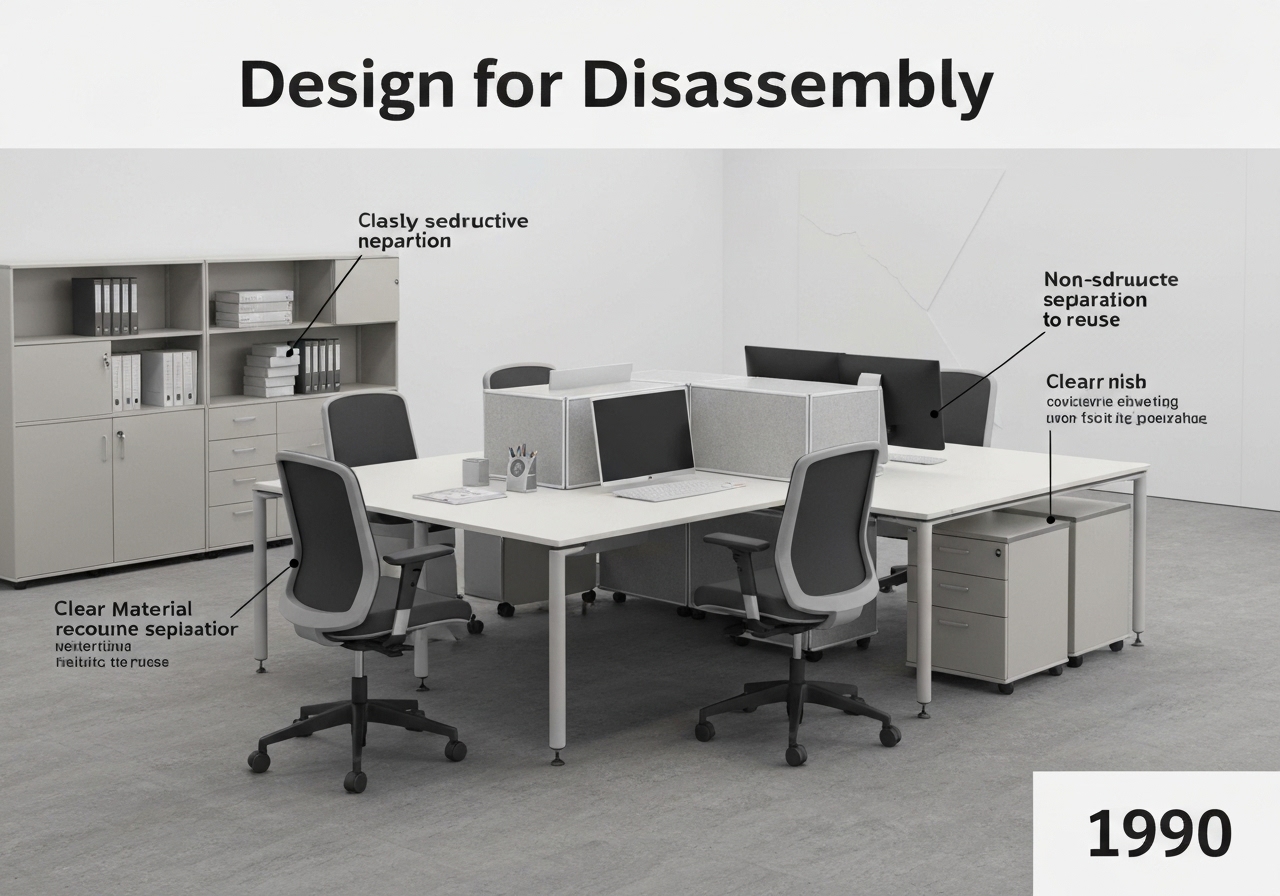
분해 용이 설계(Design for Disassembly, DfD)는 제품 수명 종료 시 구성 요소와 재료를 쉽고 비용 효율적으로 분리할 수 있도록 하는 데 중점을 둔 설계 전략입니다. 비파괴 분리를 우선시함으로써 DfD는 수리, 재사용, 재제조 및 고순도 재활용을 촉진합니다. 주요 기술로는 접착제 대신 기계식 체결 장치 사용, 모듈식 구조 설계, 명확한 재료 라벨링을 통한 가치 회수 극대화 등이 있습니다.


(설명을 위한 생성된 이미지입니다)
분해 용이 설계(Design for Disassembly, DfD)는 제품 수명 종료 시 구성 요소와 재료를 쉽고 비용 효율적으로 분리할 수 있도록 하는 데 중점을 둔 설계 전략입니다. 비파괴 분리를 우선시함으로써 DfD는 수리, 재사용, 재제조 및 고순도 재활용을 촉진합니다. 주요 기술로는 접착제 대신 기계식 체결 장치 사용, 모듈식 구조 설계, 명확한 재료 라벨링을 통한 가치 회수 극대화 등이 있습니다.
분해 용이 설계는 실용적인 응용 사례입니다. 순환 경제 DfD(설계자 주도 설계) 원칙은 제품 구조와 접합 방법을 신중하게 선택하는 기술적 구현을 수반합니다. DfD를 활용하는 설계자는 접착제나 볼트와 같은 영구적인 결합 방식 대신 나사와 같은 일반적인 유형의 패스너를 선택하여 패스너의 종류와 수량을 최소화합니다. ultrasonic welds. Products are often designed with a clear hierarchy, allowing major modules to be removed without disturbing the entire assembly. Materials are selected not only for performance but also for their compatibility in recycling streams, and are clearly marked with international recycling codes to aid in sorting. This approach stands in contrast to conventional Design for Assembly (DfA), which often prioritizes initial production speed and can lead to integrated, inseparable designs that are destined for landfill. The novelty of DfD was its explicit consideration of the 수명 종료 phase as a critical design constraint, shifting the perspective from a linear ‘take-make-dispose’ model to a circular one where components and materials retain their value through multiple life cycles.
분해 용이 설계(DfD)
(날짜를 알 수 없거나 관련이 없는 경우, 예를 들어 "유체역학"의 경우, 주목할 만한 등장 시기를 대략적으로 추정하여 제공합니다.)

고화질 이미지 및 다운로드는 등록된 회원에게만 100% 무료로 제공됩니다.
> 로그인 <