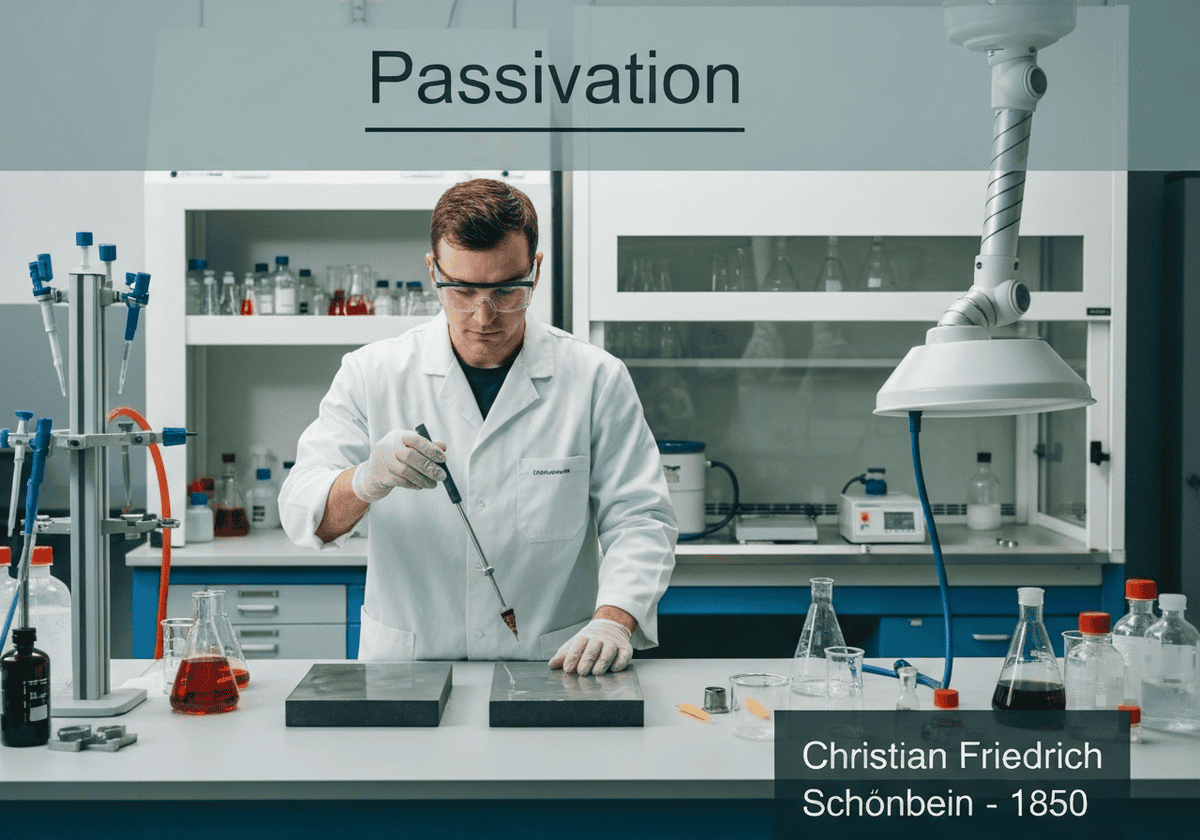
The stability of this passive film is dependent on the environment, particularly pH and the presence of certain ions like chlorides. For example, the chromium oxide ([latex]Cr_2O_3[/latex]) layer on stainless steel is highly effective in many environments but can be locally broken down by chloride ions, leading to 孔食. The breakdown and reformation of this passive layer is a dynamic process. If the film is mechanically scratched or damaged, the exposed metal will often repassivate almost instantly, a property known as self-healing.
Passivation can be a natural process or can be enhanced artificially through chemical treatments, such as dipping stainless steel in nitric or citric acid to remove free iron from the surface and encourage the formation of a more robust chromium-rich oxide layer. This process is distinct from applying a coating, as the passive layer is formed from the base metal itself.