Product Design, Manufacturing & Innovation Resources
家 » 成績係数(ヒートポンプ)

成績係数(ヒートポンプ)

1850
熱力学における機械工学のヒートポンプシステムの解析。

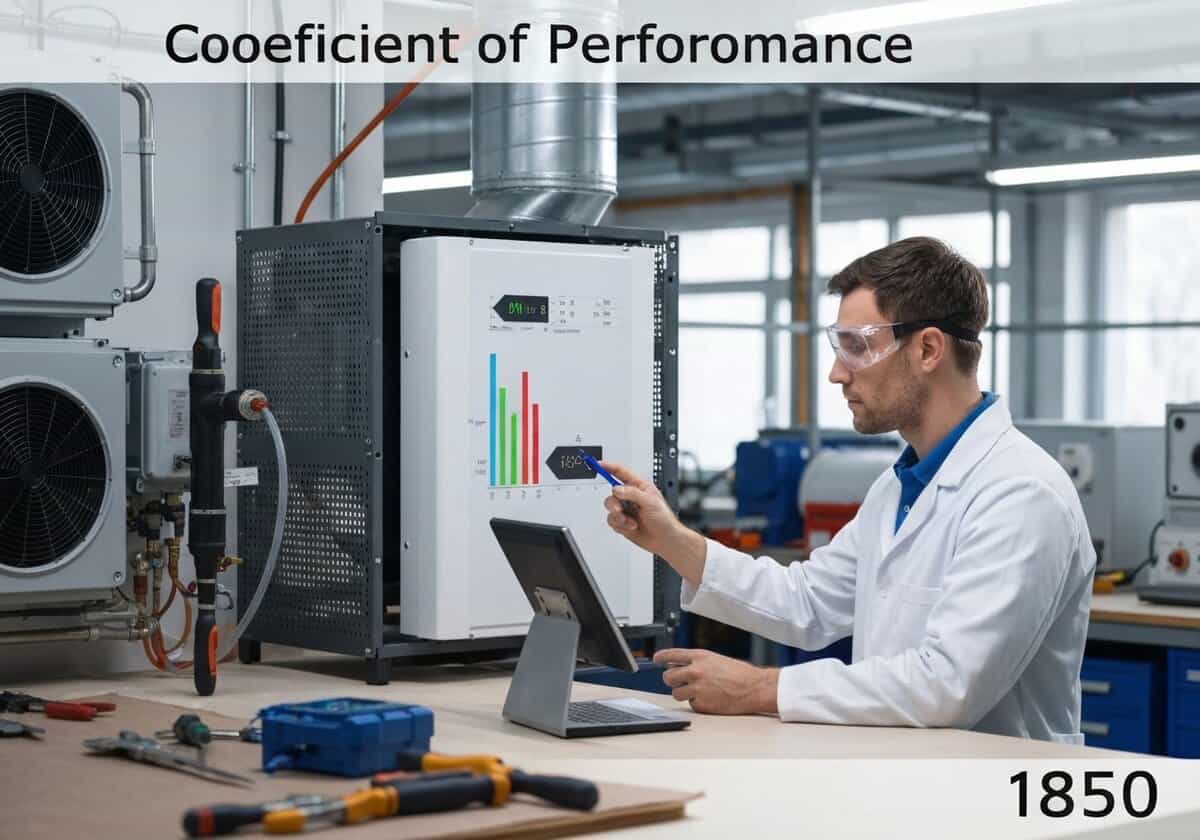
(画像はイメージです)

成績係数(COP)は、ヒートポンプの効率を測定する無次元比です。これは、必要な仕事量に対する、供給される有効な暖房または冷房量の比です。暖房の場合、[latex]COP_{heating} = frac{|Q_H|}{W}[/latex]、冷房の場合、[latex]COP_{cooling} = frac{|Q_C|}{W}[/latex]となります。ここで、Qは伝達される熱量、Wは入力される仕事量です。COP値が高いほど、効率が高いことを示します。

The Coefficient of Performance (COP) is a fundamental metric in thermodynamics that quantifies the effectiveness of a heat ポンプ, refrigerator, or air conditioning system. Unlike the ‘thermal efficiency’ of a heat engine, which is always less than one, the COP of a heat pump is typically greater than one. This is because a heat pump does not convert work into heat; it uses work to move existing heat from a colder location to a warmer one. The work input, W, is usually the electrical energy consumed by the compressor.

The two primary COP values are for heating and cooling. The heating COP, [latex]COP_{heating}[/latex], is the ratio of the heat delivered to the hot reservoir ([latex]Q_H[/latex]) to the input work (W). The cooling COP, [latex]COP_{cooling}[/latex], is the ratio of the heat removed from the cold reservoir ([latex]Q_C[/latex]) to the input work (W). By the 第一法則 熱力学の式[latex]|Q_H| = |Q_C| + W[/latex]は、同じ装置の場合、[latex]COP_{heating} = COP_{cooling} + 1[/latex]を意味します。

The COP is not a constant value; it is highly dependent on the operating conditions, specifically the temperature difference between the heat source and the heat sink. As the temperature difference increases, the heat pump must work harder to move the heat, and its COP decreases. For this reason, manufacturers often provide COP data at standardized temperature conditions to allow for fair comparisons. However, for a more realistic measure of performance over a season, metrics like the Seasonal Performance Factor (SPF) are used.


UNESCO Nomenclature: 3322
機械工学

タイプ

パフォーマンス指標

混乱

実質的な

使用法

広く普及している

前駆物質

  • サディ・カルノーによる熱機関の効率に関する研究
  • 熱力学の第一法則と第二法則の定式化
  • ジェームズ・プレスコット・ジュールによる熱の機械的等価物に関する実験
  • ルドルフ・クラウジウスのエントロピーの概念

アプリケーション

  • HVACシステムのエネルギー効率評価指標(SEER、EER、HSPF)
  • 異なるヒートポンプモデル間の性能比較
  • 設計最適化 of refrigeration cycles
  • 高効率家電製品の省エネルギー効果と投資回収期間の計算
  • 政府に情報を提供する エネルギー保全 方針と基準

特許:

NA

潜在的なイノベーションのアイデア

  • dynamic cop optimization アルゴリズム in smart thermostats that adjust operation based on real-time electricity pricing and weather forecasts
  • multi-stage compressors with variable speed drives that maintain a high average cop across a wide range of thermal loads
  • ai-powered predictive maintenance systems that monitor component performance to prevent drops in cop
  • integration of heat pumps with thermal storage systems to run the pump at its peak cop and store the energy
  • development of novel refrigerants with 熱力学 properties that maximize cop for specific temperature ranges
  • cop-based 制御システム for hybrid heating systems that switch between a heat pump and a furnace based on which is more efficient at the current outdoor temperature
  • micro-heat pumps for electronics cooling, where local cop is optimized for individual chip hotspots
  • transcritical co2 heat pumps designed to achieve high cop values for sanitary hot water production
  • self-learning heat pump systems that adapt their cycle parameters over time to maximize the cop in a specific building’s thermal environment
  • a universal ‘live cop’ display for consumers, showing real-time efficiency to encourage energy-saving behavior
関連キーワード:COP、成績係数、ヒートポンプ効率、HVAC、熱力学、エネルギー比、暖房、冷房、仕事入力、エネルギー効率。

歴史的背景

成績係数(ヒートポンプ)

1850
1850
1850
1850
1867
1875-01-01
1881
1850
1850
1850
1850
1860
1870
1876
1882-01-01

(日付が不明または関連性がない場合、例えば「流体力学」などでは、その注目すべき出現時期の概算値が提示されます。)

10年目 周年

フルサイズの画像とダウンロードは、登録会員のみが100%無料で利用できます。