Product Design, Manufacturing & Innovation Resources
घर » क्रैडल-टू-क्रैडल (C2C)

क्रैडल-टू-क्रैडल (C2C)

2002
  • William McDonough
  • Michael Braungart
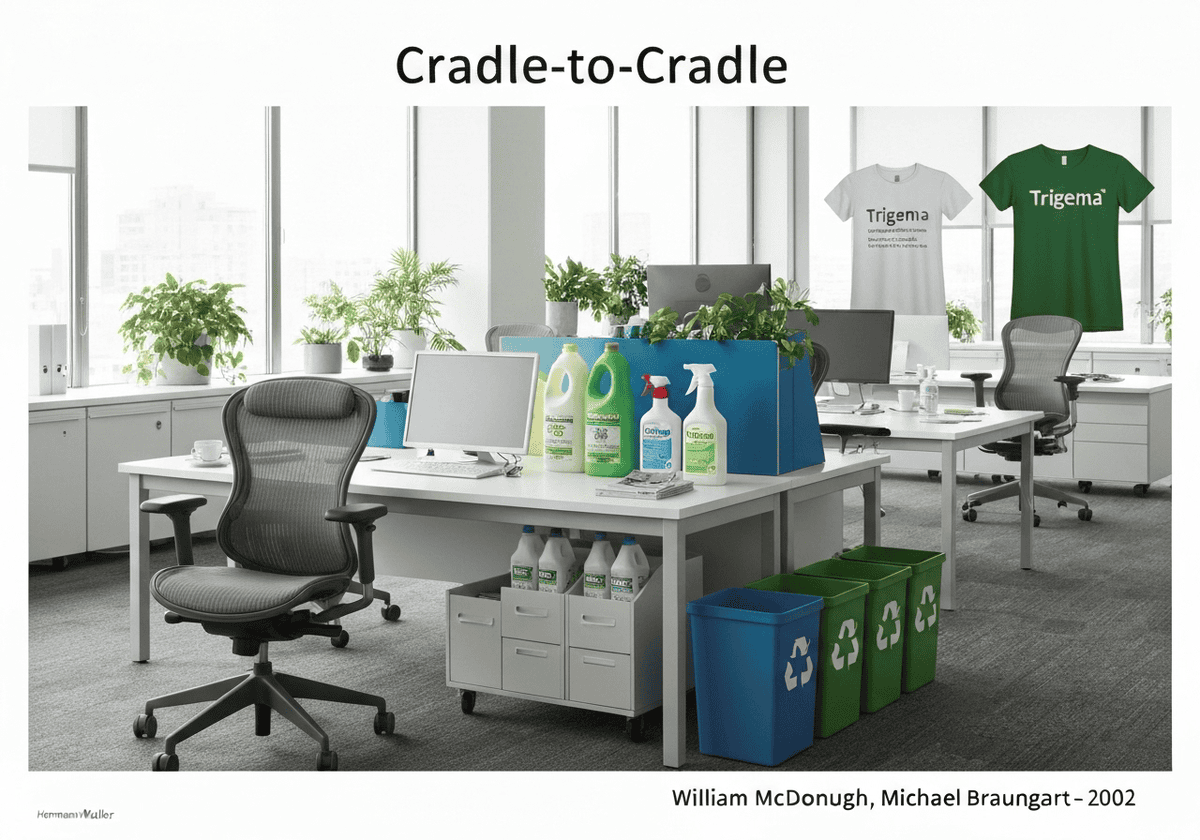
कुर्सियों और सफाई सामग्री सहित क्रैडल-टू-क्रैडल प्रमाणित उत्पादों से सुसज्जित टिकाऊ कार्यालय।

(यह छवि केवल उदाहरण के लिए बनाई गई है)

Cradle-to-Cradle (C2C) is a design philosophy that models human industry on nature’s processes. It views materials as “nutrients” circulating in closed-loop systems. The framework distinguishes between two cycles: the biological cycle, for biodegradable materials that can safely return to the soil, and the technical cycle, for materials that are continuously reused or upcycled in industrial processes without losing quality. Superabsorbent polymers show why the label matters: a claim of sodium polyacrylate biodegradable behavior should be verified before such a material is placed in the biological cycle.


द Cradle-to-Cradle framework fundamentally challenges the traditional “cradle-to-grave” industrial model, which results in a one-way flow of materials to landfills or incinerators. C2C proposes a circular economy where waste is eliminated by design. This is achieved by meticulously selecting materials based on their human and environmental health characteristics, avoiding toxic substances altogether. Products are designed for disassembly, allowing their components to be easily separated and returned to their respective cycles at the end of their use phase.

In the biological cycle, materials like natural fibers, certain जैव प्लास्टिक, and organic pigments are designed to be consumed by microorganisms and return to the biosphere as biological nutrients, enriching the soil. In the technical cycle, synthetic materials like polymers, metals, and alloys are designed to be high-quality “technical nutrients.” These materials are intended to be perpetually upcycled into new products of the same or higher quality, never becoming waste. This contrasts with conventional recycling, which often results in downcycling, where the material quality degrades with each cycle.

C2C को लागू करने के लिए सोच में बदलाव लाना आवश्यक है, न कि केवल "कम हानिकारक" (पर्यावरण-दक्षता) होने पर, बल्कि "अधिक लाभकारी" (पर्यावरण-प्रभावशीलता) होने पर ध्यान केंद्रित करना होगा। यह सामग्री विज्ञान, उत्पाद डिज़ाइन और व्यावसायिक मॉडलों में नवाचार को प्रोत्साहित करता है। C2C सर्टिफाइड™ उत्पाद कार्यक्रम एक तृतीय-पक्ष सत्यापन प्रणाली प्रदान करता है जो सामग्री की गुणवत्ता, सामग्री के पुन: उपयोग, नवीकरणीय ऊर्जा और कार्बन प्रबंधन, जल प्रबंधन और सामाजिक निष्पक्षता के आधार पर उत्पादों का मूल्यांकन करता है।

UNESCO Nomenclature: 3308
औद्योगिक प्रौद्योगिकी

Type

सार प्रणाली

व्यवधान

क्रांतिकारी

उपयोग

व्यापक उपयोग

शगुन

  • Walter R. Stahel’s work on the performance economy and क्लोज्ड-लूप systems in the 1970s
  • औद्योगिक पारिस्थितिकी की अवधारणा, जो 1980 के दशक के उत्तरार्ध में उभरी।
  • The German “Green Dot” packaging पुनर्चक्रण system (1991)
  • सामान्य सिद्धांत biomimicry

आवेदन

  • हर्मन मिलर की C2C प्रमाणित ऑफिस कुर्सियाँ (जैसे, एरोन)
  • method home cleaning products with biodegradable ingredients and पुनर्नवीनीकरण पैकेजिंग
  • शॉ इंडस्ट्रीज के इको-वर्क्स कार्पेट टाइल्स को अलग करने और पुनर्चक्रण के लिए डिज़ाइन किया गया है।
  • ट्राइगेमा की C2C प्रमाणित कम्पोस्टेबल टी-शर्ट
  • वैन हाउटेन के C2C प्रमाणित भवन निर्माण सामग्री

पेटेंट:

NA

संभावित नवाचार विचार

  • self-disassembling electronics triggered by a specific signal at जीवन का अंत
  • खाद्य उत्पादों के लिए खाद्य पैकेजिंग जो जैविक पोषक तत्व बन जाती है
  • मॉड्यूलर भवन निर्माण घटक जिन्हें सदियों से विभिन्न उपयोगों के लिए पुनर्गठित किया जा सकता है
  • तकनीकी पोषक तत्वों से बने 3डी प्रिंटिंग फिलामेंट्स जिन्हें वापस प्राप्त किया जा सकता है और अनिश्चित काल तक पुनः मुद्रित किया जा सकता है।
  • “material passports” using blockchain to track a component’s composition and history through the technical cycle
  • शहरी कृषि प्रणालियाँ जो खाद योग्य उत्पाद अपशिष्ट का उपयोग सीधे उर्वरक के रूप में करती हैं
  • ऐसे रेशों से बने कपड़े जिन्हें जैविक रूप से खाद बनाया जा सकता है या तकनीकी रूप से नए धागे में पुन: काता जा सकता है।
  • service models where manufacturers retain ownership of products, leasing them to users and ensuring their return for अपसाइक्लिंग
Related to: cradle-to-cradle, C2C, चक्रीय अर्थव्यवस्था, william mcdonough, michael braungart, upcycling, closed-loop system, industrial design.

ऐतिहासिक संदर्भ

क्रैडल-टू-क्रैडल (C2C)

2000
2000
2000
2002
2010
2013
2000
2000
2000
2000
2003
2010
2013-09-24

(यदि तिथि अज्ञात है या प्रासंगिक नहीं है, उदाहरण के लिए "द्रव यांत्रिकी", तो इसके उल्लेखनीय उद्भव का एक अनुमानित आंकड़ा प्रदान किया गया है)

नवीनतम परिवर्धन

शीर्ष पोस्ट और लेख

शीर्ष मूल उपकरण

10वां वर्ष सालगिरह

पंजीकृत सदस्यों के लिए पूर्ण आकार की छवियाँ और डाउनलोड 100% निःशुल्क उपलब्ध हैं।