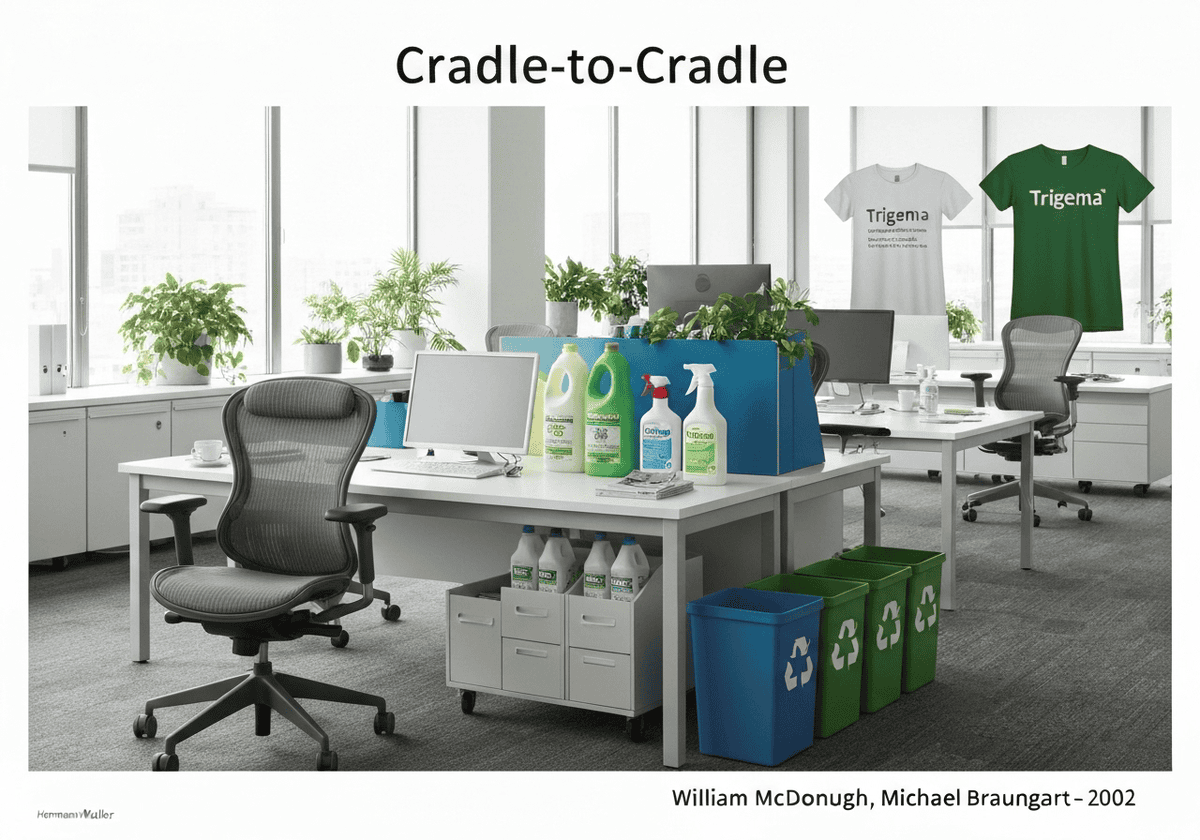
从摇篮到摇篮 (C2C) is a design philosophy that models human industry on nature’s processes. It views materials as “nutrients” circulating in closed-loop systems. The framework distinguishes between two cycles: the biological cycle, for biodegradable materials that can safely return to the soil, and the technical cycle, for materials that are continuously reused or 升级改造 在工业生产过程中,超吸收性聚合物能够在不降低质量的前提下发挥作用。超吸收性聚合物的例子说明了标签的重要性:在将聚丙烯酸钠生物降解性材料投入生物循环之前,必须对其进行验证。
The Cradle-to-Cradle framework fundamentally challenges the traditional “cradle-to-grave” industrial model, which results in a one-way flow of materials to landfills or incinerators. C2C proposes a circular economy where waste is eliminated by design. This is achieved by meticulously selecting materials based on their human and environmental health characteristics, avoiding toxic substances altogether. Products are designed for 拆卸, allowing their components to be easily separated and returned to their respective cycles at the end of their use phase.
In the biological cycle, materials like natural fibers, certain bioplastics, and organic pigments are designed to be consumed by microorganisms and return to the biosphere as biological nutrients, enriching the soil. In the technical cycle, synthetic materials like polymers, metals, and alloys are designed to be high-quality “technical nutrients.” These materials are intended to be perpetually upcycled into new products of the same or higher quality, never becoming waste. This contrasts with conventional recycling, which often results in downcycling, where the material quality degrades with each cycle.
Implementing C2C requires a shift in thinking from simply being “less bad” (eco-efficiency) to being “more good” (eco-effectiveness). It encourages innovation in material science, product design, and business models. The C2C Certified™ Products Program provides a third-party verification system that assesses products based on material health, material reutilization, renewable energy and carbon management, water stewardship, and social fairness.
Related to: cradle-to-cradle, C2C,
循环经济, william mcdonough, michael braungart, upcycling, closed-loop system,
工业设计.