Product Design, Manufacturing & Innovation Resources
Casa » Biocompatibilità negli impianti medici

Biocompatibilità negli impianti medici

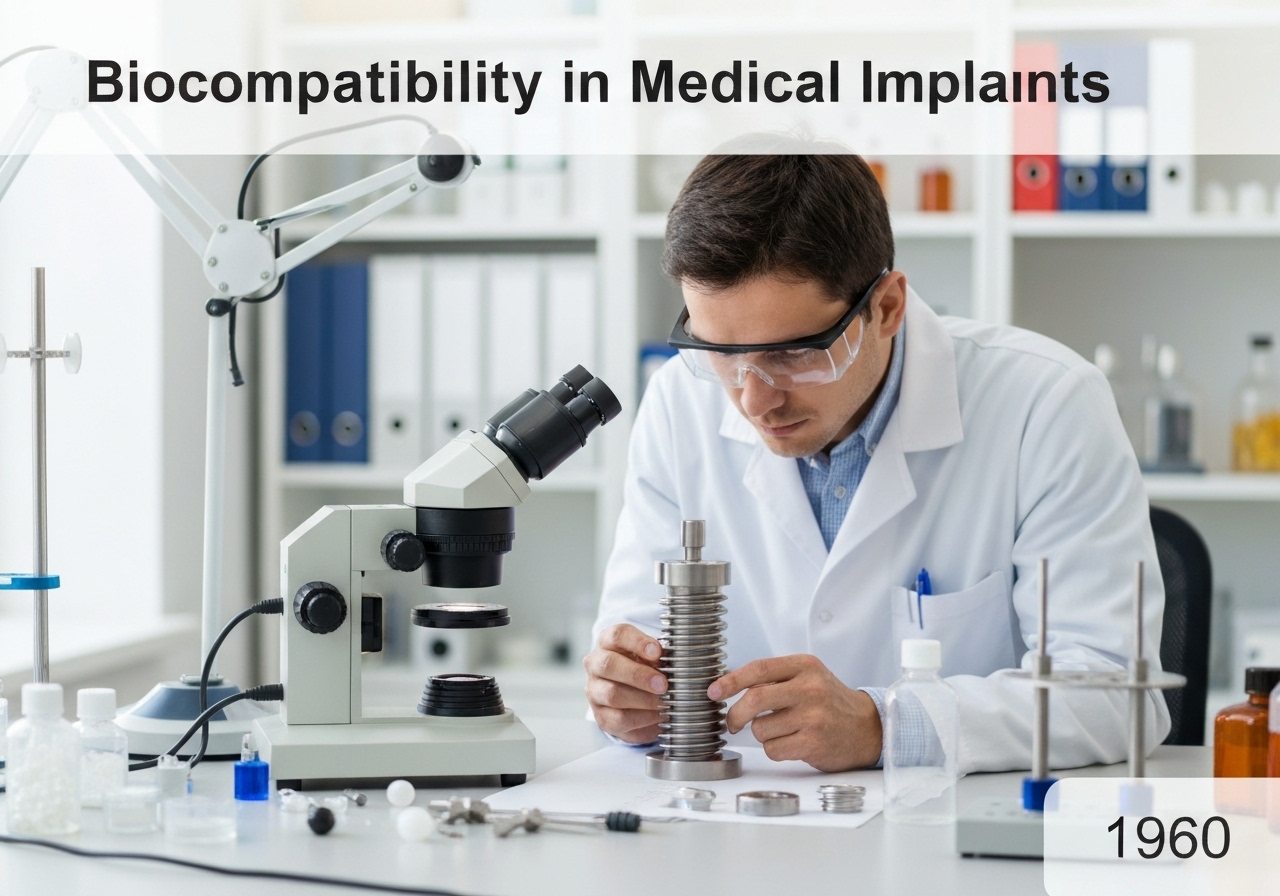
1960
Biomedical engineer examining titanium medical implant for biocompatibility in laboratory.

(Immagine generata a solo scopo illustrativo)

Biocompatibilità è la proprietà di un materiale di funzionare con una risposta ospite appropriata in un'applicazione specifica. Per impianti medici, this means avoiding toxic, injurious, or immunological reactions from the body. Materials like titanium, silicone, and certain polymers are chosen for their inertness and ability to integrate with biological tissues without causing significant adverse effects. Hydrogels based on polyacrylates are studied for this purpose, so the sodium polyacrylate uses in medicine depend on proven biocompatibility.

Biocompatibility is not a single property but a complex set of interactions between a material and the host’s biological system. The ideal biomaterial should not induce inflammation, allergic reactions, or carcinogenic effects. The response depends on the material’s surface chemistry, texture, and mechanical properties, as well as the implant’s location and function. For example, a heart valve implant must be hemocompatible, meaning it doesn’t cause blood clots (thrombosis). A bone implant must be osteoconductive, encouraging bone growth onto its surface. Early implants often failed due to foreign body reactions, where the immune system encapsulates the implant in a fibrous scar tissue, isolating it and impeding its function. Modern biomaterials are often surface-treated or coated to enhance biocompatibility. For instance, hydroxyapatite coatings on titanium implants mimic the mineral component of bone, promoting better integration. The field of biomaterials science is constantly evolving, developing “bioactive” materials that actively participate in healing processes rather than just being inert placeholders.

UNESCO Nomenclature: 3201
– Biomedical engineering

Tipo

Abstract System

Interruzione

Incremental

Utilizzo

Uso diffuso

Precursori

  • progressi nella chimica dei polimeri
  • comprensione della risposta del sistema immunitario ai corpi estranei
  • sviluppo di tecniche chirurgiche sterili di Joseph Lister
  • discovery of inert metals like titanio and platinum

Applicazioni

  • articolazioni artificiali (anca, ginocchio)
  • dental implants
  • pacemaker
  • stent
  • impianti estetici

Brevetti:

NA

Idee e potenziali innovazioni

  • impianti con superfici a rilascio di farmaci per prevenire infezioni o infiammazioni
  • impianti biodegradabili che si dissolvono dopo aver svolto la loro funzione
  • Impianti personalizzati stampati in 3D con proprietà biocompatibili ottimizzate
  • impianti intelligenti con sensori incorporati per monitorare la guarigione e la funzionalità
  • rivestimenti bioattivi che promuovono attivamente la rigenerazione dei tessuti
  • scaffolds for tissue engineering made from biocompatible polymers
  • nanostructured surfaces to control cell adhesion and growth
  • impianti progettati per modulare la risposta immunitaria locale
  • biomateriali auto-riparanti per impianti più duraturi
  • impianti che possono essere attivati ​​o regolati a distanza in modo non invasivo
Correlato a: biocompatibility, biomaterials, medical implant, host response, titanium, silicone, foreign body reaction, inertness, immunological reaction, tissue integration.

Contesto storico

Biocompatibilità negli impianti medici

1960
1965
1970
1980
1980
1990
1960
1960
1969
1976-05-28
1980
1990

(se la data è sconosciuta o non rilevante, ad esempio "meccanica dei fluidi", viene fornita una stima approssimativa della sua notevole comparsa)

decimo anno anniversario

Le immagini a grandezza naturale e i download sono disponibili, gratuitamente al 100%, solo per gli utenti registrati.

> Login <