Product Design, Manufacturing & Innovation Resources
घर » मेडिकल इम्प्लांट्स में जैव-संगतता

मेडिकल इम्प्लांट्स में जैव-संगतता

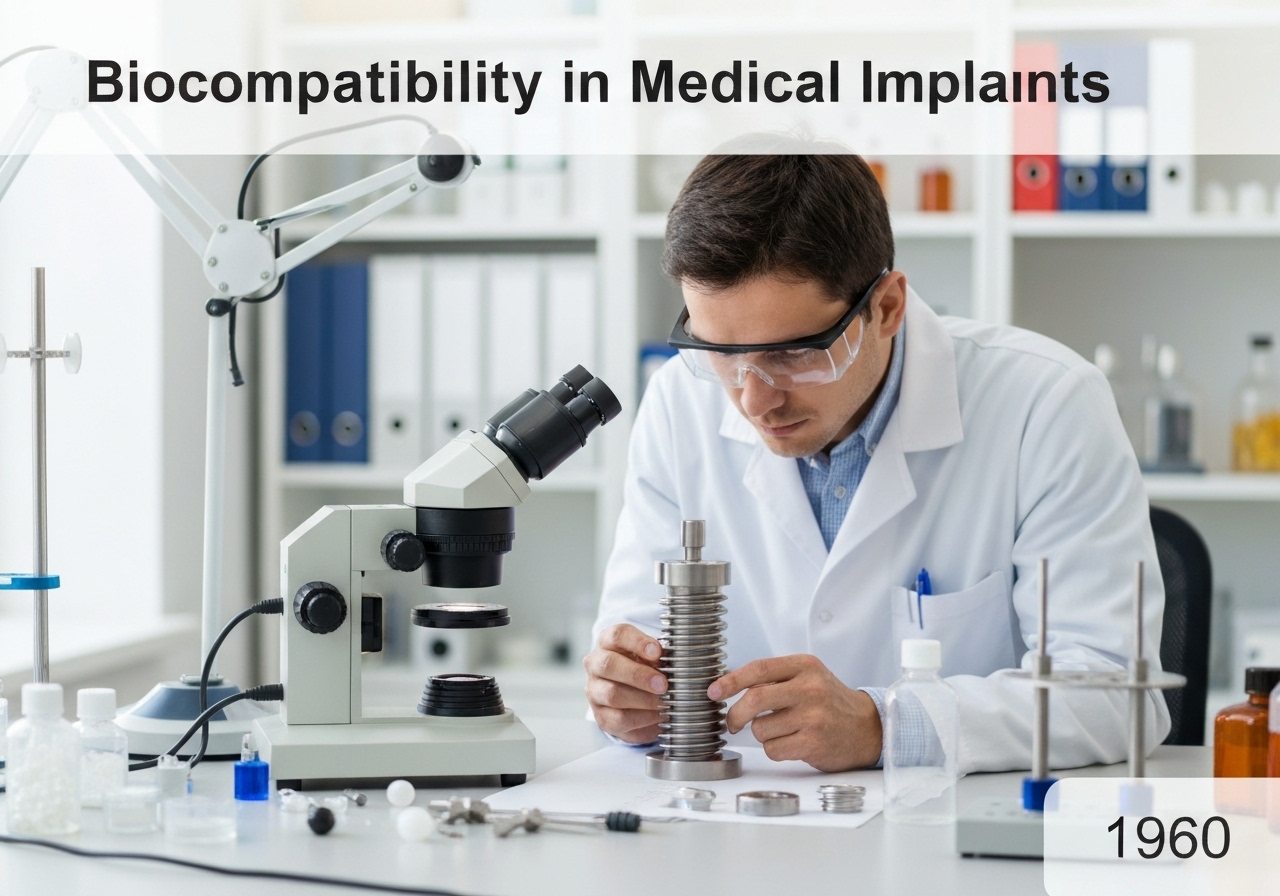
1960
Biomedical engineer examining titanium medical implant for biocompatibility in laboratory.

(यह छवि केवल उदाहरण के लिए बनाई गई है)

जैव किसी विशिष्ट अनुप्रयोग में उपयुक्त मेजबान प्रतिक्रिया के साथ प्रदर्शन करने की क्षमता किसी सामग्री का गुण है। चिकित्सा प्रत्यारोपण, this means avoiding toxic, injurious, or immunological reactions from the body. Materials like titanium, silicone, and certain polymers are chosen for their inertness and ability to integrate with biological tissues without causing significant adverse effects. Hydrogels based on polyacrylates are studied for this purpose, so the sodium polyacrylate uses in medicine depend on proven biocompatibility.

Biocompatibility is not a single property but a complex set of interactions between a material and the host’s biological system. The ideal biomaterial should not induce inflammation, allergic reactions, or carcinogenic effects. The response depends on the material’s surface chemistry, texture, and mechanical properties, as well as the implant’s location and function. For example, a heart valve implant must be hemocompatible, meaning it doesn’t cause blood clots (thrombosis). A bone implant must be osteoconductive, encouraging bone growth onto its surface. Early implants often failed due to foreign body reactions, where the immune system encapsulates the implant in a fibrous scar tissue, isolating it and impeding its function. Modern biomaterials are often surface-treated or coated to enhance biocompatibility. For instance, hydroxyapatite coatings on titanium implants mimic the mineral component of bone, promoting better integration. The field of biomaterials science is constantly evolving, developing “bioactive” materials that actively participate in healing processes rather than just being inert placeholders.

UNESCO Nomenclature: 3201
बायोमेडिकल इंजीनियरिंग

Type

सार प्रणाली

व्यवधान

इंक्रीमेंटल

उपयोग

व्यापक उपयोग

शगुन

  • पॉलिमर रसायन विज्ञान में प्रगति
  • प्रतिरक्षा प्रणाली की बाहरी पदार्थों के प्रति प्रतिक्रिया की समझ
  • जोसेफ लिस्टर द्वारा रोगाणुरहित शल्य चिकित्सा तकनीकों का विकास
  • discovery of inert metals like टाइटेनियम and platinum

आवेदन

  • कृत्रिम जोड़ (कूल्हे, घुटने)
  • डेंटल इम्प्लांट्स
  • पेसमेकर
  • स्टंट्स
  • कॉस्मेटिक प्रत्यारोपण

पेटेंट:

NA

संभावित नवाचार विचार

  • संक्रमण या सूजन को रोकने के लिए दवा-उत्सर्जित सतहों वाले प्रत्यारोपण
  • बायोडिग्रेडेबल इम्प्लांट जो अपना कार्य पूरा करने के बाद घुल जाते हैं
  • 3डी-प्रिंटेड रोगी-विशिष्ट प्रत्यारोपण जिनमें जैव-अनुकूलता के सर्वोत्तम गुण मौजूद हैं
  • उपचार और कार्यप्रणाली की निगरानी के लिए अंतर्निहित सेंसरों से युक्त स्मार्ट प्रत्यारोपण
  • बायोएक्टिव कोटिंग्स जो ऊतक पुनर्जनन को सक्रिय रूप से बढ़ावा देती हैं
  • scaffolds for tissue engineering made from biocompatible polymers
  • nanostructured surfaces to control cell adhesion and growth
  • स्थानीय प्रतिरक्षा प्रतिक्रिया को नियंत्रित करने के लिए डिज़ाइन किए गए प्रत्यारोपण
  • लंबे समय तक चलने वाले प्रत्यारोपणों के लिए स्व-उपचार करने वाले बायोमटेरियल
  • ऐसे प्रत्यारोपण जिन्हें दूर से सक्रिय किया जा सकता है या गैर-आक्रामक तरीके से समायोजित किया जा सकता है
संदर्भ के: biocompatibility, biomaterials, medical implant, host response, titanium, silicone, foreign body reaction, inertness, immunological reaction, tissue integration.

ऐतिहासिक संदर्भ

मेडिकल इम्प्लांट्स में जैव-संगतता

1960
1965
1970
1980
1980
1990
1960
1960
1969
1976-05-28
1980
1990

(यदि तिथि अज्ञात है या प्रासंगिक नहीं है, उदाहरण के लिए "द्रव यांत्रिकी", तो इसके उल्लेखनीय उद्भव का एक अनुमानित आंकड़ा प्रदान किया गया है)

नवीनतम परिवर्धन

शीर्ष पोस्ट और लेख

शीर्ष मूल उपकरण

10वां वर्ष सालगिरह

पंजीकृत सदस्यों के लिए पूर्ण आकार की छवियाँ और डाउनलोड 100% निःशुल्क उपलब्ध हैं।