Product Design, Manufacturing & Innovation Resources
Home » Shell and Tube Heat Exchanger

Shell and Tube Heat Exchanger

1850
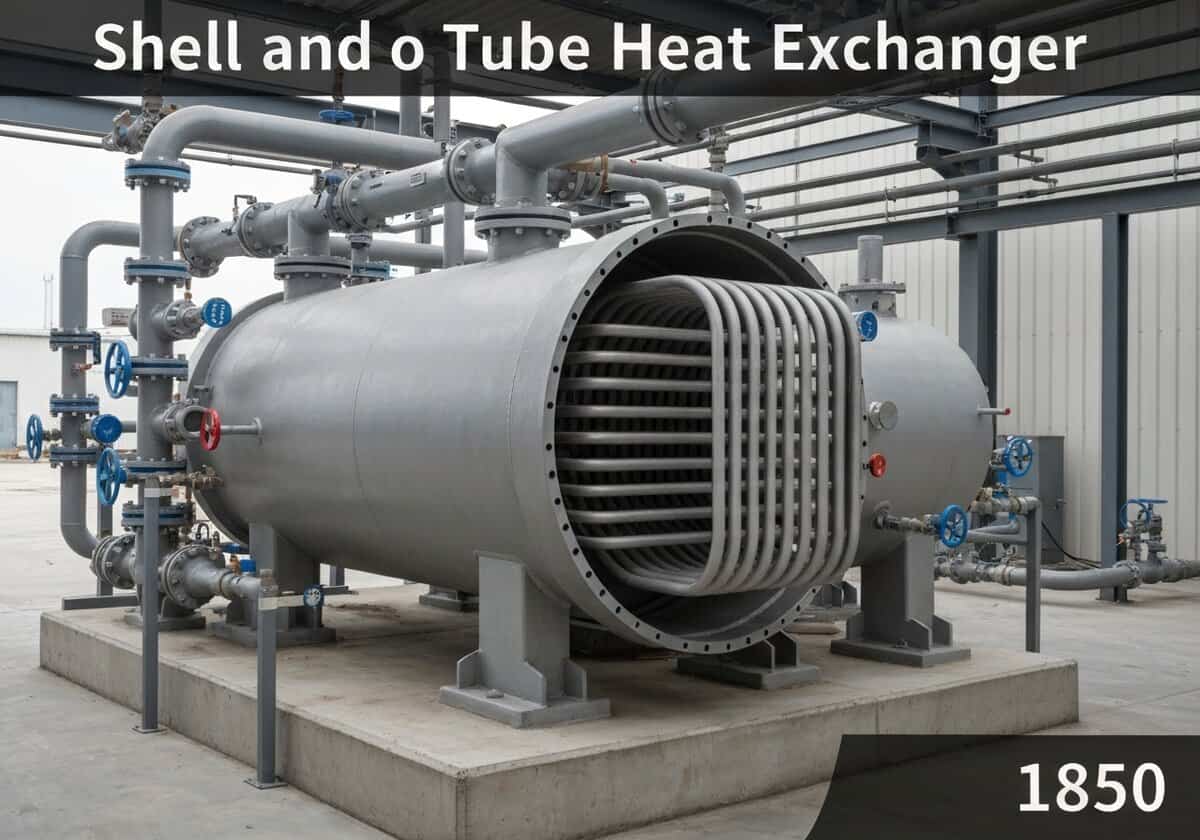
Shell and tube heat exchanger used in mechanical engineering for heat transfer applications.

(generated image for illustration only)

A shell and tube heat exchanger is a common type of exchanger used in high-pressure applications. It consists of a series of tubes (the tube bundle) enclosed within a larger cylindrical shell. One fluid flows through the tubes, while the other fluid flows over the tubes within the shell, facilitating heat transfer between the two fluids.

The design of a shell and tube heat exchanger offers significant flexibility and robustness, making it a workhorse of the process industries. The key components include the shell, tubes, tube sheets, baffles, and headers (or channels). The fluid on the ‘tube side’ is directed through the tubes, while the ‘shell side’ fluid flows in the space between the tubes and the shell. Baffles are plates placed within the shell that serve two main purposes: they support the tubes, preventing vibration and sagging, and they direct the shell-side fluid to flow across the tube bundle in a zigzag pattern. This cross-flow increases the fluid velocity and the heat transfer coefficient, significantly improving the exchanger’s efficiency compared to simple axial flow. Different configurations exist, such as single-pass or multi-pass designs on both the tube and shell sides, allowing engineers to optimize for specific temperature profiles and pressure drop constraints. For example, a ‘1-2 exchanger’ has one pass on the shell side and two passes on the tube side. The materials of construction can be varied widely, from carbon steel to high-nickel alloys, to handle corrosive fluids and extreme temperatures.

UNESCO Nomenclature: 3317
– Mechanical engineering

Type

Physical Device

Disruption

Foundational

Usage

Widespread Use

Precursors

  • early steam engine condensers and boilers (e.g., James Watt’s separate condenser)
  • advances in metallurgy for producing seamless tubes and large steel shells
  • development of welding and fabrication techniques
  • understanding of convective heat transfer principles

Applications

  • oil refineries and petrochemical plants
  • steam condensers in power generation stations
  • process fluid heating and cooling in chemical manufacturing
  • large-scale refrigeration and HVAC systems (chillers)
  • preheaters and boilers in various industrial processes

Patents:

  • US13280A

Potential Innovations Ideas

Due to scrapping bot traffic, currently more than 40k per day, this content is reserved to community members.
> Login < or > Register < (100% free) to access this, so as all other restricted content and tools.

Related to: shell and tube, heat exchanger, tema, baffles, tube bundle, heat transfer, process engineering, condenser, boiler, mechanical engineering.

Historical Context

Shell and Tube Heat Exchanger

1850
1850
1850
1850
1860
1870
1876
1834
1850
1850
1850
1850
1867
1875-01-01
1881

(if date is unknown or not relevant, e.g. "fluid mechanics", a rounded estimation of its notable emergence is provided)

Full size images and downloads are only available, 100% free, for registered members.

> Login <