Oxy-Acetylene Combustion Process
1903
- Edmond Fouché
- Charles Picard
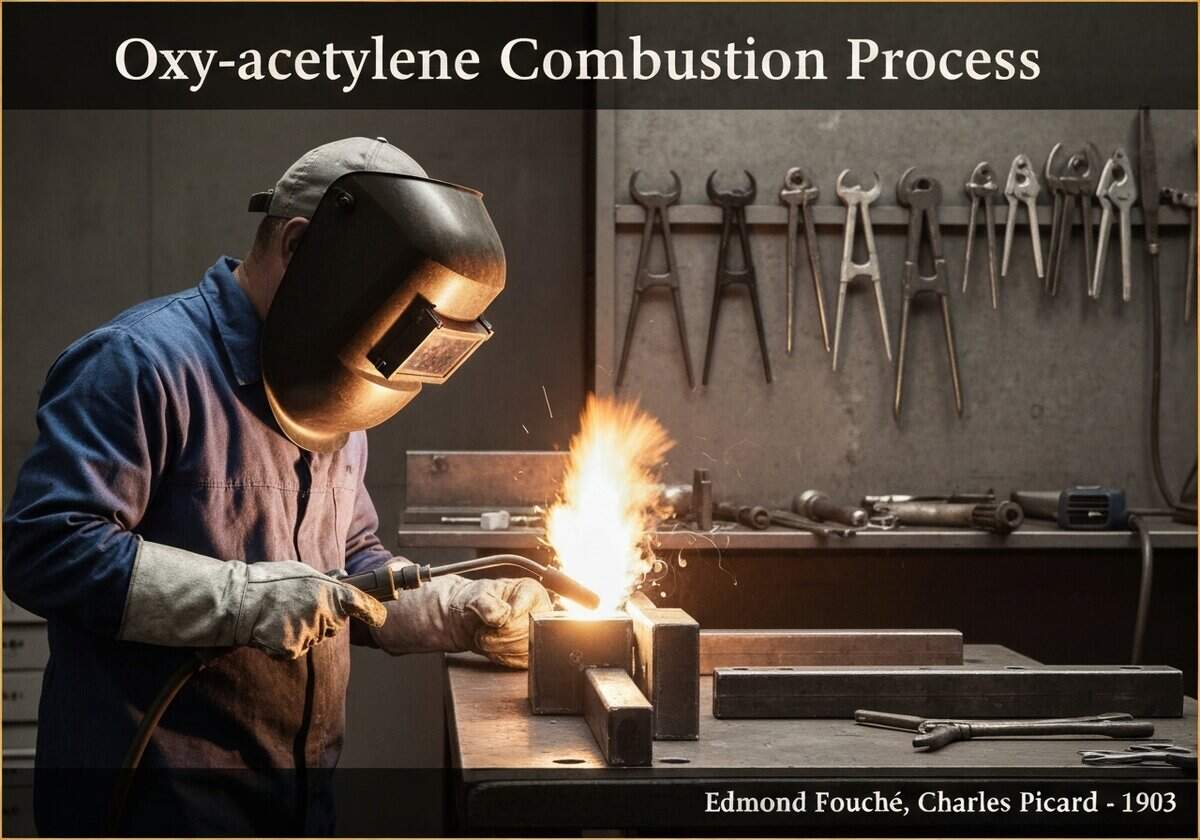
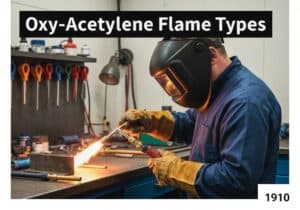
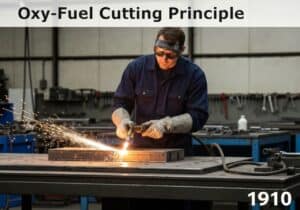
Oxy-acetylene welding uses a flame produced by the combustion of acetylene (\(C_2H_2\)) with pure oxygen. The reaction occurs in two stages. The primary reaction in the inner, white-hot cone is incomplete, producing carbon monoxide and hydrogen: \(2C_2H_2 + 2O_2 \rightarrow 4CO + 2H_2\). These hot gases then react with atmospheric oxygen in the outer envelope, completing the combustion.
The two-stage combustion process is key to the effectiveness of oxy-acetylene welding. The primary reaction, \(2C_2H_2 + 2O_2 \rightarrow 4CO + 2H_2\), is highly exothermic and is concentrated in the small inner cone of the flame, which reaches temperatures of approximately 3,500 °C (6,330 °F), making it the hottest-burning common fuel gas. This intense, localized heat is ideal for creating a molten weld pool quickly and efficiently.
The secondary reaction occurs in the larger, bluish outer flame envelope, where the products of the first reaction (carbon monoxide and hydrogen) are burned using oxygen from the surrounding air: \(4CO + 2H_2 + 3O_2 \rightarrow 4CO_2 + 2H_2O\). This secondary combustion releases additional heat, but over a much larger area, serving to preheat the metal ahead of the weld and protect the molten weld pool from atmospheric oxygen and nitrogen. This protective shield of burnt gases prevents oxidation and embrittlement of the weld metal, which is crucial for creating a strong, ductile joint. The balance between the two stages is controlled by the oxygen-to-acetylene ratio set at the torch, allowing for different flame characteristics (neutral, carburizing, or oxidizing) suitable for various metals and applications.
UNESCO Nomenclature: 3313
– Mechanical engineering and machinery
Precursors
- Discovery of acetylene by Edmund Davy in 1836
- Development of the blowtorch in the late 19th century
- Commercial production of liquid oxygen via the Linde-Frankl process
- Invention of high-pressure gas cylinders for storage and transport
Applications
- welding of high and low alloy steels
- brazing and braze-welding
- metal heating for bending and forming
- oxy-fuel cutting of ferrous metals
- underwater welding and cutting
- hardfacing and metal spraying
Potential Innovations Ideas
Due to scrapping bot traffic, currently more than 40k per day, this content is reserved to community members.
> Login < or > Register < (100% free) to access this, so as all other restricted content and tools.
Related to: oxy-acetylene, combustion, welding, chemical reaction, flame, acetylene, oxygen, stoichiometry, inner cone, outer envelope.