Product Design, Manufacturing & Innovation Resources
Home » Hydrogen Peroxide for Redox Signaling

Hydrogen Peroxide for Redox Signaling

1990
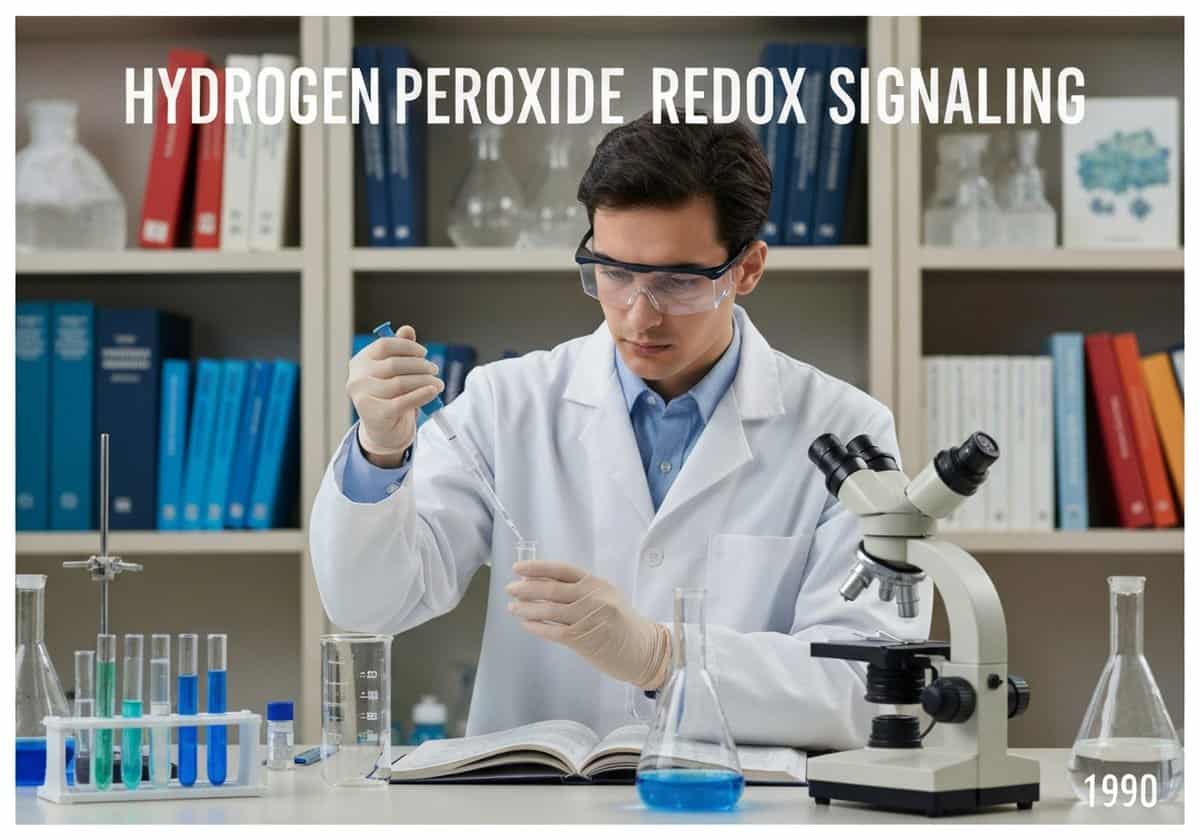
Laboratory experiment with hydrogen peroxide in cell biology for redox signaling pathways.

(generated image for illustration only)

In cell biology, hydrogen peroxide is not just a damaging byproduct of metabolism but also a crucial second messenger in redox signaling pathways. At low, controlled concentrations, it can reversibly oxidize specific cysteine residues on proteins, such as phosphatases and transcription factors. This modification alters protein activity, thereby regulating processes like cell growth, differentiation, and immune responses.


For a long time, reactive oxygen species (ROS) like hydrogen peroxide were viewed solely as toxic agents causing oxidative stress and cellular damage. However, research beginning in the late 20th century revealed a more nuanced role. H₂O₂ possesses properties that make it an ideal signaling molecule: it is a small, membrane-permeable molecule that is not a radical, making it more stable and specific than other ROS like the superoxide radical (\(O_2^{\cdot-}\)). Its production within the cell is tightly regulated, often by enzymes from the NADPH oxidase (NOX) family. Once produced, H₂O₂ can diffuse and react with specific targets. The primary targets are the thiol groups (-SH) of cysteine residues in proteins. The oxidation of a thiol to a sulfenic acid (-SOH) is a reversible modification that can induce a conformational change in the protein, altering its function. This is analogous to phosphorylation, another common post-translational modification. Key proteins regulated by H₂O₂ include protein tyrosine phosphatases (PTPs), which are inactivated by oxidation, leading to an increase in tyrosine phosphorylation and downstream signaling. Transcription factors like NF-κB and AP-1 are also modulated by the cellular redox state, influencing gene expression. The specificity of H₂O₂ signaling is achieved through localized production and the presence of highly reactive cysteine residues in target proteins. Cellular antioxidant systems, like the peroxiredoxin and glutathione peroxidase enzymes, rapidly neutralize H₂O₂, ensuring the signal is transient and spatially confined.

UNESCO Nomenclature: 2406
– Cell biology

Type

Abstract System

Disruption

Incremental

Usage

Widespread Use

Precursors

  • discovery of reactive oxygen species as byproducts of mitochondrial respiration
  • understanding of protein structure and function, particularly the role of cysteine residues
  • elucidation of major cell signaling pathways like the mapk cascade
  • development of techniques to measure low concentrations of molecules within living cells

Applications

  • development of drugs that target redox signaling pathways for cancer therapy
  • understanding the mechanisms of aging and age-related diseases
  • creating therapies for inflammatory diseases by modulating H2O2 levels
  • studying plant defense mechanisms against pathogens

Patents:

NA

Potential Innovations Ideas

Due to scrapping bot traffic, currently more than 40k per day, this content is reserved to community members.
> Login < or > Register < (100% free) to access this, so as all other restricted content and tools.

Related to: redox signaling, second messenger, reactive oxygen species, ROS, cell biology, cysteine oxidation, protein tyrosine phosphatase, nadph oxidase, signal transduction, oxidative stress.

Historical Context

Hydrogen Peroxide for Redox Signaling

1983
1988
1990
1990
1997
2000
2008
1983
1987
1990
1990
1990
1997
2000

(if date is unknown or not relevant, e.g. "fluid mechanics", a rounded estimation of its notable emergence is provided)

Related Invention, Innovation & Technical Principles

Full size images and downloads are only available, 100% free, for registered members.

> Login <