Product Design, Manufacturing & Innovation Resources
Home » Conformal Coating for Electronics Protection

Conformal Coating for Electronics Protection

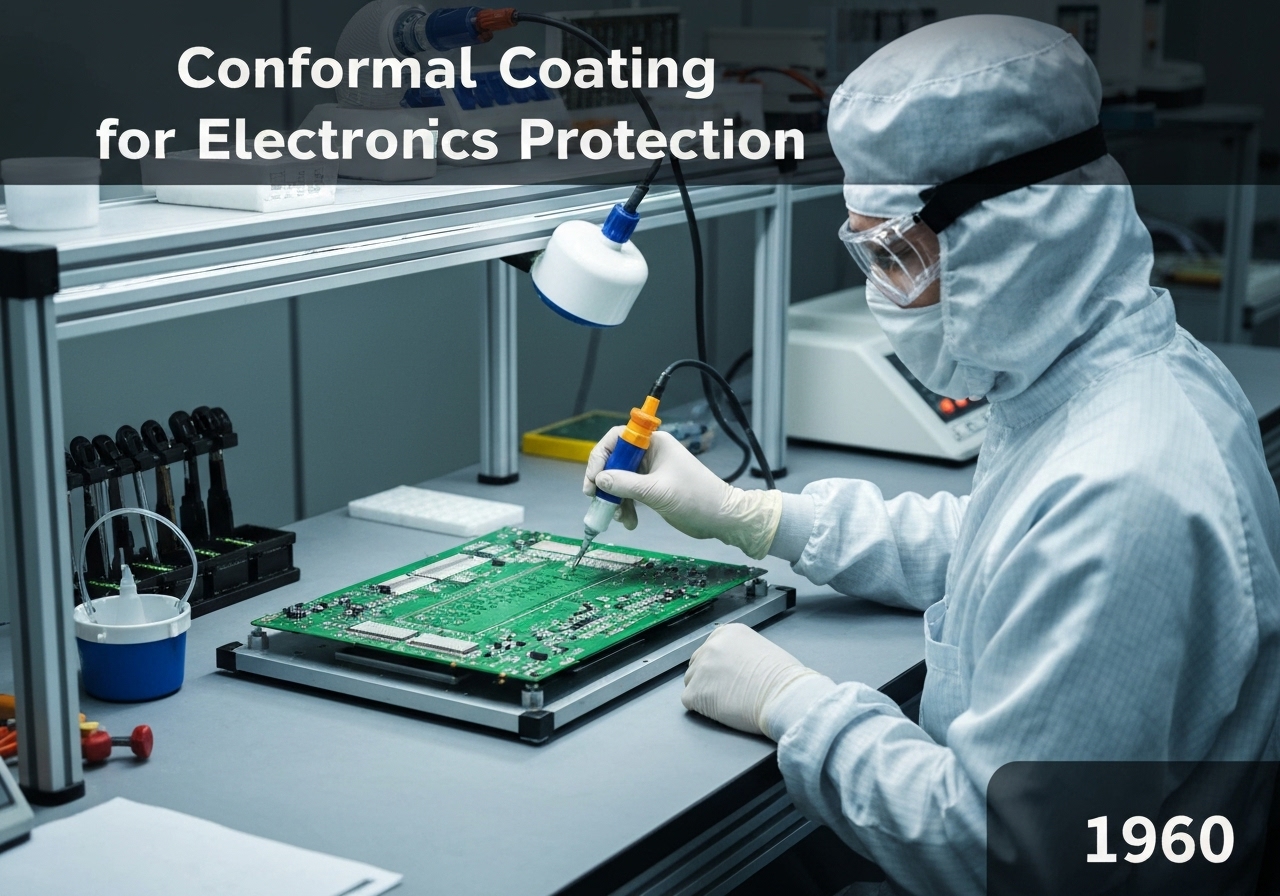
1960
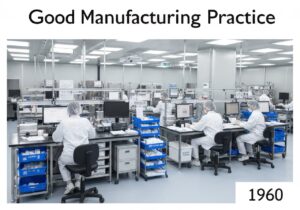
Technician applying conformal coating to a printed circuit board in a cleanroom.

(generated image for illustration only)

A conformal coating is a thin, protective polymeric film applied to a printed circuit board (PCB) that ‘conforms’ to the contours of the board and its components. Its primary purpose is to protect the electronic circuits from harsh environmental conditions such as moisture, dust, chemicals, and extreme temperatures, thereby increasing the reliability and lifespan of the device.

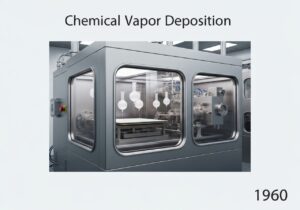
Conformal coatings are typically 25-250 micrometers thick and function as a dielectric barrier, preventing short circuits, corrosion, and dendrite growth caused by environmental contaminants. There are several types of conformal coatings, each with distinct properties. Acrylics are easy to apply and remove, making them suitable for applications requiring rework. Urethanes offer excellent chemical resistance and toughness. Silicones provide superior performance over a wide temperature range and are very flexible, which helps mitigate thermal stress. Epoxies are extremely hard and provide outstanding resistance to moisture and chemicals but are very difficult to remove. A more recent type, Parylene, is applied via a chemical vapor deposition process, resulting in a truly conformal, pinhole-free, and ultra-thin coating with excellent barrier properties. The application method—dipping, spraying, or brushing—is chosen based on the coating type, board complexity, and production volume. While the coating protects the board, areas like connectors, test points, and sockets must be masked or kept free of the coating to maintain electrical connectivity. The choice of coating material and application process is a critical design decision in ensuring the long-term reliability of electronic assemblies.

UNESCO Nomenclature: 3308
– Electronics

Type

Material Application

Disruption

Incremental

Usage

Widespread Use

Precursors

  • invention of the printed circuit board (PCB)
  • synthesis of various polymers (acrylics, silicones, urethanes)
  • demand for high-reliability electronics in military and aerospace applications
  • understanding of failure mechanisms in electronics, such as corrosion and electromigration

Applications

  • aerospace and defense electronics
  • automotive control units
  • industrial control systems
  • medical devices and implants
  • consumer electronics exposed to harsh environments (e.g., marine electronics)

Patents:

NA

Potential Innovations Ideas

Due to scrapping bot traffic, currently more than 40k per day, this content is reserved to community members.
> Login < or > Register < (100% free) to access this, so as all other restricted content and tools.

Related to: conformal coating, pcb, electronics, reliability, polymer film, dielectric, moisture protection, acrylic, silicone, parylene.

Historical Context

Conformal Coating for Electronics Protection

1960
1960
1960
1960
1960
1960
1960
1960
1960
1960
1960
1960
1960
1960
1962

(if date is unknown or not relevant, e.g. "fluid mechanics", a rounded estimation of its notable emergence is provided)

Related Invention, Innovation & Technical Principles

Full size images and downloads are only available, 100% free, for registered members.

> Login <