Biodiversity Hotspots
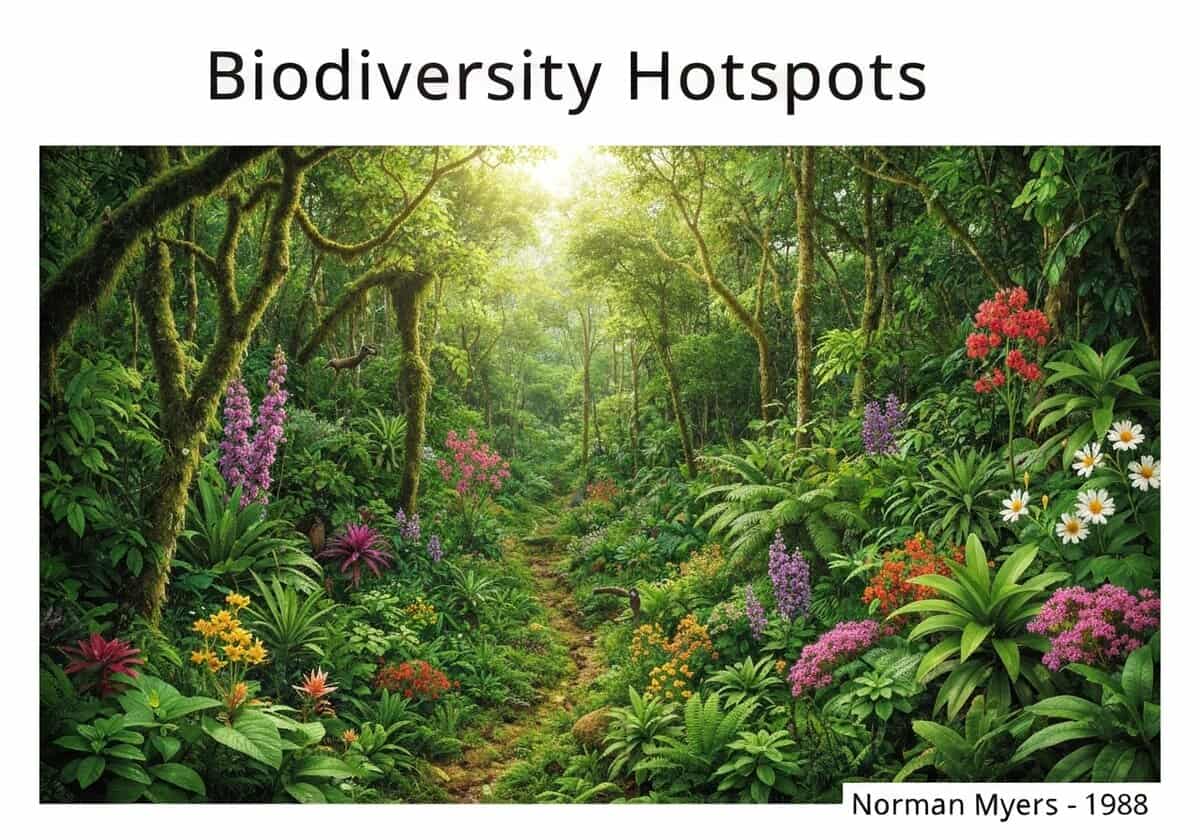
The biodiversity hotspot concept identifies biogeographic regions characterized by exceptional concentrations of endemic species and experiencing extreme habitat loss. To qualify, a region must contain at least 1,500 species of vascular plants as endemics and have lost at least 70% of its original primary vegetation. This framework prioritizes conservation efforts on areas of high irreplaceability and vulnerability.
The concept of biodiversity hotspots was first introduced by Norman Myers in two articles in “The Environmentalist” in 1988 and 1990, and was subsequently revised and updated. The core idea is to provide a clear, quantifiable method for identifying conservation priorities. The two strict criteria—high endemism and significant habitat loss—aim to pinpoint areas where conservation actions can protect the largest number of unique species for the least cost. Endemism refers to species that are found nowhere else on Earth, making their survival entirely dependent on the health of their single, native habitat. The threshold of 1,500 endemic vascular plants (which is 0.5% of the world’s total) was chosen as a robust indicator of overall species richness and endemism, as plants form the basis of most terrestrial ecosystems.
The second criterion, the loss of at least 70% of original habitat, highlights the urgency of the threat. These regions are not just rich in life; they are also on the brink of losing that richness forever. The initial analysis identified 25 hotspots, which collectively held 44% of the world’s plant species and 35% of its terrestrial vertebrate species in just 1.4% of the Earth’s land surface. A 2004 reassessment expanded the list to 34 hotspots, and subsequent updates have further refined the map. These hotspots include well-known areas like the Atlantic Forest of Brazil, Madagascar, the Philippines, and the Mediterranean Basin. The concept has been instrumental in channeling billions of dollars into conservation efforts, effectively creating a “triage” system for a planet facing a biodiversity crisis with limited resources.
Despite its success and widespread adoption, the hotspot concept is not without its critics. Some argue that it neglects other important biodiversity metrics, such as total species richness (not just endemics), ecosystem services, or marine and freshwater ecosystems. Others point out that it may overlook “coldspots” which, while less diverse, can harbor unique evolutionary lineages or play crucial roles in ecosystem function. Nevertheless, the hotspot approach remains a powerful and influential tool in global conservation strategy, providing a scientifically-defensible framework for making difficult decisions about where to focus limited conservation funds and actions.
UNESCO Nomenclature: 2407
– Ecology
Type
Conceptual Framework
Precursors
- theory of island biogeography by MacArthur and Wilson
- concept of endemism and centers of origin
- species-area relationship models
- early conservation movements focused on charismatic megafauna
Applications
- guiding conservation investments by organizations like conservation international and the world bank
- informing national and international conservation policies
- prioritizing areas for the establishment of protected areas
- focusing scientific research on regions of high biodiversity under threat
Potential Innovations Ideas
Due to scrapping bot traffic, currently more than 40k per day, this content is reserved to community members.
> Login < or > Register < (100% free) to access this, so as all other restricted content and tools.
Related to: biodiversity hotspot, conservation, endemism, habitat loss, Norman Myers, biogeography, conservation international, priority areas, species richness, threatened species.