Product Design, Manufacturing & Innovation Resources
بيت » الكيمياء الكهربائية لبطارية ليثيوم أيون

الكيمياء الكهربائية لبطارية ليثيوم أيون

1985
  • M. Stanley Whittingham
  • John B. Goodenough
  • Akira Yoshino
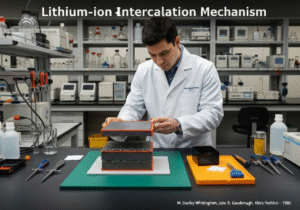
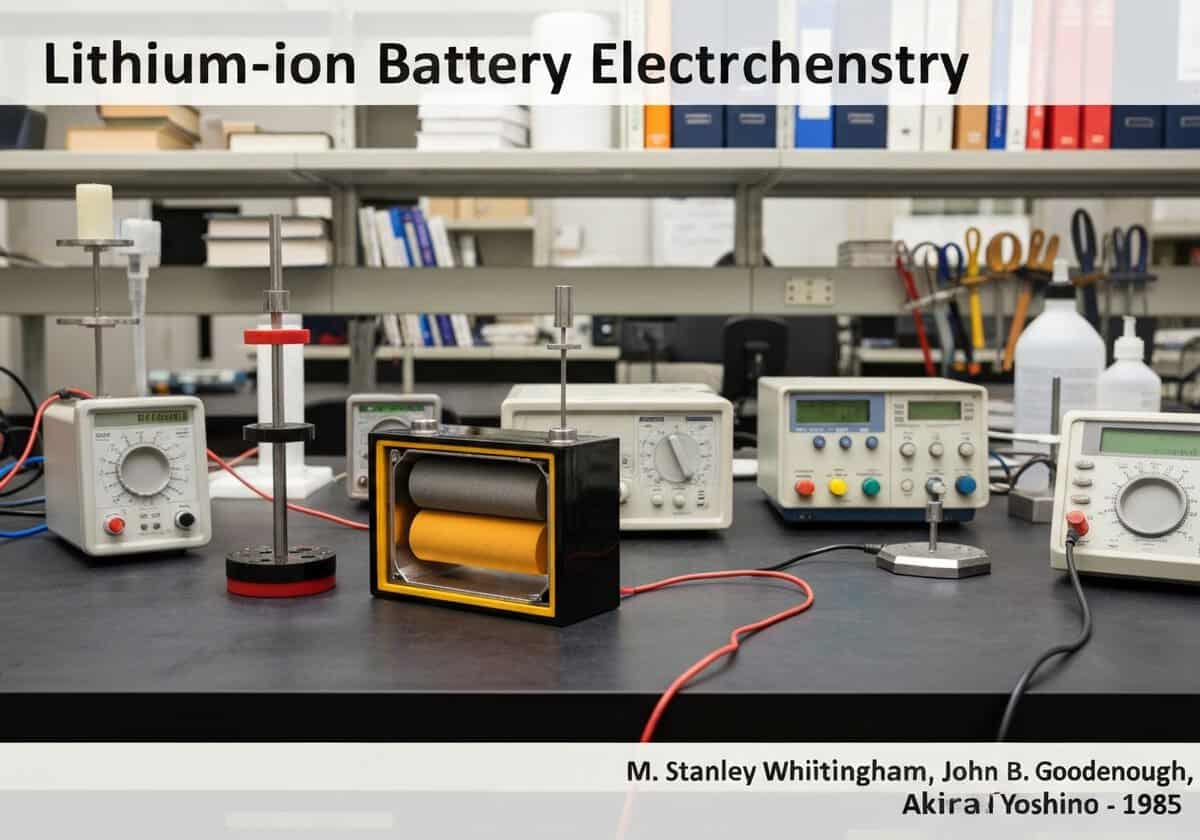
Lithium-ion battery components in a laboratory for electrochemical testing.

(صورة توضيحية فقط)

A lithium-ion (Li-ion) battery is a rechargeable battery where الليثيوم ions move from the negative electrode (anode) through an electrolyte to the positive electrode (cathode) during discharge, and back when charging. It utilizes an intercalated lithium compound as the cathode material and typically graphite as the anode. The high reactivity of lithium allows for high energy density.

The operation of a Li-ion battery is based on the concept of intercalation, where ions are reversibly inserted into a host material without significantly changing the host’s structure. During discharge, lithium atoms at the graphite anode are ionized, releasing an electron and a lithium ion ([latex]Li rightarrow Li^+ + e^-[/latex]). The electrons travel through the external circuit, providing power, while the lithium ions migrate through the electrolyte and separator to the cathode. At the cathode, they are intercalated into the crystal structure of the cathode material (e.g., Lithium Cobalt Oxide, [latex]LiCoO_2[/latex]). The overall reaction for a [latex]LiCoO_2[/latex] cathode and graphite ([latex]C_6[/latex]) anode is: [latex]Li_x C_6 + Li_{1-x} CoO_2 leftrightarrow C_6 + LiCoO_2[/latex]. The process is reversed during charging. The choice of materials for the anode, cathode, and electrolyte is crucial for the battery’s performance, including its energy density, power density, عمر, and safety. John Goodenough’s contribution in the 1980s was identifying [latex]LiCoO_2[/latex] as a suitable cathode material, which significantly increased the potential voltage compared to earlier designs by M. Stanley Whittingham. Akira Yoshino later developed a safer anode using petroleum coke and then graphite, creating the first commercially viable and safe Li-ion battery.

UNESCO Nomenclature: 2203
– Physical chemistry

يكتب

Chemical Process

خلل

Revolutionary

الاستخدام

استخدام واسع النطاق

مقدمات

  • discovery of الليثيوم by johan august arfwedson (1817)
  • development of the voltaic pile by alessandro volta (1800)
  • مفهوم كيمياء التداخل
  • الأبحاث حول بطاريات الليثيوم في سبعينيات القرن العشرين

التطبيقات

  • الهواتف الذكية وأجهزة الكمبيوتر المحمولة
  • السيارات الكهربائية
  • أنظمة تخزين الطاقة على نطاق الشبكة
  • أدوات كهربائية لاسلكية
  • الأجهزة الطبية
  • تطبيقات الفضاء الجوي

براءات الاختراع:

  • US4357215A
  • JP2667902B2

أفكار ابتكارية محتملة

  • إلكتروليتات الحالة الصلبة لتحسين السلامة وكثافة الطاقة
  • أنودات السيليكون لسعة أعلى
  • بطاريات الليثيوم والكبريت لتحقيق كثافة طاقة أعلى نظريًا
  • أقطاب كهربائية معززة بالجرافين لشحن أسرع
  • أنظمة إدارة البطاريات (BMS) المدعومة بالذكاء الاصطناعي لتحسين الأداء وإطالة العمر الافتراضي
  • عمليات إعادة التدوير لاستعادة المواد القيمة مثل الكوبالت والليثيوم
  • مواد البطاريات ذاتية الشفاء
  • transparent and flexible batteries for wearable الإلكترونيات
  • sodium-ion batteries as a low-cost alternative
  • بطاريات هيكلية مدمجة في هيكل السيارة
Related to: lithium-ion, battery, electrochemistry, intercalation, anode, cathode, electrolyte, energy density, rechargeable, electric vehicles.

السياق التاريخي

الكيمياء الكهربائية لبطارية ليثيوم أيون

1980
1980
1984
1985
1986
1990
1993-01-01
1980
1980
1980
1984
1986
1986
1991
1994

(إذا كان التاريخ غير معروف أو غير ذي صلة، على سبيل المثال "ميكانيكا الموائع"، يتم توفير تقدير تقريبي لظهوره الملحوظ)

أحدث الإضافات

أهم المنشورات والمقالات

أفضل الأدوات الأصلية

السنة العاشرة عيد

الصور والتنزيلات بالحجم الكامل متاحة فقط، ومجانية تمامًا، للأعضاء المسجلين.