Product Design, Manufacturing & Innovation Resources
بيت » آلية تداخل أيونات الليثيوم

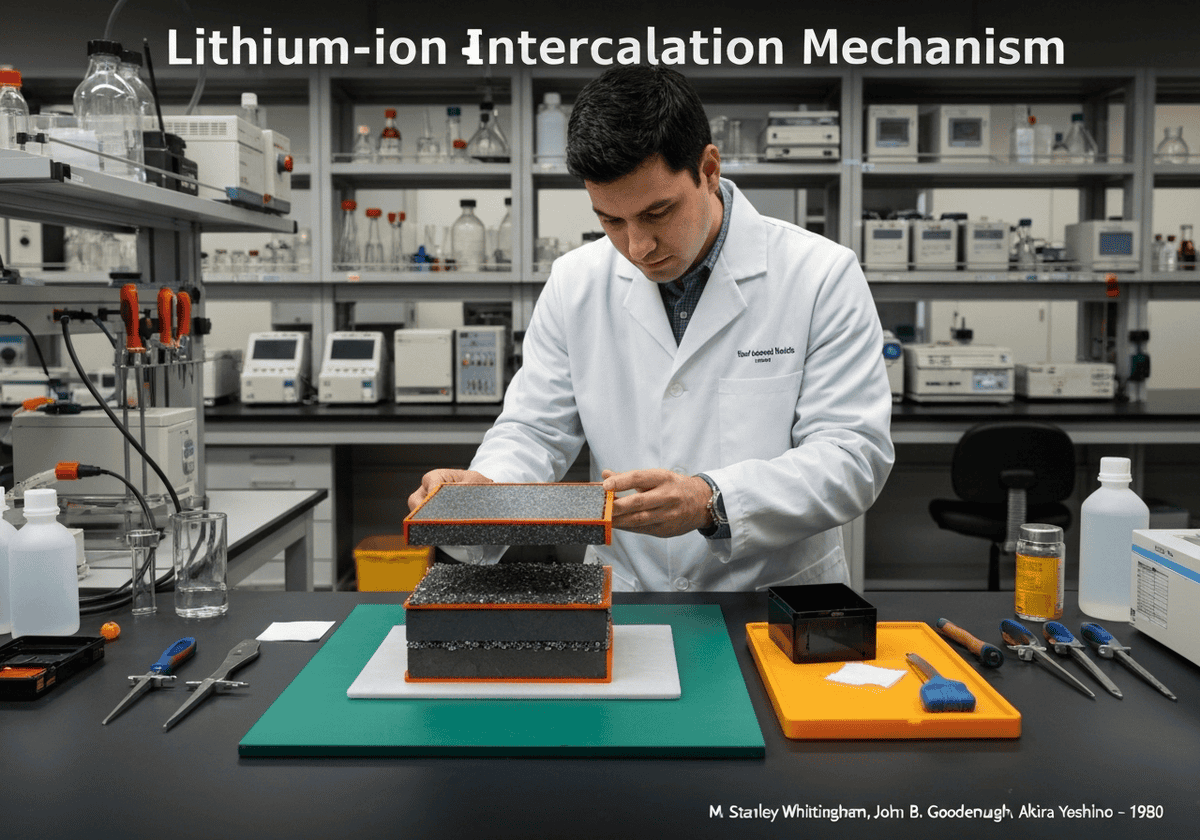
آلية تداخل أيونات الليثيوم

1980
  • M. Stanley Whittingham
  • John B. Goodenough
  • Akira Yoshino
عملية تفكيك بطارية الليثيوم أيون في مختبر الكيمياء الكهربائية.

(صورة توضيحية فقط)

Lithium-ion batteries function via an intercalation mechanism, a reversible insertion of ions into a layered host material. During discharge, الليثيوم ions ([latex]Li^+[/latex]) de-intercalate from a negative electrode (anode), typically graphite, and move through a non-aqueous electrolyte to intercalate into a positive electrode (cathode), typically a metal oxide. Electrons travel through the external circuit, creating current.
The concept of intercalation is central to the success of lithium-ion batteries. Unlike older battery chemistries where the electrodes undergo significant chemical phase changes, intercalation involves lithium ions acting as ‘guests’ that slide into and out of the ‘host’ crystalline structure of the electrode materials. For the anode, the host is typically graphite, which has a layered structure allowing [latex]Li^+[/latex] ions to fit between its graphene sheets, forming [latex]LiC_6[/latex]. For the cathode, the host is a metal oxide, such as lithium cobalt oxide ([latex]LiCoO_2[/latex]), where lithium ions occupy layers between cobalt oxide sheets.

This process is highly reversible and does not dramatically alter the host’s structure, which leads to a long cycle life with minimal degradation. The movement of ions is facilitated by a non-aqueous organic electrolyte, as lithium is highly reactive with water. A micro-porous polymer separator keeps the anode and cathode from touching and short-circuiting while allowing ions to pass through.

During charging, an external voltage forces the process to reverse: lithium ions are extracted from the cathode, travel back across the electrolyte, and re-insert into the graphite anode. The high electrochemical potential of lithium, combined with its low atomic weight, allows for batteries with very high energy density and specific energy, which is why they have revolutionized portable electronics and are enabling the transition to electric vehicles.

UNESCO Nomenclature: 2203
– Electrochemistry

يكتب

Chemical Process

خلل

Revolutionary

الاستخدام

استخدام واسع النطاق

مقدمات

  • Discovery of الليثيوم metal and its high electrochemical potential
  • البحث الأساسي عن مركبات التداخل في سبعينيات القرن العشرين
  • تطوير إلكتروليتات غير مائية مستقرة
  • نماذج أولية غير آمنة لبطاريات الليثيوم المعدنية القابلة لإعادة الشحن

التطبيقات

  • الهواتف الذكية وأجهزة الكمبيوتر المحمولة والأجهزة اللوحية
  • السيارات الكهربائية
  • أدوات كهربائية لاسلكية ومعدات حدائق
  • أنظمة تخزين الطاقة على نطاق الشبكة
  • الأجهزة الطبية القابلة للزرع وأجهزة السمع

براءات الاختراع:

  • US4357215A

أفكار ابتكارية محتملة

  • أنودات مركبة من السيليكون والجرافيت مع روابط بوليمرية ذاتية الشفاء لإدارة التوسع الحجمي
  • أنظمة إدارة البطاريات التي تعتمد على الذكاء الاصطناعي والتي تتنبأ بتدهور الخلايا وتحسن بروتوكولات الشحن في الوقت الفعلي
  • structural batteries where the battery is part of the device’s chassis (e.g., a car door)
  • بطاريات ثنائية الأيونات تستخدم التداخل بين الكاتيونات والأنيونات
  • خلايا ليثيوم أيون ذاتية التسخين لتحسين الأداء في المناخات الباردة
  • aqueous أيون الليثيوم batteries using ‘water-in-salt’ electrolytes for enhanced safety
  • بطاريات مزودة بأجهزة استشعار ألياف بصرية متكاملة لمراقبة درجة الحرارة الداخلية والإجهاد
  • عمليات إعادة التدوير باستخدام الهيدروميتالورجيا لاستعادة المعادن الكاثودية القيمة
Related to: lithium-ion, intercalation, anode, cathode, electrolyte, rechargeable, energy density, graphite.

السياق التاريخي

آلية تداخل أيونات الليثيوم

1970
1970
1975
1980
1980
1980
1984
1970
1970
1974-11-15
1980
1980
1980
1984
1985

(إذا كان التاريخ غير معروف أو غير ذي صلة، على سبيل المثال "ميكانيكا الموائع"، يتم توفير تقدير تقريبي لظهوره الملحوظ)

أحدث الإضافات

أهم المنشورات والمقالات

أفضل الأدوات الأصلية

السنة العاشرة عيد

الصور والتنزيلات بالحجم الكامل متاحة فقط، ومجانية تمامًا، للأعضاء المسجلين.