Product Design, Manufacturing & Innovation Resources
بيت » الموصلية الفائقة عند درجات الحرارة العالية

الموصلية الفائقة عند درجات الحرارة العالية

1986
  • Johannes Georg Bednorz
  • Karl Alexander Müller
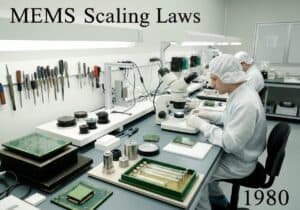
Laboratory scene with researchers studying high-temperature superconducting ceramic materials.

(صورة توضيحية فقط)

In 1986, Georg Bednorz and K. Alex Müller discovered superconductivity in a ceramic material, a lanthanum-based cuprate perovskite, at a critical temperature of ~35 K. This was significantly higher than the ~23 K record for conventional superconductors at the time and shattered the belief that superconductivity was restricted to much lower temperatures, opening the field of high-temperature superconductivity.
The discovery by Bednorz and Müller at the IBM Zurich Research Laboratory was a major breakthrough. For decades, the progress in raising the critical temperature ([latex]T_c[/latex]) had been slow and incremental, with most physicists believing that the electron-phonon mechanism described by BCS theory had a theoretical upper limit of around 30-40 K. Bednorz and Müller decided to investigate metallic oxides, a class of materials generally considered unsuitable for superconductivity. Their discovery in lanthanum barium copper oxide (LBCO) with a [latex]T_c[/latex] of 35 K was quickly confirmed and followed by a rapid succession of discoveries of related materials with even higher critical temperatures. In 1987, Paul Chu’s group discovered yttrium barium copper oxide (YBCO) with a [latex]T_c[/latex] of 92 K. This was a particularly significant milestone because 92 K is above the boiling point of liquid nitrogen (77 K), a coolant that is far cheaper and easier to handle than the liquid helium required for all previous superconductors. This made many applications economically and practically feasible for the first time. These materials, known as cuprates, are Type II superconductors with a layered, perovskite-like crystal structure. Despite intense research for over three decades, a complete, universally accepted microscopic theory for high-temperature superconductivity in cuprates remains elusive, though it is widely believed to involve a different pairing mechanism than the conventional phonon-mediated attraction of BCS theory.

UNESCO Nomenclature: 2211
– Solid state physics

يكتب

Physical Property

خلل

Incremental

الاستخدام

استخدام واسع النطاق

مقدمات

  • نظرية BCS (توفير خط أساس للمقارنة)
  • البحث في أكاسيد المعادن والسيراميك
  • تقنيات تركيب المواد المتقدمة
  • تطوير أنظمة قياس موثوقة لدرجات الحرارة المنخفضة

التطبيقات

  • كابلات نقل الطاقة الفائقة التوصيل
  • مغناطيسات كهربائية عالية المجال للأبحاث والتصوير بالرنين المغناطيسي
  • محددات تيار الخطأ لشبكات الطاقة
  • مرشحات الاتصالات الخلوية
  • محركات ومولدات كهربائية عالية الأداء

براءات الاختراع:

NA

أفكار ابتكارية محتملة

  • مفاعلات الاندماج المدمجة (توكاماكس) باستخدام مغناطيسات عالية المجال
  • مراكز بيانات خالية من الخسائر مع وصلات فائقة التوصيل
  • high-speed maglev transport systems operating with liquid nitrogen cooling
  • أنظمة دفع الطائرات الكهربائية الفعالة وخفيفة الوزن
  • عجلات تخزين الطاقة واسعة النطاق مع محامل فائقة التوصيل
  • أنظمة الدفع البحرية الصامتة (الدفع المغناطيسي الهيدروديناميكي)
  • مسرعات الجسيمات من الجيل التالي ذات حزم الطاقة الأعلى
  • نقل الطاقة لاسلكيًا لمسافات طويلة
  • مصاعد فضائية بشرائط فائقة التوصيل
  • أجهزة كشف فائقة الحساسية لعمليات البحث عن المادة المظلمة
Related to: high-temperature superconductivity, cuprates, YBCO, critical temperature, liquid nitrogen, Bednorz and Müller, unconventional superconductivity, condensed matter physics, perovskite, ceramic superconductor.

السياق التاريخي

الموصلية الفائقة عند درجات الحرارة العالية

1980
1984
1986
1986
1991
1994
1997
1980
1984
1985
1986
1990
1993-01-01
1995
2000

(إذا كان التاريخ غير معروف أو غير ذي صلة، على سبيل المثال "ميكانيكا الموائع"، يتم توفير تقدير تقريبي لظهوره الملحوظ)

أحدث الإضافات

أهم المنشورات والمقالات

أفضل الأدوات الأصلية

السنة العاشرة عيد

الصور والتنزيلات بالحجم الكامل متاحة فقط، ومجانية تمامًا، للأعضاء المسجلين.