An ergonomics lesson provided by an Ikea video, promoting their paper catalog (the “bookbook™”) is fantastic from many points of view. It became viral because of making fun of 苹果 产品介绍。这段视频也可能是在自嘲一些瑞典的刻板印象(比如那个笑容灿烂的金发男),但其中也蕴含着扎实的人体工程学原理和产品设计理念。而这正是我们今天的主题。接下来,让我们回到最初的内容。 史蒂夫·乔布斯 新品上市!
The Marketing Parody
“Once in a while…”, “Introducing the”, “amazing”, nice music while a slow-motion of the product …. that remembers you something, right?
(see the link at the bottom for the answer)
The Centuries-old Book Ergonomics Lesson
or, seen in an innovative way, the electronic accessories have still some innovation possible:
| books | possibly new technology/improvement over books |
| not many electronics have no radio communication anymore (物联网 Internet of Things) |
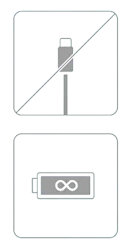
| the biggest electronic drawback; any phone or tablet currently lasts between hours and at best days of usage Induction charging is developing, thus a relatively low-efficiency ratio; but still requires a docking base or equivalent To improve this or decrease the need for recharging
|
| currently nothing really with variable screen size on the market yet some progress on foldable/rollable screens in R&D pipes Other ideas? |
| the physical contact so has the paper smell is indeed not there; would that really be a user function? the sharing easily aspect, well, mail, short message, online library, social network (…) have probably |
| no device has indeed a book-flip-pages speed yet so as a book The need is not really to obtain an animated character like in early flipbooks but to find information fast, visually, by color, or by aspect. A search feature using words does not help you much when you don’t know keywords for it yet or just looking for nice ideas 这里或许还蕴藏着一些创新!? |
| electronic bookmarks exist in all shapes and flavors … none is visible when the app /tablet/phone has not even started … |
| to be fair, not really a book-only advantage anymore; mid to high-end devices have now a resolution that is under the human eye perception. … providing that the app provides pictures in a sufficient resolution (saving memory app can destroy the tech advantage) |

Not mentioned in the video:
- price point: book=low; tablet, although the app can be free, the device required to view is several $100s, although some viewers-only are cheaper.
The Ergonomics Lesson Video, See By Yourself
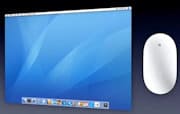
To be compared with Steve Jobs’s iconic iPhone product introduction in 2007 (“once in a while” … you’ve heard that before?) that was clearly a milestone in product introduction methodology, but also showing a typical modern Product Development cycle; see this iconic product introduction:
Last Ergonomics Words
All these being said, and while we are big fans (in the product design sense) of the assembly instructions delivered with their products,
this catalog is difficult to use to find a product in particular.
It does put the products in their context in a nice way (a kid’s room, a kitchen …), but trying to quickly find all tables for example is impossible … you have them all around the catalog, mixed with other furniture.
Complementary Readings & Methodologies
- 人因工程: focuses on designing systems and devices that align with human capabilities and limitations.
- Cognitive ergonomics: studies mental processes and how they affect interactions with other elements of a system.
- Anthropometry: the measurement and analysis of the human body to improve product design.
- Biomechanics: examines the mechanical aspects of human movement to enhance ergonomic design.
- 以用户为中心 设计: a design philosophy that focuses on the needs and limitations of the end-user.
- Workplace design: involves organizing the work environment to optimize productivity and comfort.
- Haptic feedback technology: uses touch feedback to improve user interaction with devices and systems.
- Virtual Reality (VR) ergonomics: studies the ergonomic impacts of VR systems to improve immersive experiences.
- Fatigue management: strategies to minimize fatigue-related errors and enhance worker performance.
常用术语表
Internet of Things (IoT): 一个由嵌入传感器、软件和其他技术的互连设备组成的网络,使它们能够通过互联网收集和交换数据,促进各种流程和系统的自动化、监控和控制。
New Product Introduction (NPI): 涉及新产品的规划、开发和发布的过程,涵盖市场研究、设计、测试和生产,以确保成功进入市场并满足客户需求和业务目标。