
Limits of the Five Whys Root Cause Analysis Technique
Is the Five Whys technique enough to find the true causes of complex problems? The Five Whys is a simple
Is the Five Whys technique enough to find the true causes of complex problems? The Five Whys is a simple

Did you know that a Toyota car has over 30,000 parts? The Toyota Production System (TPS) makes sure each one

Did you know that in 1950, Toyota was making only 2,500 cars a year? Meanwhile, Ford was producing nearly 8,000
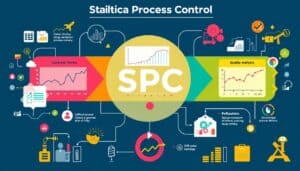
Statistical Process Control (SPC) is key in quality management. It gives real-time insights to keep process performance and product quality

Are you making the most of every tool at your disposal to enhance production? Knowing and using the right Key

Did you know that over 70% of modern agile projects use Scrum? It’s a dynamic approach aimed at quickly delivering

Can a simple design change spark a revolution in productivity? The key might be in the Single Minute Exchange of

Avoid these product design mistakes for a lot of troubles: some product features or technologies are tempting at first, but

The operators may move fast on the production line, make straightforward repetitive tasks and put their best effort into it

A brief review of the 6 Jugaad principles, together with our own additions, views sometimes different, and examples and links