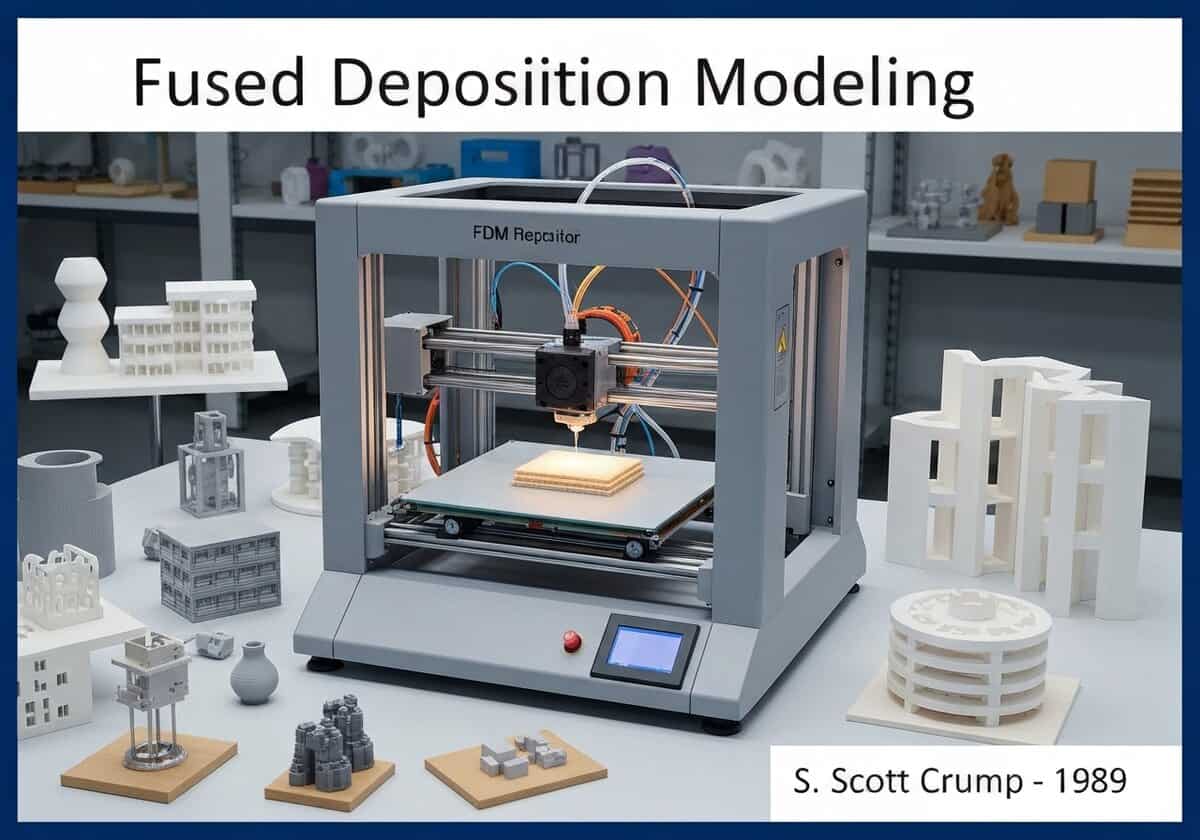
융합 적층 모델링(FDM), 또는 융합 필라멘트 제조(FFF)라고도 불리는 이 기술은 용융된 재료를 미리 정해진 경로를 따라 층별로 선택적으로 적층하여 물체를 제작하는 재료 압출 기술입니다. 열가소성 물질 필라멘트는 코일에서 풀려나 가열된 압출기 노즐을 통해 공급됩니다. 노즐은 필라멘트를 녹여 빌드 플랫폼에 분사하고, 필라멘트는 플랫폼에서 냉각되어 굳어지면서 아래층과 융합됩니다.


(설명을 위한 생성된 이미지입니다)
융합 적층 모델링(FDM), 또는 융합 필라멘트 제조(FFF)라고도 불리는 이 기술은 용융된 재료를 미리 정해진 경로를 따라 층별로 선택적으로 적층하여 물체를 제작하는 재료 압출 기술입니다. 열가소성 물질 필라멘트는 코일에서 풀려나 가열된 압출기 노즐을 통해 공급됩니다. 노즐은 필라멘트를 녹여 빌드 플랫폼에 분사하고, 필라멘트는 플랫폼에서 냉각되어 굳어지면서 아래층과 융합됩니다.
FDM 프린터에서 압출기 헤드 및/또는 빌드 플랫폼의 움직임은 슬라이싱된 3D 모델을 해석하는 컴퓨터에 의해 제어됩니다.G코드). The head moves in the X and Y axes, while the platform typically moves in the Z axis after each layer is complete. The process relies on precise thermal management: the ‘hot end’ of the extruder must keep the plastic at a temperature that allows it to flow but not degrade, while the deposited material must cool quickly enough to hold its shape. Layer adhesion is critical for part strength and is highly dependent on temperature, speed, and material properties. FDM parts are not fully dense; their internal structure is often a pre-defined infill pattern (e.g., grid, honeycomb) to save material and print time while providing structural support. Common materials include polylactic acid (PLA), acrylonitrile butadiene styrene (ABS), polyethylene terephthalate glycol (PETG), and various engineering-grade polymers. The expiration of the original FDM patent in 2009 was a 촉매 for the open-source RepRap project and the subsequent explosion of affordable, consumer-grade 3D printers, making the technology widely accessible.
융합 적층 모델링(FDM)
(날짜를 알 수 없거나 관련이 없는 경우, 예를 들어 "유체역학"의 경우, 주목할 만한 등장 시기를 대략적으로 추정하여 제공합니다.)

고화질 이미지 및 다운로드는 등록된 회원에게만 100% 무료로 제공됩니다.
> 로그인 <