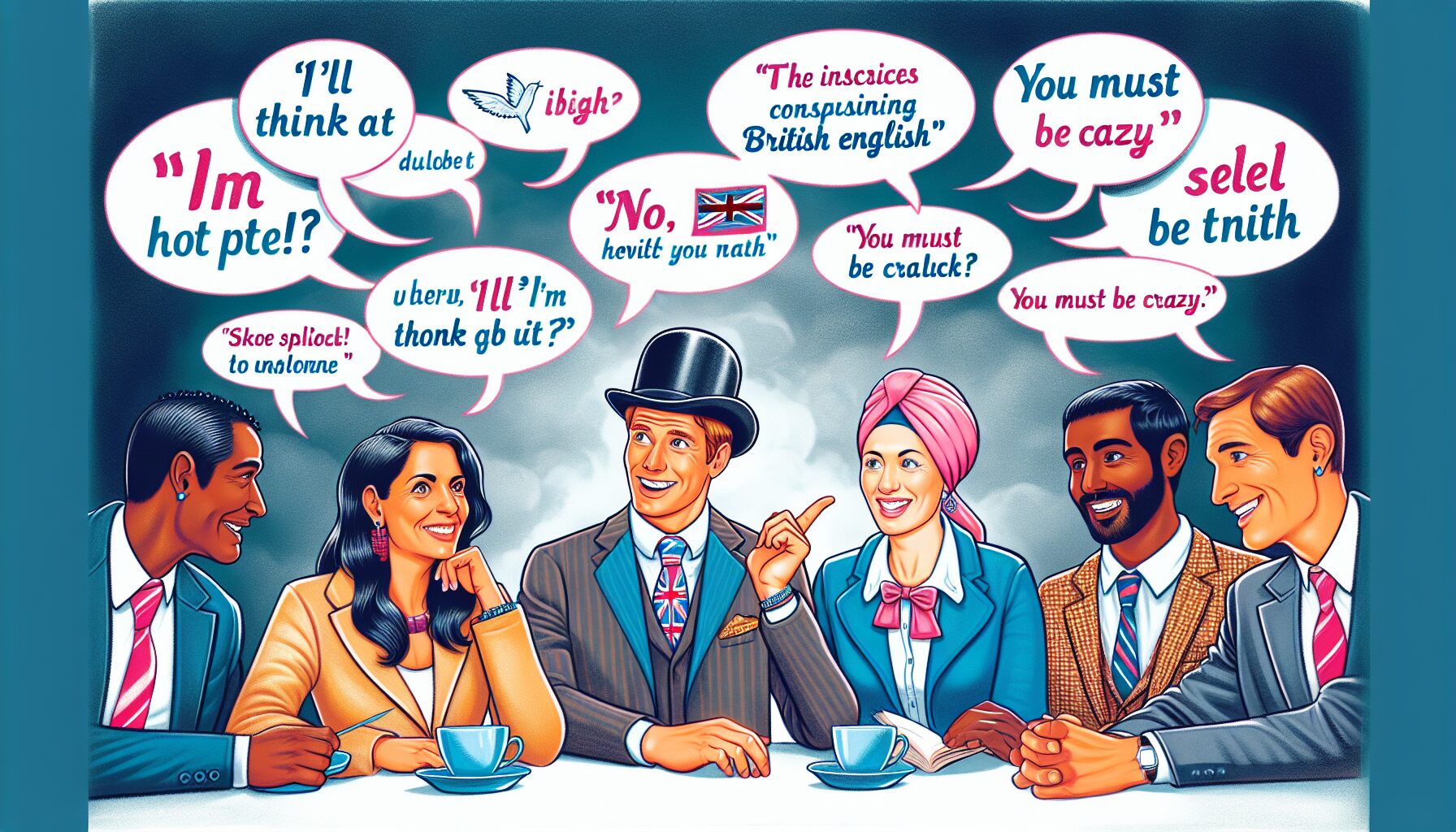
영국식 영어는 예의를 갖추기 위해 간접적인 표현을 자주 사용하기 때문에 외국어 화자에게는 혼란스러울 수 있습니다. 다른 문화권에서는 상대방이 실제로 무엇을 의미하는지 파악하기 어렵기 때문입니다. 영국인들은 존중의 표시로 "아니요"라는 말을 직접적으로 하지 않고 "생각해 볼게요"와 같은 표현을 사용하는데, 이는 사실상 "아니요"라는 뜻입니다. 또한 영국식 유머는 아이러니, 절제된 표현, 풍자에 크게 의존하기 때문에 오해를 불러일으키기 쉽습니다. 이러한 문화적 관습으로 인해 의도하는 바는 종종 숨겨져 있으므로, 문자 그대로의 의미를 넘어 세심한 해석이 필요합니다.
영국식 영어
Beside famous “it’s raining cats and dogs” and other funny idioms easy to understand, one of the most difficult aspect in Professional 의사소통 between native and non-native speakers is when the intention is underlying, or with irony for foreign cultures using a much more direct open-mind style.
(영국인이 아닌) 당신에게 긍정적이거나 격려가 되는 말이 당신에게는 정반대로 들릴 수도 있습니다.
아래 표는 국제 프로젝트나 비즈니스를 진행할 때, 특히 영국인과 같은 원어민 영어 사용자를 상대할 경우 반드시 알아두어야 할 내용입니다.
(이것은 아닙니다) 혁신.세계 (이 표는 출처가 명시되지 않은 채 최소 15년 동안 유포되어 왔습니다. 원저자는 표 아래를 참조하십시오.)
| What the British say | What the British mean | What the foreigners understand |
| I hear what you say | I disagree completely | He accepts my point of view |
| You must come by for dinner sometime | Just being polite; Goodbye! | He will invite me for dinner in the course of time |
| Very interesting | I don’t agree | He likes my idea |
| With the greatest respect | You must be a fool | He respects me/my view |
| I’m sure it’s my fault | It’s your fault! | It is his fault |
| That is an original point of view | You must be crazy | They like the idea |
| I almost agree | I don’t agree | He almost agrees |
| You’ll get there (eventually) | No way you will make it | Encouragement to go on |
| I’ll bear it in mind | I won’t do anything about it | He will use it when appropriate |
| Could we consider some other options | I don’t like your idea | He is still in the process of thinking |
| I would suggest | Do it as I want you to | An open suggestion |
| By the way | The primary purpose is | Not very important |
| Perhaps you could give this some more thought | Don’t do it, it’s a bad idea | Consider possible road blocks |
| Quite good | A bit disappointing | Quite good |
| Not bad | (very) good | Average or poor |
| Please consider | Do it or forget it | He leaves it up to me |
| I have a further suggestion | Take it or leave it | He leaves it up to me |
| The method described is rather original | Bullshit | It’s a good method |
| I have a few preliminary suggestions | I strongly suggest you to follow my suggestions | Don’t change anything until final suggestions have been made |
| Reads well | Really good | Average |
| I am somewhat disturbed by the methodology | I am crossed | He is not feeling too comfortable about it |
| With all due respect | You don’t know what you are doing, I have a better suggestion (polite disagreement) | With the greatest respect |
| A few issues that need to be addressed | A whole lot needs to be changed | 2–3 issues need rewriting |
| An issue that worries me slightly | A great worry | A minor issue |
| I am sorry we have to reject your paper on priority grounds |
Your paper sucks | My paper nearly made it |
| I am sorry to disappoint you on this occasion | I could not care less | He is sorry |
© 나네트 립미스터 노동 이동성 분야의 전문가인 @Expertise 님의 허락을 받아 여기에 게시되었습니다.
강조가 모든 것을 좌우합니다.
위의 영국식 스타일보다 훨씬 쉽습니다. 많은 (모든?) 언어에서 공통적으로 사용되는 방식인데, 문장에서 강조점을 어디에 둘지 정하는 방식이기 때문입니다. 적어도 사람에게는 훨씬 쉽죠. AI에게는 말입니다. 법학 석사 이것들을 이해하는 데 훨씬 더 많은 어려움을 겪을 것입니다. 유명한 예는 다음과 같습니다.
“I never said she stole my money” = 다른 사람이 그렇게 말했을 수도 있지만, 나는 그렇게 말하지 않았다
“I never said she stole my money”저는 그 어떤 시점에서도 그런 주장을 한 적이 없습니다.
“I never said she stole my money” = 나는 그것이 암시되었거나 생각되었지만, 말로 표현하지는 않았다.
“I never said she stole my money” 나는 그게 그녀라고 말한 적 없어.
“I never said she stole my money” 내가 그녀에게 돈을 빌렸거나 주었을 수도 있다.
“I never said she stole my money” 그녀는 다른 사람의 돈을 훔쳤다.
“I never said she stole my money“ 그녀는 내 돈 말고 다른 것도 훔쳤어.
(위의 영국식 영어처럼, 이 표현도 최소 13년 동안 유포되고 있습니다. 원작자이시거나 원작자를 아시는 분이 계시다면 알려주시면 감사하겠습니다.)