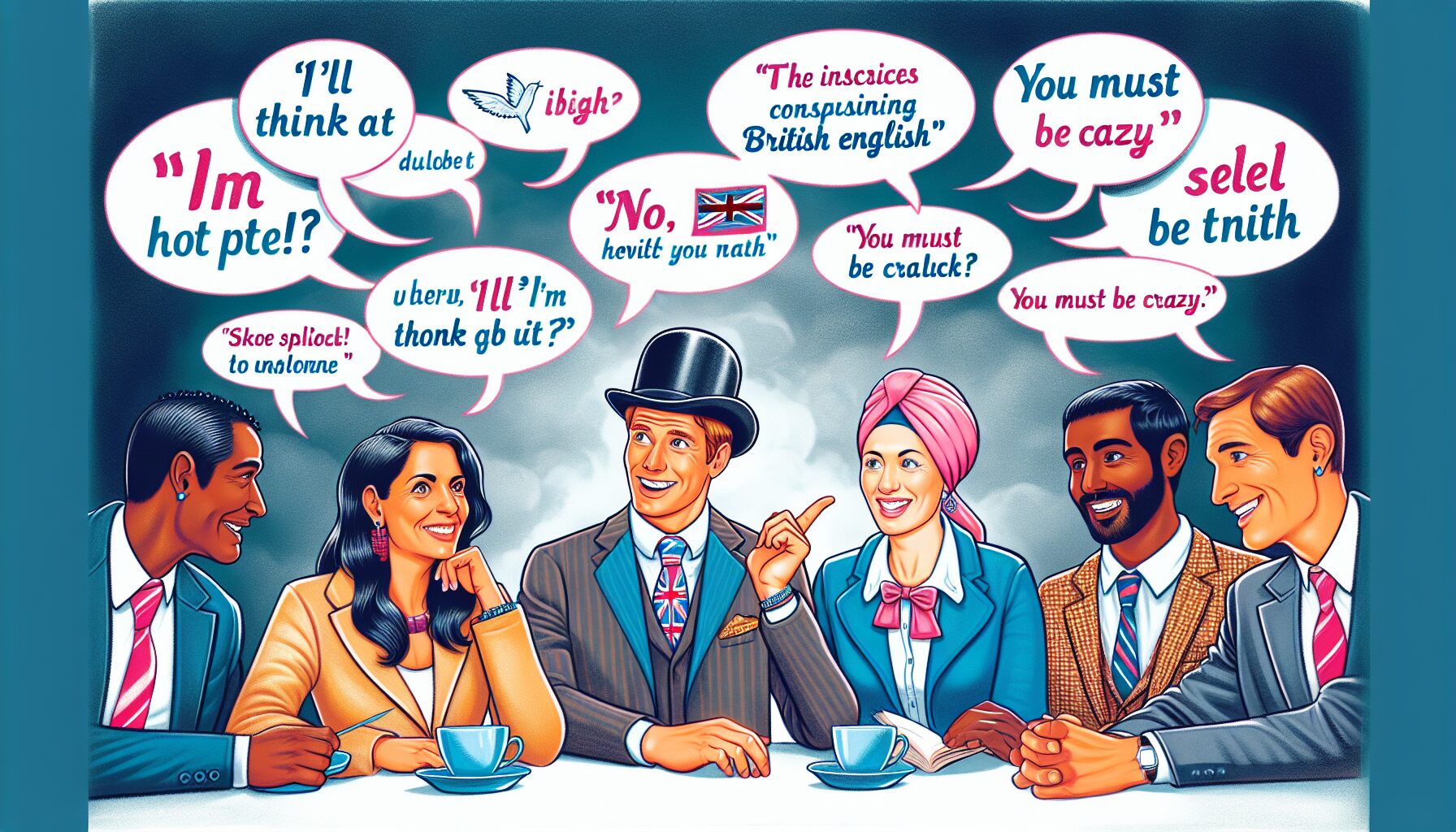
O inglês britânico pode ser confuso para quem não é nativo, pois a polidez muitas vezes leva a uma linguagem indireta, dificultando a compreensão das reais intenções de outras culturas. Por respeito, os britânicos podem evitar dizer "não" diretamente, usando frases como "Vou pensar nisso", que na verdade significa "não". Seu senso de humor se baseia fortemente em ironia, eufemismo e sarcasmo, o que pode ser facilmente mal interpretado. Esses hábitos culturais fazem com que a mensagem pretendida muitas vezes fique implícita, exigindo uma interpretação cuidadosa que vá além do texto literal.
Inglês britânico
Beside famous “it’s raining cats and dogs” and other funny idioms easy to understand, one of the most difficult aspect in Professional comunicação between native and non-native speakers is when the intention is underlying, or with irony for foreign cultures using a much more direct open-mind style.
O que soa positivo ou encorajador para você (não britânico) ∞ pode ser exatamente o oposto.
A tabela abaixo é essencial para quem gerencia projetos ou negócios internacionais com falantes nativos de inglês, especialmente britânicos.
(isto não é) inovação.mundo (Cópias não atribuídas desta tabela circularam por pelo menos 15 anos. Consulte abaixo da tabela para obter informações sobre o autor original.)
| What the British say | What the British mean | What the foreigners understand |
| I hear what you say | I disagree completely | He accepts my point of view |
| You must come by for dinner sometime | Just being polite; Goodbye! | He will invite me for dinner in the course of time |
| Very interesting | I don’t agree | He likes my idea |
| With the greatest respect | You must be a fool | He respects me/my view |
| I’m sure it’s my fault | It’s your fault! | It is his fault |
| That is an original point of view | You must be crazy | They like the idea |
| I almost agree | I don’t agree | He almost agrees |
| You’ll get there (eventually) | No way you will make it | Encouragement to go on |
| I’ll bear it in mind | I won’t do anything about it | He will use it when appropriate |
| Could we consider some other options | I don’t like your idea | He is still in the process of thinking |
| I would suggest | Do it as I want you to | An open suggestion |
| By the way | The primary purpose is | Not very important |
| Perhaps you could give this some more thought | Don’t do it, it’s a bad idea | Consider possible road blocks |
| Quite good | A bit disappointing | Quite good |
| Not bad | (very) good | Average or poor |
| Please consider | Do it or forget it | He leaves it up to me |
| I have a further suggestion | Take it or leave it | He leaves it up to me |
| The method described is rather original | Bullshit | It’s a good method |
| I have a few preliminary suggestions | I strongly suggest you to follow my suggestions | Don’t change anything until final suggestions have been made |
| Reads well | Really good | Average |
| I am somewhat disturbed by the methodology | I am crossed | He is not feeling too comfortable about it |
| With all due respect | You don’t know what you are doing, I have a better suggestion (polite disagreement) | With the greatest respect |
| A few issues that need to be addressed | A whole lot needs to be changed | 2–3 issues need rewriting |
| An issue that worries me slightly | A great worry | A minor issue |
| I am sorry we have to reject your paper on priority grounds | Your paper sucks | My paper nearly made it |
| I am sorry to disappoint you on this occasion | I could not care less | He is sorry |
© Nannette Ripmeester @Especialista em Mobilidade Laboral, publicado aqui com sua autorização.
A ênfase é tudo.
Bem mais fácil do que o estilo britânico acima, já que é comum a muitas (ou todas?) as línguas, é onde você coloca a ênfase na frase. Bem mais fácil, pelo menos para humanos, do que para uma IA. Mestrado em Direito terão muito mais dificuldades para entender isso. O exemplo famoso é:
“I never said she stole my money” Alguém pode ter dito isso, mas não eu.
“I never said she stole my money”Eu não fiz essa afirmação em nenhum momento.
“I never said she stole my money” Eu tinha isso implícito ou pensado, mas não disse explicitamente.
“I never said she stole my money” Eu nunca disse que era ela.
“I never said she stole my money” Talvez eu tenha lhe emprestado ou lhe dado o dinheiro.
“I never said she stole my money” = ela roubou o dinheiro de outra pessoa
“I never said she stole my money“ Ela roubou algo além do meu dinheiro.
(Assim como o texto em inglês britânico acima, este circula há pelo menos 13 anos. Se você for o autor original ou o conhecer, teremos prazer em dar-lhe os devidos créditos.)