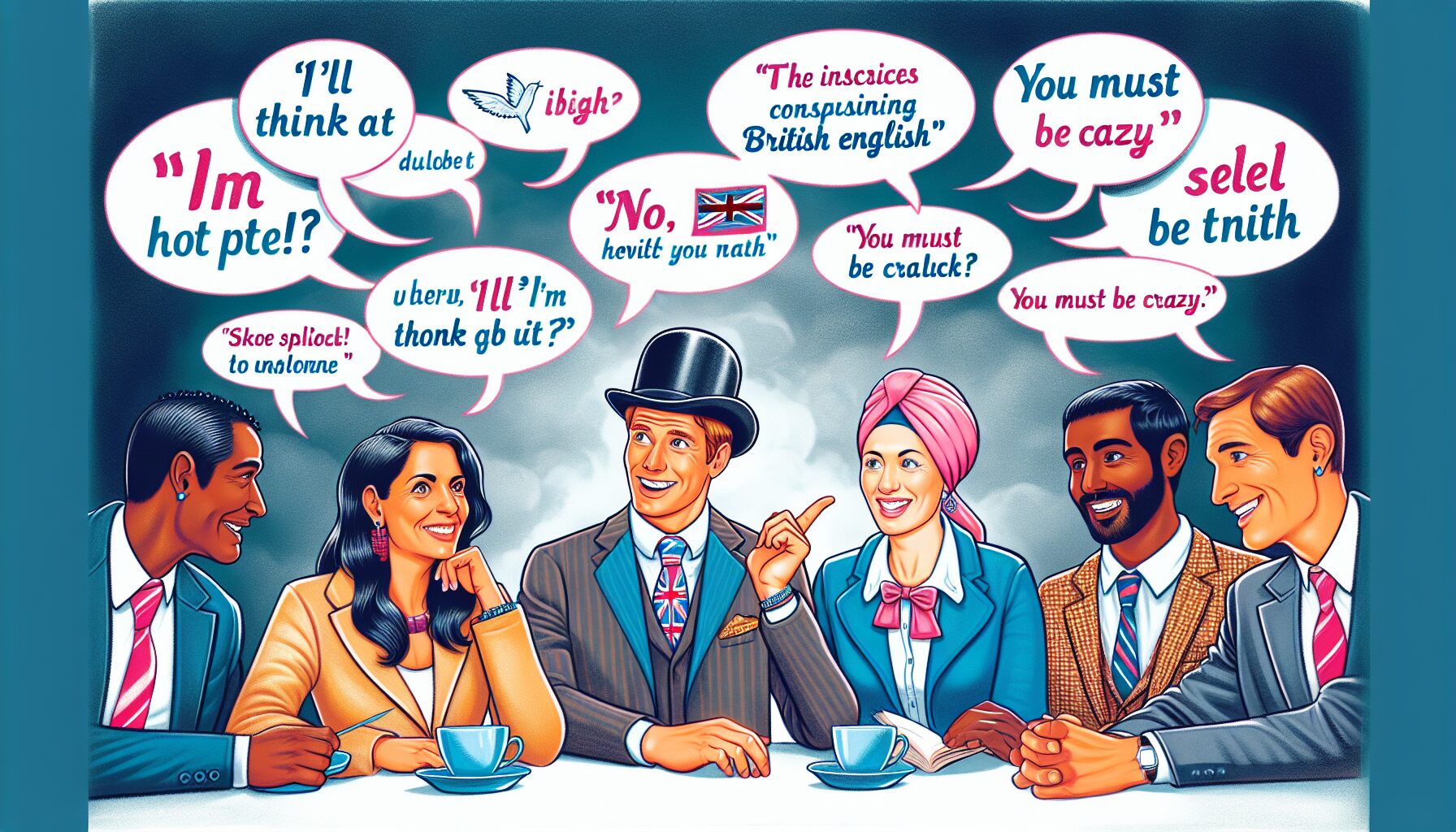
ब्रिटिश अंग्रेज़ी गैर-देशी वक्ताओं के लिए भ्रमित करने वाली हो सकती है क्योंकि विनम्रता अक्सर अप्रत्यक्ष भाषा की ओर ले जाती है, जिससे अन्य संस्कृतियों के लिए यह जानना मुश्किल हो जाता है कि कोई वास्तव में क्या कहना चाहता है। सम्मान के कारण, ब्रिटिश लोग सीधे 'नहीं' कहने से बच सकते हैं, इसके बजाय 'मैं इस बारे में सोचूंगा' जैसे वाक्यांशों का उपयोग करते हैं, जिसका वास्तव में अर्थ 'नहीं' होता है। उनके हास्य की भावना काफी हद तक विडंबना, अल्पकथन और व्यंग्य पर निर्भर करती है, जिसे आसानी से गलत समझा जा सकता है। ये सांस्कृतिक आदतें बताती हैं कि इच्छित संदेश अक्सर छिपा होता है, जिसके लिए शाब्दिक शब्दों से परे सावधानीपूर्वक व्याख्या की आवश्यकता होती है।
ब्रिटिश अंग्रेज़ी
Beside famous “it’s raining cats and dogs” and other funny idioms easy to understand, one of the most difficult aspect in Professional संचार between native and non-native speakers is when the intention is underlying, or with irony for foreign cultures using a much more direct open-mind style.
जो आपको (गैर-ब्रिटिश) सकारात्मक या उत्साहजनक लगता है ... वह पूरी तरह से विपरीत हो सकता है।
यदि आप अंतरराष्ट्रीय परियोजनाओं या देशी अंग्रेज़ी बोलने वालों, विशेष रूप से ब्रिटिश लोगों के साथ व्यवसाय का प्रबंधन करते हैं, तो नीचे दी गई तालिका जानना आवश्यक है।
(यह नहीं है इनोवेशन.वर्ल्ड कार्य। इस तालिका की अनाम प्रतियाँ कम से कम 15 वर्षों से प्रसारित हो रही हैं। मूल लेखक के लिए तालिका के नीचे देखें)
| What the British say | What the British mean | What the foreigners understand |
| I hear what you say | I disagree completely | He accepts my point of view |
| You must come by for dinner sometime | Just being polite; Goodbye! | He will invite me for dinner in the course of time |
| Very interesting | I don’t agree | He likes my idea |
| With the greatest respect | You must be a fool | He respects me/my view |
| I’m sure it’s my fault | It’s your fault! | It is his fault |
| That is an original point of view | You must be crazy | They like the idea |
| I almost agree | I don’t agree | He almost agrees |
| You’ll get there (eventually) | No way you will make it | Encouragement to go on |
| I’ll bear it in mind | I won’t do anything about it | He will use it when appropriate |
| Could we consider some other options | I don’t like your idea | He is still in the process of thinking |
| I would suggest | Do it as I want you to | An open suggestion |
| By the way | The primary purpose is | Not very important |
| Perhaps you could give this some more thought | Don’t do it, it’s a bad idea | Consider possible road blocks |
| Quite good | A bit disappointing | Quite good |
| Not bad | (very) good | Average or poor |
| Please consider | Do it or forget it | He leaves it up to me |
| I have a further suggestion | Take it or leave it | He leaves it up to me |
| The method described is rather original | Bullshit | It’s a good method |
| I have a few preliminary suggestions | I strongly suggest you to follow my suggestions | Don’t change anything until final suggestions have been made |
| Reads well | Really good | Average |
| I am somewhat disturbed by the methodology | I am crossed | He is not feeling too comfortable about it |
| With all due respect | You don’t know what you are doing, I have a better suggestion (polite disagreement) | With the greatest respect |
| A few issues that need to be addressed | A whole lot needs to be changed | 2–3 issues need rewriting |
| An issue that worries me slightly | A great worry | A minor issue |
| I am sorry we have to reject your paper on priority grounds |
Your paper sucks | My paper nearly made it |
| I am sorry to disappoint you on this occasion | I could not care less | He is sorry |
© Nannette Ripmeester @Expertise in Labour Mobility, उनकी अनुमति से यहां प्रकाशित
ज़ोर देना ही सब कुछ है
ऊपर वर्णित ब्रिटिश शैली की तुलना में कहीं अधिक आसान, क्योंकि यह कई (सभी?) भाषाओं में सामान्य है, वह है जहाँ आप अंततः वाक्य में ज़ोर देते हैं। कम से कम मनुष्यों के लिए कहीं अधिक आसान, क्योंकि एक AI LLM इन्हें समझने में कहीं अधिक कठिनाइयाँ होंगी। प्रसिद्ध उदाहरण है:
“I never said she stole my money” = किसी और ने कहा होगा, मैंने नहीं
“I never said she stole my money”= मैंने किसी भी समय वह दावा नहीं किया था
“I never said she stole my money” = मैंने इसका अर्थ दिया या सोचा है, लेकिन कहा नहीं है
“I never said she stole my money” = मैंने कभी नहीं कहा कि यह वह थी
“I never said she stole my money” = मैंने शायद उससे पैसे उधार लिए या उसे दिए होंगे
“I never said she stole my money” = उसने किसी और के पैसे चुराए
“I never said she stole my money“ = उसने मेरे पैसे के अलावा कुछ और चुराया
(ऊपर वर्णित ब्रिटिश अंग्रेज़ी की तरह, यह कम से कम 13 वर्षों से प्रसारित हो रहा है। यदि आप मूल लेखक हैं या उसे जानते हैं, तो हमें उन्हें श्रेय देने में खुशी होगी)