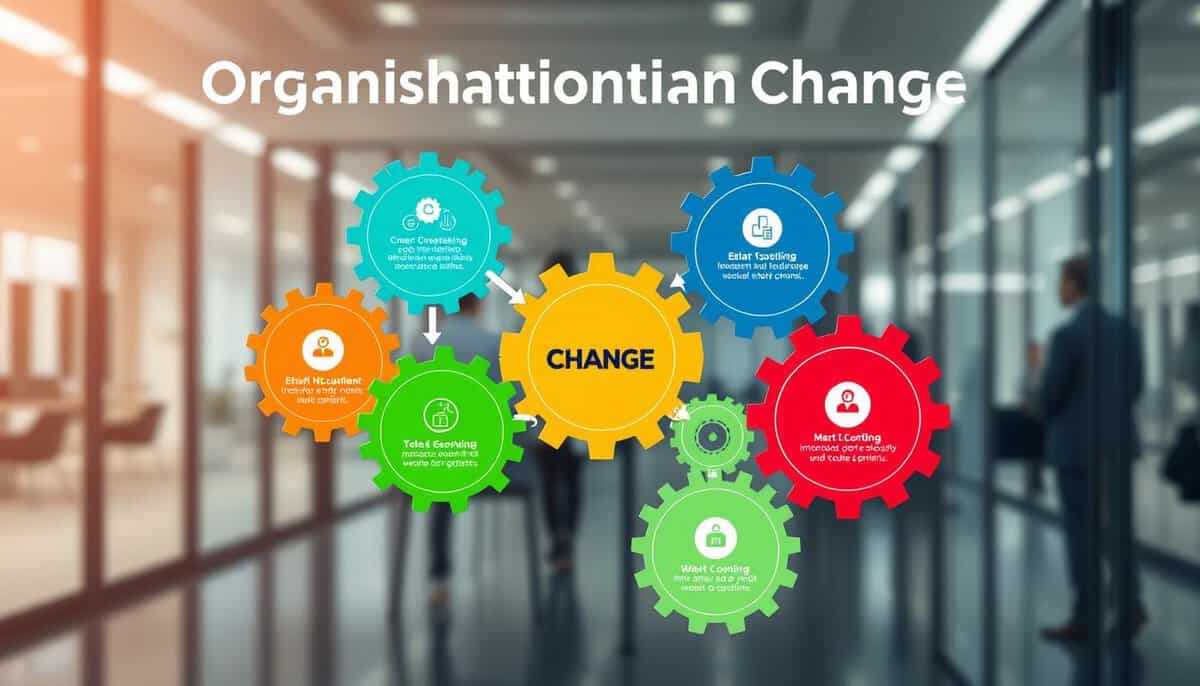
조직 변화의 성공 확률이 단 30%에 불과하다는 사실을 알고 계셨습니까? 이 사실은 신중한 전략 수립의 필요성을 강조합니다. 변화 관리. Harvard professor John Kotter developed a strategic method to avoid common organizational change mistakes. His 8-step process offers a thought-out and inclusive framework.
코터의 방법론은 다양한 변화 시도에 대한 심층적인 연구에서 비롯되었습니다. 이 방법론은 많은 변화가 실패하는 주요 원인을 다룹니다. 또한 조직 전반에 걸쳐 단결과 리더십을 증진합니다. 코터의 단계별 지침은 지속적이고 효과적인 변화를 위한 핵심 요소입니다.
이 가이드에서는 코터의 8단계 리더십 기법을 하나씩 살펴보겠습니다. 리더들이 이러한 방법을 활용하여 성공적인 조직 변화를 이끌어내는 방법을 알아보실 수 있습니다.
핵심 요약
- 체계적인 접근 방식 없이 변화를 구현하는 조직의 성공률은 단 30%에 불과합니다.
- 변화의 시급성을 조성하려면 경영진의 75% 지지가 필수적입니다.
- 효과적인 변화 관리를 위해서는 다양한 핵심 팀과 후원자를 포함하는 주도적인 연합체가 반드시 필요합니다.
- 단기적인 성과가 조직 전체에 명확하고 가시적으로 드러나야 추진력을 유지할 수 있습니다.
- 효과적인 변화 소통과 직원 인정은 장기적인 성공에 필수적입니다.
- 존 코터 박사의 8단계 모델은 변화 관리를 위한 포괄적인 틀을 제공합니다.
- 변화를 기업 문화에 뿌리내리게 하면 새로운 관행이 지속적인 영향을 미치게 됩니다.
코터의 8단계 조직 변화 프로세스 이해하기
코터의 프로세스 조직 변화의 핵심은 구조화된 방법론을 사용하는 것입니다. 이 모델은 신중하게 변화를 이끌고, 리더를 육성하며, 조직 구성원들을 조화롭게 정렬합니다.
코터의 8단계 프로세스 개요
코터의 8단계 변화 프로세스는 다음과 같습니다.
- 긴박감을 조성하다
- 이끌어갈 연합체 구축
- 전략적 비전 수립
- 자원병 모집
- 장벽을 제거하여 행동을 가능하게 함
- 단기적인 성과 창출
- 가속을 지속하다
- 변화를 실행에 옮기다
이러한 조치는 모든 사람을 참여시키고, 저항을 줄이며, 새로운 아이디어를 촉발하는 것을 목표로 합니다. 예를 들어, 모든 계층의 사람들에게 권한을 부여하면 운영 효율성이 향상됩니다.
현대 변화 관리에서의 중요성
빠르게 변화하는 현대 사회에서 코터 모델은 매우 중요합니다. 전략 수립, 리더십 개발, 문화 변화 등 다양한 시나리오에 적용 가능합니다. IBM과 제너럴 일렉트릭(GE) 같은 기업들은 코터의 아이디어를 활용하여 대규모 변화를 이뤄냈습니다. 이 모델은 디지털 혁신, 인수합병에도 핵심적인 역할을 합니다.
게다가 코터의 방법은 프로시(Prosci)의 모델과 같은 다른 모델들과도 잘 호환됩니다. 아드카르 그리고 루윈의 변화 모델은 강력한 리더십과 모든 구성원의 참여를 강조합니다.
| 변화 관리 모델 | 핵심 초점 | 예시 애플리케이션 |
|---|---|---|
| 코터의 8단계 프로세스 | 조직 변화를 위한 구조화된 단계 | 새로운 운영 절차 시행 |
| 프로시 ADKAR 모델 | 개인별 변화 관리 요구 사항 | 직원들의 신규 소프트웨어 도입 |
| Lewin의 변화 관리 모델 | 변화의 세 단계: 해빙, 변화, 그리고 재결빙 | 문화 변화 계획 |
코터의 프로세스는 조직의 성공적인 변화를 돕습니다. 대규모 변화 노력의 70% 이상이 코터 모델 덕분에 더 나은 결과를 얻습니다. 코터 모델은 현대 변화 관리의 핵심 요소입니다.
긴박감을 조성하기
오늘날과 같은 세상에서 기업은 빠르게 움직입니다. 코터의 8단계 프로세스에 기반하여 긴박감을 조성하는 것이 매우 중요합니다. 리더는 팀에 동기를 부여하고 나태함을 없애야 합니다.
잠재적 위협 및 기회 식별
The IBM study “The Enterprise of the Future”이는 변화가 빠르게 일어난다는 것을 알려줍니다. 위협과 기회를 조기에 포착하는 것이 중요합니다. 예를 들어, 코로나 19 많은 기업들이 온라인 판매와 회의로 전환하도록 강요했습니다.
존 코터는 기업이 신속하게 대응하려면 대부분의 관리자들이 동참해야 한다고 말합니다. 리더는 실제 상황을 공유하고 모든 구성원을 참여시켜 긴급한 변화를 이끌어내야 합니다.
추진력과 열정을 구축하다
명확한 소통은 변화에 대한 에너지와 열정을 불러일으키는 출발점입니다. 이는 행동하지 않을 경우 어떤 위험이 따르는지, 그리고 행동할 경우 무엇을 얻을 수 있는지를 보여주는 것입니다. 넷플릭스의 성공과 블록버스터의 몰락은 이를 완벽하게 보여주는 사례입니다.
변화를 주도하는 CEO는 엄청난 차이를 만들어냅니다. 그들은 어려운 시기를 기회로 삼고, 목표를 명확히 하며, 변화를 효과적으로 전달합니다. 존 코터 박사는 성공을 위해 이러한 접근 방식을 강조합니다.
| 회사 | 긴급성 부족으로 인한 결과 | 변화 리더십을 위한 교훈 |
|---|---|---|
| 블록버스터 | 시장 지배력을 잃고 2010년에 사업을 중단했습니다. | 경쟁 및 기술 동향에 적응하십시오. |
| 블랙베리 | 시장 점유율은 2017년까지 20%에서 1% 미만으로 떨어졌다. | 기술 발전에 신속하게 대응하십시오 |
| 시어스 | 2018년 파산 신청 후 매장 수를 대폭 축소했습니다. | 변화하는 비즈니스 모델을 수용하세요 |
With new tech and market changes, following Kotter’s 8-step model helps businesses stay strong and ready for what comes next.
이끌어갈 연합체 구축
The second step in John Kotter’s model for leading change is creating a guiding coalition. Without strong support of skilled and influential people, change efforts often fail. This team’s main 직업 변화를 지원하고, 비전을 홍보하며, 모든 사람에게 동기를 부여하는 것입니다.

Engaging Key Stakeholders
Starting a guiding coalition means first getting key stakeholders on board. Experts say that its success greatly depends on continuous support from top leaders. These leaders must stay actively involved to fight resistance and help everyone accept the change.
- Active participation is crucial to counter resistance.
- Transparency and trust are essential for harmony.
- Front-line and middle managers’ engagement strengthens buy-in.
Forming a Strong Team
A guiding coalition needs diverse members with leadership skills and decision-making power. It should include people from different levels and areas that are relevant to the change. A variety of perspectives helps bring new ideas to the change effort. Leaders must be careful not to choose the wrong people or lack engagement.
| Success Factors | Common Mistakes |
|---|---|
| Engaging key stakeholders actively | Lack of active engagement |
| Appointing credible, influential members | Wrong team appointments |
| Ensuring transparency and trust | Weak coalition start |
By following leadership principles and Kotter’s model, organizations can form a coalition that leads the way in making change happen.
Developing a Strategic Vision
Crafting a strategic vision is a key part of Kotter’s 8-Step Change Model. It creates a clear path for the future. It also motivates everyone in the organization to work towards the same goals. A strong vision acts as a guiding light, enabling the achievement of major aims smoothly.
Clarifying Future Goals
Understanding the organization’s strengths and weaknesses is vital for setting future goals. This step needs deep thought and future planning. By setting SMART goals, we can ensure our change plans are clear and achievable.
Getting Organizational Buy-In
Getting the organization on board is essential for any change to work. Leaders must communicate well and get stakeholders involved in making and doing the plans. This builds a strong support base and excitement for change.
Also, making sure the entire organization aligns with the vision is critical. This ensures every part works together towards shared goals. It boosts both efficiency and unity.
Empowering Action by Removing Barriers
Kotter’s 8-step process highlights empowering action as key. It follows creating urgency, forming a team, and sharing a vision. Removing barriers that block progress is vital.
It’s important to know the barriers. They come as structural, skills, systems, and managerial issues.
Structural barriers can stop individuals from achieving the change vision. This can lead to frustration and quitting early if not dealt with.
Skills barriers mean we need training or experiences to build the right behaviors. Systems barriers mean making our processes fit the new vision. This helps everyone act effectively.

Managers and supervisors might also block change because of their past or habits. It’s critical to address these issues quickly. Dr. John Kotter found 70% of major organizational changes fail. Most failures are due to not empowering action or not removing barriers well.
- Structural barriers: things like hierarchies and resource issues can clash with new visions.
- Skills barriers: spotting skills gaps and providing training can reduce resistance.
- Systems barriers: systems should help, not hinder, change efforts.
- Managerial barriers: managers may fear loss of control, needing care and strategic change to align them with the vision.
To truly remove barriers, companies need to train both employees and managers. The structure, skills, systems, and leaders must support the vision. Senior leaders and guiding teams are crucial here.
| 범주 | Common Barrier | Solution |
|---|---|---|
| Structural | Hierarchical constraints | Realign organizational structure |
| Skills | Lack of necessary skills | Provide targeted training programs |
| Systems | Outdated processes | Update and align systems with vision |
| Managerial | Resistance from managers | Address concerns and realign roles |
Generating Short-Term Wins
Generating short-term wins is key in Kotter’s 8-step process for creating lasting change. It keeps momentum and motivation high among employees. These early successes show the positive effects of change, building support and belief in the vision.
Importance of Early Wins
Short-term wins are organizational improvements that happen within 6 to 18 months. They are important to keep change moving forward.
These wins must be clear, seen by everyone, and linked to the change efforts
They help avoid discouragement, boost morale, and reduce resistance.
Celebrating these wins also encourages employees and cuts down on criticism. By recognizing efforts toward short-term goals, morale stays high. This ensures everyone stays engaged and supports the change.
Strategies to Achieve Short-Term Wins
Planning and executing short-term wins requires effective strategies. They should aim for 3-to-6-month targets. This creates urgency, which is crucial in change management. Acknowledging these achievements is key to keeping everyone motivated.

It’s important to have clear markers to track progress. They help spot problems early, so adjustments can be made if needed. Key strategies include:
- Goal identification: define what a win looks like for the change effort.
- Communication: keep everyone informed about successes to boost commitment.
- Reward system: reward those who meet short-term goals to keep morale high.
- Tracking and reporting: regular progress checks help highlight successes and areas to improve.
Using these strategies not only creates short-term wins but ensures the change benefits are seen long-term. This helps convince stakeholders that the effort is worth it, leading to successful change.
| 기준 | 설명 |
|---|---|
| Unambiguous Success | Clear indicators of success according to predefined criteria. |
| Visibility | Achievements must be visible organization-wide to ensure acknowledgment. |
| 관련성 | Successes must be directly linked to the change effort to reinforce the change vision. |
Sustaining Acceleration and Consolidating Gains
Kotter’s change model talks about keeping the energy up. After we win some, we use that success to go after bigger changes. Keeping the momentum and making sure the wins last is key.
Kotter says we need to keep pushing to line up our systems and rules with our goals. This way, the new ways stick in how we do things every day.
Getting a strong team to guide change is important. This team works every day to keep the changes going. They communicate a lot to keep everyone moving forward together.
Kotter believes in celebrating the small victories. This helps everyone stay on board and keeps the progress going. Even though it’s slow, it’s the steady effort that makes change stick.
Anchoring Change in Organizational Culture
In the Leading Change Model by John Kotter, the last step is crucial. It makes new actions stick in the organization’s culture. Most failures happen because altering a company’s culture is tough. Making the change deep within the company’s core is essential.
The top leaders have a big part in this. They must fully support and show the new ways themselves. This means everything from what the company values to how it picks and rewards its people must match the new changes. It makes sure the changes stick, not just quick fixes.
At times, you might need to move or replace employees who don’t accept the change. Though hard, it stops them from blocking the new path.
Companies must weave new practices into daily work, making change usual.
The goal is to make the new ways strong and lasting, setting up for real success.
보충 자료 및 방법
- ADKAR 모델: 이 프로그램은 인식, 욕구, 지식, 능력, 강화라는 다섯 가지 핵심 결과에 초점을 맞춰 변화 관리에 대한 보다 개인 중심적인 접근 방식을 제공합니다.
- Lewin의 변화 관리 모델: 이 과정은 해빙, 변화, 재동결의 세 단계로 구성되어 변화 역학에 대한 기본적인 이해를 제공합니다.
- Prosci 변화 관리 방법론: 성공적인 결과를 얻기 위해서는 변화의 인적 측면을 관리하는 것이 중요하다는 점을 강조합니다.
- 이해관계자 분석 및 참여: 주요 이해관계자를 파악하고 변화 과정 전반에 걸쳐 이들을 참여시키기 위한 전략을 계획합니다.
- 변화 준비도 평가: 조직의 변화 대비 태세를 평가하고, 그에 맞춰 전략을 수립하는 데 도움을 줍니다.
- 변화 관리에 있어서 감성 지능의 역할: 변화의 감정적 측면을 다루기 위해 감성 지능을 활용하여 의사소통 및 리더십 효과를 향상시킵니다.
- 조직 문화 변화: 조직 문화를 새로운 전략적 방향에 맞추는 데 중점을 두며, 이는 변화를 지속하는 데 필수적입니다.
- 커뮤니케이션 계획: 변화 과정 전반에 걸쳐 모든 이해관계자가 정보를 얻고 참여할 수 있도록 포괄적인 커뮤니케이션 전략을 개발합니다.
자주 묻는 질문
코터의 8단계 프로세스란 무엇인가요?
코터의 8단계 프로세스는 하버드 대학교 교수 존 코터가 개발한 것으로, 성공적인 조직 변화를 이끌기 위한 지침서입니다. 이 프로세스는 모든 구성원의 참여를 유도하고 변화 프로젝트에서 흔히 발생하는 문제점을 해결하는 데 중점을 둡니다.
코터의 프로세스가 현대 변화 관리에서 중요한 이유는 무엇일까요?
코터의 방법론은 오늘날 기업 환경이 빠르게 변화하는 시대에 매우 중요합니다. 변화 전략을 효과적으로 계획하고 실행하는 데 도움이 되기 때문입니다. 조직을 강하고 성공적으로 유지하기 위해서는 모든 단계의 리더십이 필수적입니다.
조직은 어떻게 변화에 대한 긴급성을 조성할까요?
긴급성을 조성하기 위해 기업은 신속한 조치가 필요한 위협이나 기회를 파악합니다. 이 단계를 통해 모든 구성원의 참여를 유도하고 변화 과정을 활기차게 시작할 수 있습니다.
코터의 모델에서 주도적인 연합이란 무엇을 의미하는가?
주도적 연합은 필요한 역량을 갖춘 존경받는 리더들로 구성된 팀입니다. 이들은 변화를 주도하고, 비전을 추진하며, 직장 내 모든 구성원에게 동기를 부여합니다.
코터의 모델에 따르면 전략적 비전은 어떻게 개발되는가?
전략적 비전은 변화를 위한 명확하고 실질적인 계획을 제시합니다. 이는 미래 목표를 설정하고 모든 구성원의 동의를 얻어 회사가 원활하게 함께 나아갈 수 있도록 하는 것입니다.
단기적인 성과를 창출하는 것의 의미는 무엇일까요?
변화 과정에서 모두의 동기를 유지하는 데에는 단기적인 성공이 중요합니다. 이러한 초기 성공은 사람들이 변화를 믿고 지지하게 만드는 원동력이 됩니다.
조직 문화에 변화를 정착시킨다는 것은 무엇을 의미할까요?
변화를 정착시킨다는 것은 새로운 업무 방식을 기업 문화의 정규적인 부분으로 만드는 것을 의미합니다. 즉, 리더는 변화를 지속적으로 지원하고, 미래를 계획하며, 새로운 관행을 회사의 기반에 녹여내야 합니다.
External Links on Comapanies Organizational Changes
국제 표준
(링크 위에 마우스를 올려놓으면 콘텐츠에 대한 설명을 볼 수 있습니다.)
사용된 용어집
Specific Measurable Achievable Relevant Timely (SMART): 명확하고, 정량화 가능하며, 달성 가능하고, 더 광범위한 목표와 일치하며, 시간 제한이 있는 목표를 설정하기 위한 프레임워크로, 효과적인 계획 수립 및 진행 상황 평가를 용이하게 합니다.