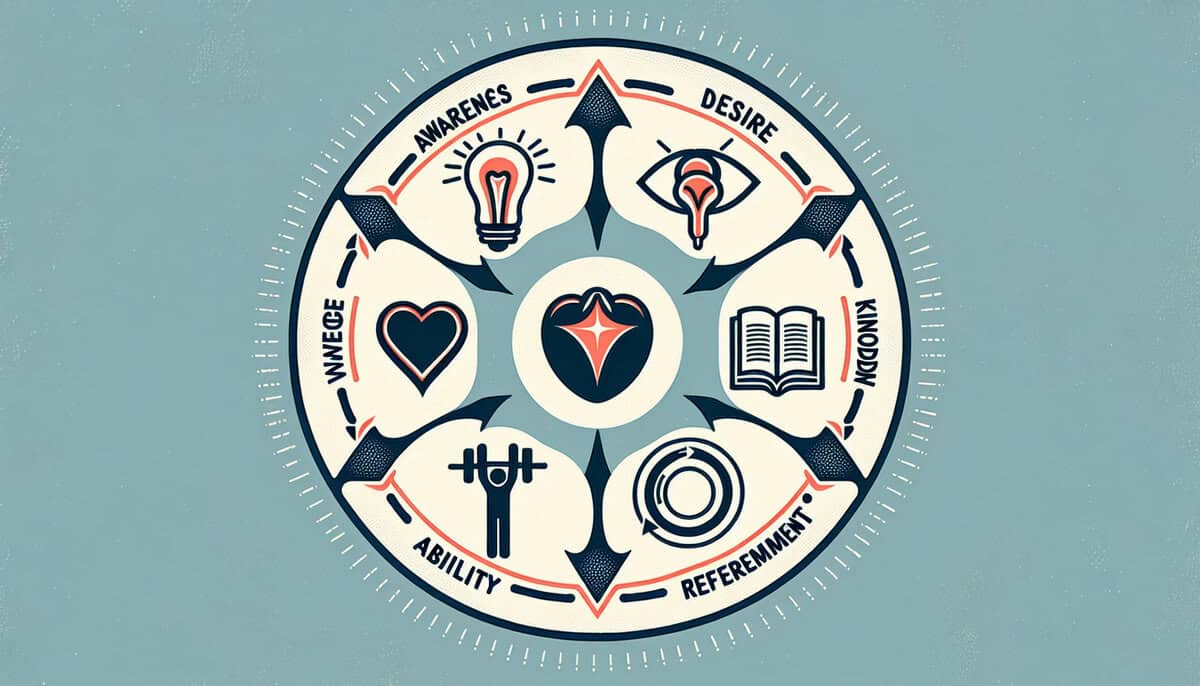
성공적인 개인적 변화를 이끌어내는 요인이 무엇인지 생각해 본 적이 있습니까? ADKAR 모델은 1996년 Prosci의 Jeff Hiatt가 개발했습니다. 이 모델은 개인적인 차원에서 변화를 단계적으로 관리하는 것의 중요성에 초점을 맞추고 있으며, 어려운 변화의 과정을 헤쳐나가는 리더들에게 핵심 전략으로 자리 잡았습니다.
핵심 요약
- ADKAR 모델은 인식, 욕구, 지식, 능력, 강화라는 다섯 가지 핵심 요소로 구성됩니다.
- 특히 의료, 금융 및 기술 분야를 비롯한 다양한 분야에서 뛰어난 역량을 발휘합니다.
- 이 모델은 변화의 감정적 측면과 실질적 측면 모두를 다룹니다.
- 리더는 ADKAR 모델의 구현과 성공에 매우 중요한 역할을 합니다.
- 성과 지표와 핵심성과지표(KPI)를 통한 진행 상황 추적에 중점을 둡니다.
- 이 모델은 구현 후에도 지속적인 모니터링과 강화를 통해 추진력을 유지하도록 권장합니다.
ADKAR 모델 이해하기
프로사이(Prosci)에서 개발한 ADKAR 모델은 변화 관리를 위한 최고의 도구 중 하나입니다. 이 모델은 사람과 조직이 변화를 성공적으로 이끌어갈 수 있도록 명확한 로드맵을 제시합니다. ADKAR 모델은 인식(Awareness), 욕구(Desire), 지식(Knowledge), 능력(Ability), 강화(Reinforcement)의 다섯 가지 핵심 단계로 구성되어 있으며, 이러한 단계를 통해 원활하고 성공적인 변화를 보장합니다.
이 모델은 변화의 인간적인 측면을 다루는 데 탁월합니다. 직원들이 새로운 역할로 원활하게 전환하거나 새로운 기술을 활용할 수 있도록 지원합니다. 따라서 ADKAR은 기술 업데이트나 새로운 문화에 적응하는 것과 같은 다양한 변화에 유용하게 사용될 수 있습니다.
ADKAR는 유연성이 뛰어난 것으로 잘 알려져 있습니다. 인사, IT, 운영 등 어떤 부서에서든 효과적으로 활용할 수 있으며, 합병이나 신기술 도입과 같은 다양한 변화에도 유용합니다. 또한, 개인 프로젝트부터 회사 전체 규모에 이르기까지 모든 규모의 프로젝트에 적합합니다.
ADKAR는 관리에 중점을 둡니다. 인간적인 면 변화에 대응하고 직원들이 새로운 프로세스, 기술 및 역할에 적응하도록 돕습니다. — 프로사이
ADKAR differs from other models like Kotter’s 8-Step Process because it focuses on individuals. This reduces pushback and makes adoption quicker. One key to its success is making sure people understand why change is needed. This shows the importance of the Awareness step.
- 의식: 변화의 필요성을 이해하는 것.
- 욕구: 변화에 참여하고 지지하고 싶어합니다.
- 지식: 변화하는 방법을 아는 것.
- 능력: 필요한 기술과 행동을 구현하는 것.
- 보강: 변화를 지속시키는 것.
ADKAR 모델은 변화 과정에서 개인이 겪는 일에 초점을 맞춘다는 점에서 탁월합니다. 이 모델은 개인의 어려움과 각 단계에서 사람들을 동기 부여하는 요소를 다룹니다. 이처럼 세부적인 사항에 대한 관심 덕분에 ADKAR는 다양한 산업 분야와 변화 유형에 걸쳐 효과적으로 작동합니다.
ADKAR 변화 관리 모델의 핵심 요소
각 부분은 USAID 사업 및 파트너십을 포함한 다양한 분야에서 성공적인 변화 전략을 위해 매우 중요합니다.
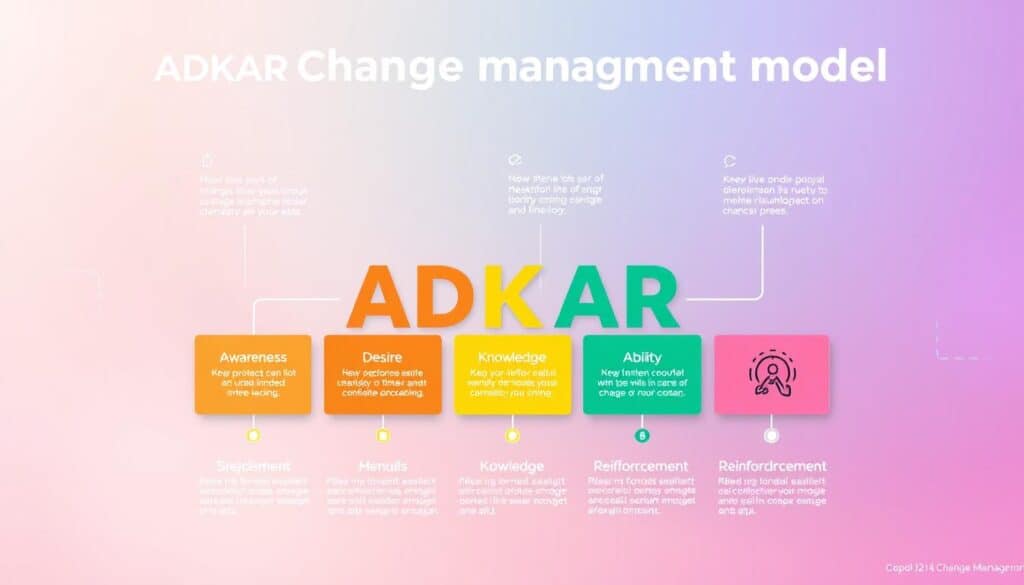
- 인식: 변화의 필요성을 인지하는 것이 필수적입니다. 이는 변화의 필요성을 공개적으로 소통하고 이해를 구축하는 것을 의미합니다. 한 연구에 따르면 40% 이상이 변화 노력을 평가하기 위해 ADKAR 모델을 사용하고 있습니다.
- 욕구는 변화를 뒷받침하는 추진력을 구축하는 것입니다. 변화를 이끄는 리더는 직원과 관련자들이 이러한 욕구를 갖도록 유도하는 것을 목표로 합니다. 연구 결과 ADKAR이 효과적인 것으로 나타났으며, 응답자의 32%는 '어느 정도 효과적'이라고 답했고, 66%는 '매우 효과적'이라고 답했습니다.
- 지식이란 사람들에게 필요한 기술과 정보를 제공하는 것을 의미합니다. 이는 각자의 역할과 책임에 맞춘 교육을 포함합니다. 이러한 방식으로 지속적인 학습을 통해 인식 단계를 강화할 수 있습니다.
- 능력은 기술을 적용하고 어려움을 극복하는 것입니다. 모든 사람이 자신이 알고 있는 것을 실천에 옮길 수 있는 것이 매우 중요합니다. 리더는 개인이 ADKAR 목표를 달성하는 시기가 각기 다르다는 점을 인지하고, 이 단계에서 개인 맞춤형 접근 방식을 취합니다.
- 마지막으로, 강화는 지속적인 지원과 격려를 통해 변화가 지속되도록 보장합니다. ADKAR 모델은 저항을 파악하여 리더가 이를 효과적으로 처리하고 지속적인 성공을 거둘 수 있도록 돕습니다.
이러한 모든 요소는 체계적인 방법으로 이어집니다. 이는 모든 구성원이 변화에 효과적으로 적응하는 데 도움이 됩니다. ADKAR 모델을 활용하면 조직은 변화에 대한 저항을 파악하고 해결할 수 있으므로, 이는 변화 관리를 위한 강력한 전략이 됩니다.
Implementing the ADKAR Model in Your Organization
Using the ADKAR Model can totally change how your organization handles change. It leads to big benefits. Here are key points for making the ADKAR Model work in your company:
- Leadership Advocacy: Having a leader who supports change management boosts the success of changes. Leaders need to back the ADKAR Model and create a culture open to change.
- Building Desire: Coaching is a powerful way to get people excited about change. It helps employees want to support and join in the change efforts.
- Training Programs: Joining comprehensive training, like the Prosci’s Change Management Certification Program, improves an organization’s change ability.
- Custom Methodologies: Using your own change management methods can work well. Strategies made for your company’s specific needs and culture are best.
- Mitigating Resistance: According to Prosci’s 2019 study, nearly half of employee resistance could be stopped by using good change management practices.
Here’s a table that compares key facts about successful versus unsuccessful change management:
| 요인 | Excellent Change Management | Poor Change Management |
|---|---|---|
| Likelihood of Meeting Objectives | 7 times higher | Significantly lower |
| Impact of Moving from Poor to Fair Practices | Nearly triples success rate | Low success rate |
| Employee Resistance Avoidance | 47% reduced | High resistance |
| Role of Leadership | Increases success rate | Minimal impact |
Benefits of Using the ADKAR Model in Change Management
A study in 2005 with over 400 companies showed that not knowing enough caused most resistance. This fact highlights the value of the ADKAR Model’s first step.

Another key benefit of the ADKAR Model is boosting employee involvement. When people know why changes are happening and see how it matches their goals, they’re more likely to support and commit. Being actively involved reduces resistance, making things easier for all.
For any change effort, making the transition seamless is crucial. The ADKAR Model lays out clear steps and backing to guide employees. It ensures people can learn and take on new actions well. Offering ongoing training and reminders lessens issues and quickens accepting new changes.
| Factors Influencing Success | 영향 |
|---|---|
| No Awareness/No Desire | Slower adoption and delays |
| No Knowledge/No Ability | Lower utilization of new processes and tools |
| No Reinforcement | Reversion to old behaviors |
It’s vital to help employees personally move through changes, too. The ADKAR Model provides clear directions for this. It looks at how people learn, what might hold them back, and what drives them. By considering these factors, the model effectively addresses the diverse challenges of change.
Tips for Successfully Applying the ADKAR Model
To use the ADKAR Model well, think it through and plan. Start by creating a strong communication plan. This helps grow employees’ desire for change and stops frustration-based resistance. If people feel part of the journey, they’re open to change.
Using social learning is key for spreading knowledge. Let peers teach each other to share insights and boost ongoing improvement.
Leadership plays a huge role too. Leaders must inspire confidence in their teams to tackle challenges. Using feedback, surveys, and tracking progress helps find areas to improve and celebrate wins. This strengthens the change effort. Adopting these tips can smooth out the ADKAR process, leading to better change management.
Related Readings
- Kotter’s 8-Step change model: a framework for leading change that complements ADKAR by focusing on creating urgency and building a guiding coalition.
- Lewin의 변화 관리 모델: focuses on unfreezing, changing, and refreezing organizational processes, which can align with ADKAR’s reinforcement stage.
- Prosci 변화 관리 방법론: provides a structured approach to change management, which can be used alongside ADKAR for comprehensive change planning.
- Stakeholder analysis: identifying and understanding stakeholders can enhance the effectiveness of creating awareness and desire in the ADKAR model.
- 커뮤니케이션 계획: developing strategies to effectively communicate change, crucial for building awareness and knowledge.
- Organizational culture assessment: understanding and aligning organizational culture with change initiatives can improve the success of the ADKAR model.
- Performance management systems: tools and processes that support the reinforcement stage by measuring and rewarding desired behaviors.
자주 묻는 질문
변화 관리에서 ADKAR 모델이란 무엇인가요?
ADKAR 모델은 Prosci에서 개발한 모델로, 인식(Awareness), 욕구(Desire), 지식(Knowledge), 능력(Ability), 강화(Reinforcement)의 다섯 단계를 통해 변화에 대처하는 방법을 제시합니다. 이 모델은 각 개인이 변화를 어떻게 경험하는지에 초점을 맞추며, 다양한 산업 분야에서 효과적으로 적용될 수 있습니다.
ADKAR 모델은 변화에 대한 저항을 어떻게 다루나요?
ADKAR 모델은 변화에 대한 직원들의 걱정이나 두려움을 고려함으로써 변화에 대한 저항을 줄이는 데 도움을 줍니다. 또한 변화 과정에 직원들을 참여시킴으로써 변화를 지지할 가능성을 높입니다.
ADKAR 모델의 핵심 요소는 무엇인가요?
ADKAR 모델의 주요 5가지 요소는 다음과 같습니다. 인식(변화의 필요성을 깨닫는 것), 욕구(변화에 참여하고 싶어하는 것), 지식(변화를 실현하는 방법을 배우는 것), 능력(배운 것을 활용하여 변화를 이루는 것), 강화(변화를 장려하여 지속시키는 것).
ADKAR 모델을 사용하면 어떤 이점이 있나요?
ADKAR 모델을 활용하면 직원 참여(직원 참여는 변화를 지지할 가능성을 높임), 저항 완화(새로운 것에 대한 사람들의 걱정과 두려움을 줄임), 효과적인 교육(적절한 교육은 직원들이 새로운 방식을 배우고 적용하는 데 도움이 됨), 지속적인 변화(지속적인 지지는 변화가 오래 지속되도록 함)와 같은 여러 가지 이점을 얻을 수 있습니다.
사회 및 직업 변화 관리 관련 외부 링크
국제 표준
(링크 위에 마우스를 올려놓으면 콘텐츠에 대한 설명을 볼 수 있습니다.)
사용된 용어집
Key Performance Indicator (KPI): a measurable value that demonstrates how effectively an organization is achieving key business objectives, often used to evaluate success at reaching targets.