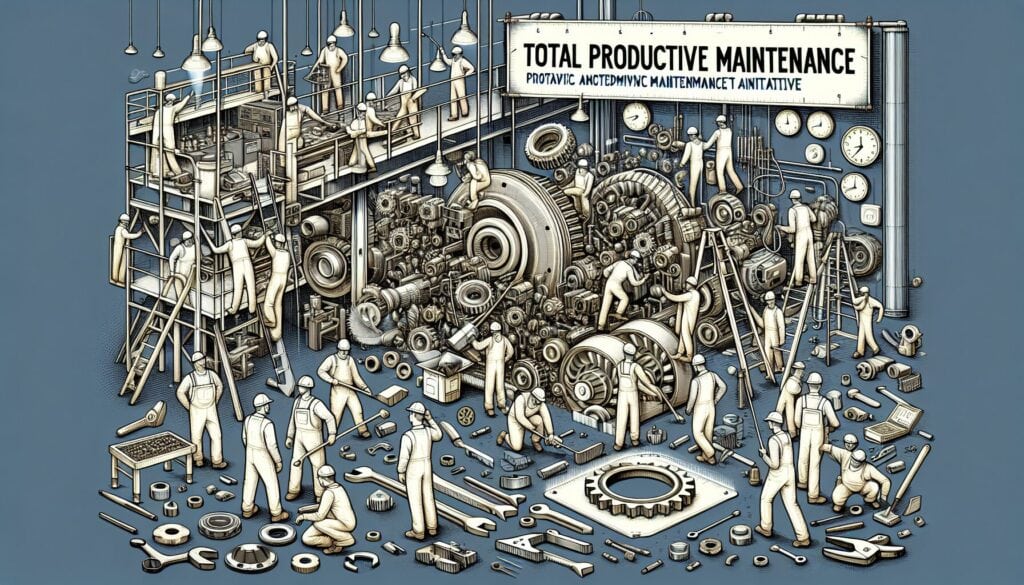
Maximizing equipment effectiveness and 寿命 through a comprehensive, proactive maintenance strategy involving all employees.
Total Productive Maintenance (TPM) is widely applicable across various industries, particularly in manufacturing, automotive, and food processing, where equipment uptime is essential for maintaining production efficiency and quality. In the context of project phases, TPM can be integrated during the design and development stages, where input from operators can lead to more maintainable equipment designs that enhance operational performance. It often involves cross-functional teams that include maintenance personnel, production staff, and quality control experts who collaborate to identify areas of improvement and implement preventative measures. Initiated by management, TPM relies on the involvement of all employees, encouraging them to take ownership of the machines they operate, which builds a culture of continuous improvement and problem-solving. For instance, in the automotive industry, adopting TPM principles has led to significant reductions in equipment failure and unplanned downtime, enabling companies to improve their Overall Equipment Effectiveness (OEE) by closely monitoring the performance metrics and making data-driven decisions. Employees who participate in TPM initiatives also report increased job satisfaction and sense of ownership, translating into improved morale and productivity. This methodology not only targets maintenance tasks but focuses on a holistic approach to enhance process capabilities, ensuring that organizations can quickly adapt to changes in demand or production methods while maintaining high safety and quality standards.