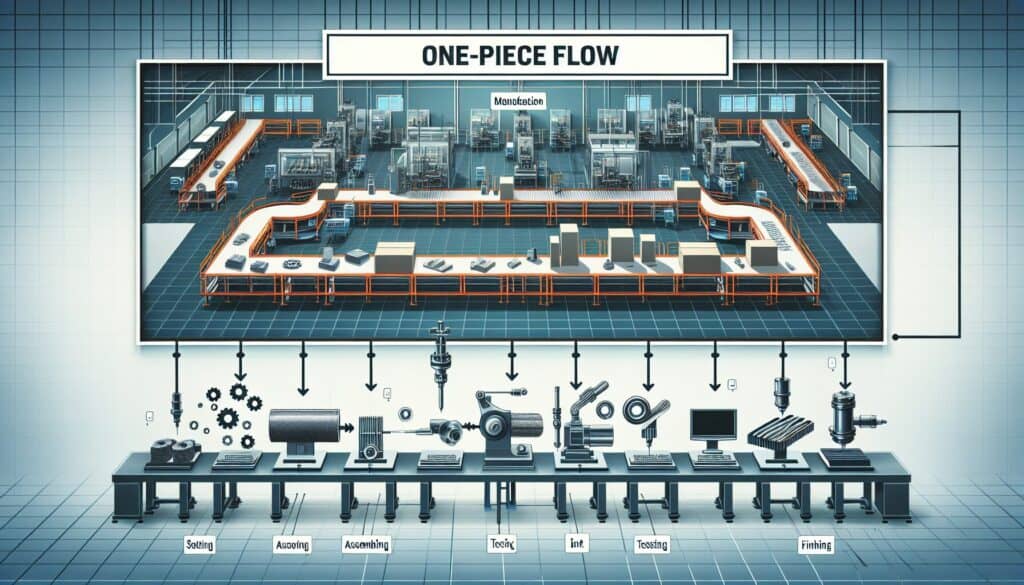
One-Piece Flow is commonly employed in industries such as automotive manufacturing, electronics, and consumer goods, where speed and efficiency are paramount due to high competition and rapid market changes. This methodology is particularly effective during assembly processes and demands a high degree of coordination among teams, prompting cross-functional collaboration between engineers, designers, and production staff to optimize workflow. Initiated by lean practitioners or process improvement teams, it often begins in pilot projects or specific product lines, enabling organizations to assess feasibility before a full-scale rollout. Implementation requires a thorough understanding of product variations and customer demand patterns to effectively operate the flow with minimal disruption. Techniques such as バリューストリームマッピング may be utilized to identify bottlenecks and enhance layout design for improved flow, directly influencing cycle times and inventory levels. Industries employing One-Piece Flow benefit from enhanced customer satisfaction due to reduced lead times and improved responsiveness to shifts in demand, making it especially suited for environments where customization is valued. The integration of technology, like real-time data tracking systems, reinforces this methodology by providing visibility into each step of the process, facilitating quicker adjustments to production schedules when necessary. Training and involvement of all stakeholders, including shop floor workers and management, are crucial in sustaining these improvements, creating a culture that supports continuous improvement and innovation throughout the production cycle.