지속적인 개선, Just-in-Time (JIT), 린 제조, Lean Production, 프로세스 최적화, 생산 효율성, 품질 관리, 가치 흐름 맵핑, 폐기물 제거 전략
목적:
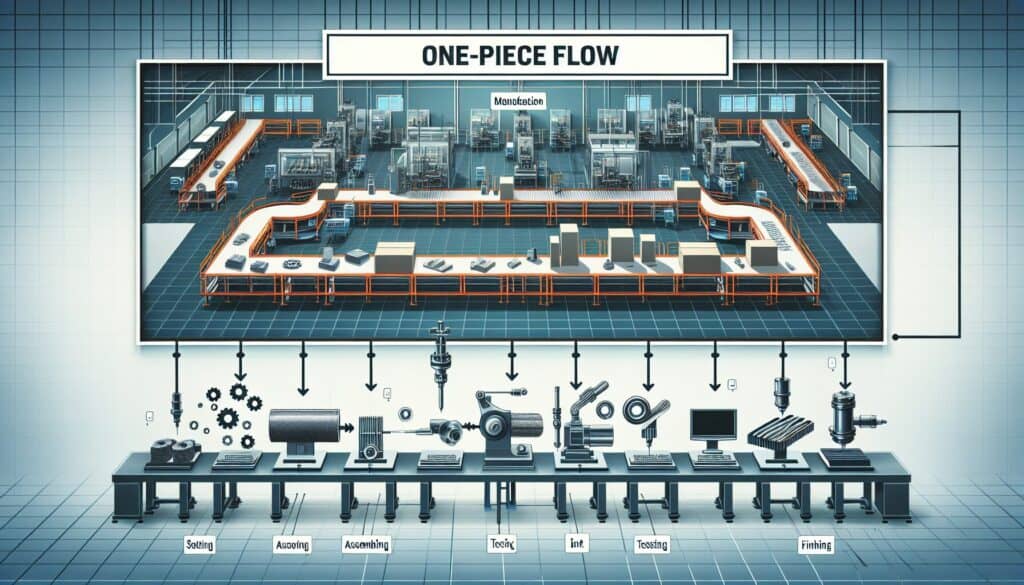
대량으로 처리하는 대신, 한 번에 한 개씩(또는 아주 소량씩) 생산하여 작업장 간에 이동시키는 방식입니다.
사용 방법:
작업대를 순서대로 배치하여 단일 장치가 재공품(WIP) 누적이나 지연 없이 모든 공정 단계를 거칠 수 있도록 합니다. 밀접하게 관련되어 있습니다. 적시 생산 그리고 셀룰러 제조.
장점
재고량, 리드 타임 및 공간 요구 사항을 줄이고, 신속한 피드백 및 결함 감지를 통해 품질을 향상시키며, 고객 요구에 대한 유연성과 대응력을 높이고, 생산 관리를 간소화합니다.
단점
안정적이고 신뢰할 수 있는 프로세스, 높은 가동률 및 일관된 품질이 요구됩니다. 모든 작업에 걸쳐 작업 부하의 균형을 맞추기가 어려울 수 있습니다. 상당한 레이아웃 변경 및 작업자 교차 교육이 필요할 수 있습니다. 설정 시간이 매우 긴 프로세스에는 적합하지 않습니다.
카테고리:
린 시그마, 조작
다음과 같은 경우에 가장 적합합니다:
특히 다양한 제품을 생산하는 환경에서 고효율적이고 지속적이며 신속하게 대응하는 생산 시스템을 구축합니다.
One-Piece Flow is commonly employed in industries such as automotive manufacturing, electronics, and consumer goods, where speed and efficiency are paramount due to high competition and rapid market changes. This methodology is particularly effective during assembly processes and demands a high degree of coordination among teams, prompting cross-functional collaboration between engineers, designers, and production staff to optimize workflow. Initiated by lean practitioners or process improvement teams, it often begins in pilot projects or specific product lines, enabling organizations to assess feasibility before a full-scale rollout. Implementation requires a thorough understanding of product variations and customer demand patterns to effectively operate the flow with minimal disruption. Techniques such as 가치 흐름 맵핑 may be utilized to identify bottlenecks and enhance layout design for improved flow, directly influencing cycle times and inventory levels. Industries employing One-Piece Flow benefit from enhanced customer satisfaction due to reduced lead times and improved responsiveness to shifts in demand, making it especially suited for environments where customization is valued. The integration of technology, like real-time data tracking systems, reinforces this methodology by providing visibility into each step of the process, facilitating quicker adjustments to production schedules when necessary. Training and involvement of all stakeholders, including shop floor workers and management, are crucial in sustaining these improvements, creating a culture that supports continuous improvement and innovation throughout the production cycle.
이 방법론의 주요 단계
제품 흐름을 기준으로 작업대 배치를 선형 순서로 설계하십시오.
일관성을 보장하기 위해 각 작업대에 표준화된 작업 절차를 시행하십시오.
특정 역할에 대한 의존도를 줄이기 위해 운영자들이 여러 작업을 동시에 처리할 수 있도록 교육하십시오.
현재 수요를 기반으로 생산을 촉발하는 풀 시그널을 설정합니다.
워크플로를 지속적으로 모니터링하여 병목 현상을 파악하고 제거합니다.
즉각적인 피드백을 위해 각 작업대에 품질 관리 점검을 통합하십시오.
문제가 발생할 때 이를 해결하기 위해 부서 간 협업을 장려하십시오.
시각적 관리 도구를 활용하여 생산 진행 상황을 실시간으로 추적하십시오.
정기적인 평가를 실시하여 업무 흐름을 최적화하고 필요에 따라 프로세스를 조정하십시오.
프로 팁
정기적인 프로세스 맵핑 세션을 통해 일체형 생산 흐름 내의 병목 현상을 파악하고 제거하여 작업 스테이션의 최적 배치를 보장합니다.
실시간 데이터 모니터링을 구현하여 주기 시간을 분석하고 워크플로우를 동적으로 조정함으로써 수요 변동에 대한 대응력을 향상시키십시오.
모든 작업 스테이션에서 표준화된 작업 지침을 활용하여 일관성을 유지하고, 직원들의 신속한 교육을 통해 업무 흐름의 안정성을 확보하십시오.