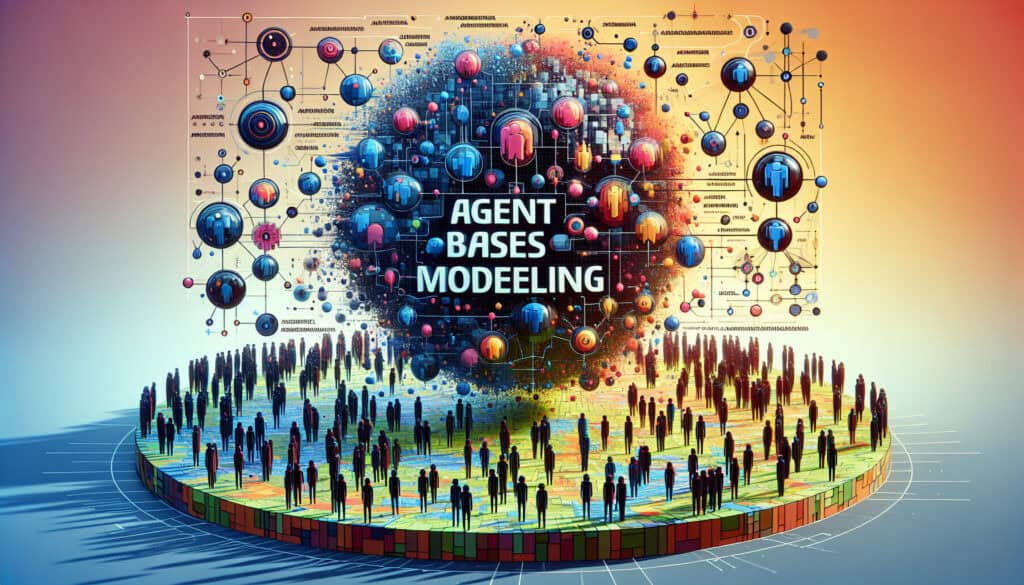
Agent-Based Modeling (ABM) serves as a powerful tool across various fields, including environmental science, economics, sociology, and engineering, where it can effectively simulate and analyze the behavior of individual agents, such as consumers, animals, or even products, within a system. In environmental science, for example, ABM can model the interactions between different species and their habitat, providing insights into ecosystem dynamics and aiding in conservation efforts. In the realm of economics, researchers use ABM to simulate market behaviors, allowing for the examination of how economic agents react to changes in policy or market conditions, which can inform government decisions on regulations and intervention strategies. The methodology is also applicable in urban planning, where it can simulate the movement and behavior of residents within a city to optimize infrastructure development. During different phases of a project lifecycle, ABM can be integrated at the design and testing stages, allowing stakeholders, including engineers, designers, and researchers, to visualize potential outcomes and refine product features accordingly. By involving cross-disciplinary teams, including domain experts, data scientists, and end-users, ABM can facilitate collaborative
問題解決より効果的で
ユーザー中心 この手法は、その適応性の高さから、特定の研究課題や状況に合わせて調整することが可能であり、プロジェクトの目標や利用可能なリソースに応じて、パイロットスタディや大規模な実施にも適しています。