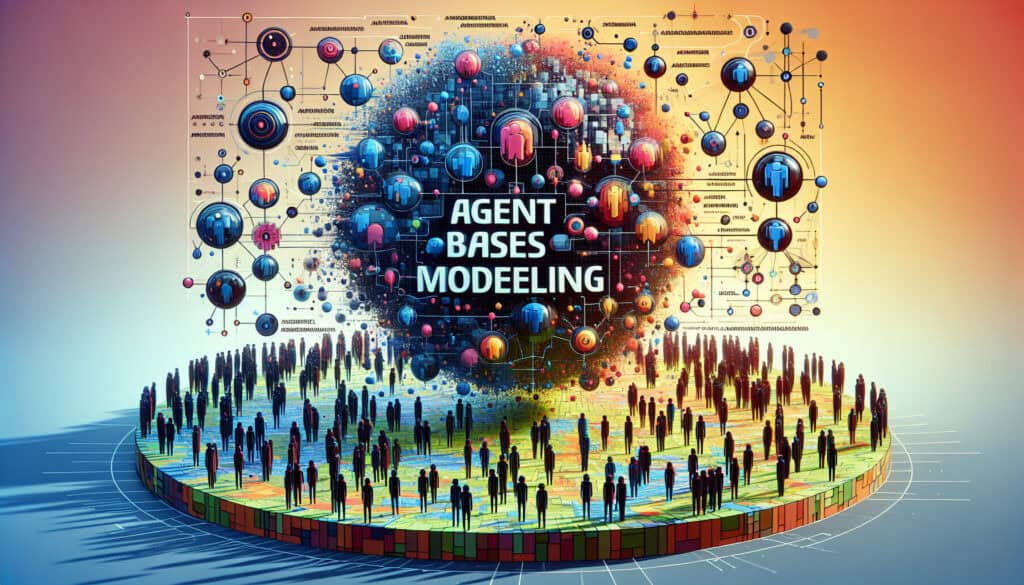
Agent-Based Modeling (ABM) serves as a powerful tool across various fields, including environmental science, economics, sociology, and engineering, where it can effectively simulate and analyze the behavior of individual agents, such as consumers, animals, or even products, within a system. In environmental science, for example, ABM can model the interactions between different species and their habitat, providing insights into ecosystem dynamics and aiding in conservation efforts. In the realm of economics, researchers use ABM to simulate market behaviors, allowing for the examination of how economic agents react to changes in policy or market conditions, which can inform government decisions on regulations and intervention strategies. The methodology is also applicable in urban planning, where it can simulate the movement and behavior of residents within a city to optimize infrastructure development. During different phases of a project lifecycle, ABM can be integrated at the design and testing stages, allowing stakeholders, including engineers, designers, and researchers, to visualize potential outcomes and refine product features accordingly. By involving cross-disciplinary teams, including domain experts, data scientists, and end-users, ABM can facilitate collaborative
समस्या को सुलझाना, leading to more effective and
उपयोगकर्ता केंद्रित इस पद्धति की अनुकूलनशीलता इसे विशिष्ट शोध प्रश्नों और संदर्भों के अनुरूप ढालने में सक्षम बनाती है, जिससे यह परियोजना के लक्ष्यों और संसाधनों की उपलब्धता के आधार पर पायलट अध्ययनों या बड़े पैमाने पर कार्यान्वयन में उपयोग के लिए उपयुक्त हो जाती है।
विभिन्न पद्धतियों को पढ़ने और उनकी तुलना करने के लिए, हम अनुशंसा करते हैं
> व्यापक कार्यप्रणाली भंडार <
अन्य 400 से अधिक पद्धतियों के साथ।
इस कार्यप्रणाली पर आपकी टिप्पणियाँ या अतिरिक्त जानकारी का स्वागत है। नीचे टिप्पणी अनुभाग देखें ↓ , साथ ही इंजीनियरिंग से संबंधित कोई भी विचार या लिंक।