Product Design, Manufacturing & Innovation Resources
家 » 紫外線スペクトルの区分(UVA、UVB、UVC)

紫外線スペクトルの区分(UVA、UVB、UVC)

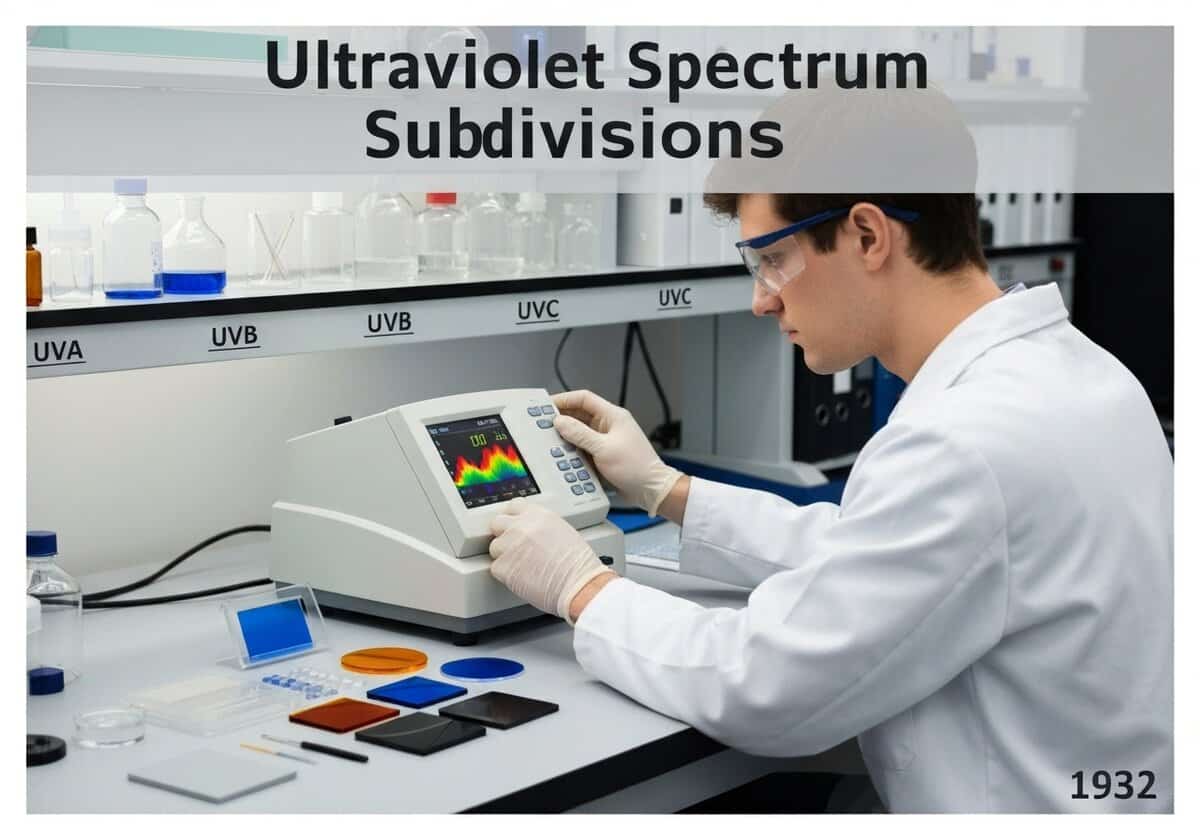
1932
Laboratory analysis of ultraviolet spectrum subdivisions for photometry applications.

(画像はイメージです)

の 紫外線 紫外線スペクトルは一般的にUVA(400~315 nm)、UVB(315~280 nm)、UVC(280~100 nm)に細分化されます。UVA、つまり長波長紫外線は最もエネルギーが低く、皮膚の奥深くまで浸透します。UVB、つまり中波長紫外線は日焼けを引き起こし、 ビタミンD 合成。UVC、つまり短波紫外線は最もエネルギーが高く殺菌効果がありますが、地球の大気によって完全に吸収されます。
The division of the 紫外線 spectrum into distinct bands is based on their wavelength and corresponding biological effects. This classification, standardized by bodies like the International Commission on Illumination (CIE), is crucial for understanding UV’s impact on living organisms and materials. UVA (long-wave) is the most prevalent UV radiation reaching the Earth’s surface (~95%), as it is less affected by the ozone layer. It penetrates into the deeper layers of the skin (dermis) and is primarily responsible for skin aging (photoaging) and can contribute to skin cancer. UVB (medium-wave) is partially absorbed by the ozone layer. It primarily affects the outer layer of the skin (epidermis), causing sunburn, DNA damage, and is the main driver for most skin cancers, but it is also the specific wavelength range that initiates ビタミンD production. UVC (short-wave) has the highest energy and is extremely dangerous to living organisms. Its photons have enough energy to break molecular bonds, making it a potent mutagen and germicide. Fortunately, UVC from the sun is entirely absorbed by oxygen and ozone in the stratosphere and does not reach the Earth’s surface. A further category, Vacuum UV (VUV), spans from 100 to 200 nm and is so named because it is strongly absorbed by air (specifically molecular oxygen), requiring a vacuum for it to propagate. These subdivisions are not just academic; they are fundamental to fields ranging from public health and dermatology to industrial applications like sterilization and polymer curing.

UNESCO Nomenclature: 2210
光学

タイプ

分類システム

混乱

実質的な

使用法

広く普及している

前駆物質

  • Discovery of 紫外線 by Johann Ritter
  • 開発 分光法 正確な波長測定
  • 光の生物学的影響に関する初期の研究(光生物学)
  • オゾン層の発見とその特性

アプリケーション

  • 日焼け止め処方(UVA/UVB防御)
  • uv germicidal irradiation (uvc)
  • 皮膚疾患に対する光線療法(UVB)
  • 日焼けマシン(UVA)
  • 紫外線劣化試験のための材料科学
  • ビタミンD合成研究

特許:

NA

潜在的なイノベーションのアイデア

  • multi-spectral sunscreens that adapt their protection level based on the detected uva/uvb ratio
  • smart clothing with integrated fibers that change color to indicate cumulative uv exposure
  • uvc-based autonomous robots for hospital and public transport disinfection
  • selective uvb emitters for indoor vertical farms to optimize vitamin d content in produce
  • drones equipped with uv spectrometers to monitor atmospheric ozone layer health in real-time
  • uv-a led arrays for curing 3d printed biological tissues without damaging cells
  • home water systems with integrated uvc-leds for point-of-use sterilization
  • cosmetics containing uva-activated compounds for anti-aging treatments
  • uvb-based therapy devices for home treatment of psoriasis and vitiligo
  • uv-filtering contact lenses that also monitor intraocular pressure
関連キーワード:UVA、UVB、UVC、紫外線スペクトル、波長、光生物学、皮膚科学、オゾン層、殺菌作用、ビタミンD。

歴史的背景

紫外線スペクトルの区分(UVA、UVB、UVC)

1930
1930
1931
1932
1933
1937
1940
1930
1930
1930
1931
1932
1936-01-01
1938
1940

(日付が不明または関連性がない場合、例えば「流体力学」などでは、その注目すべき出現時期の概算値が提示されます。)

10年目 周年

フルサイズの画像とダウンロードは、登録会員のみが100%無料で利用できます。