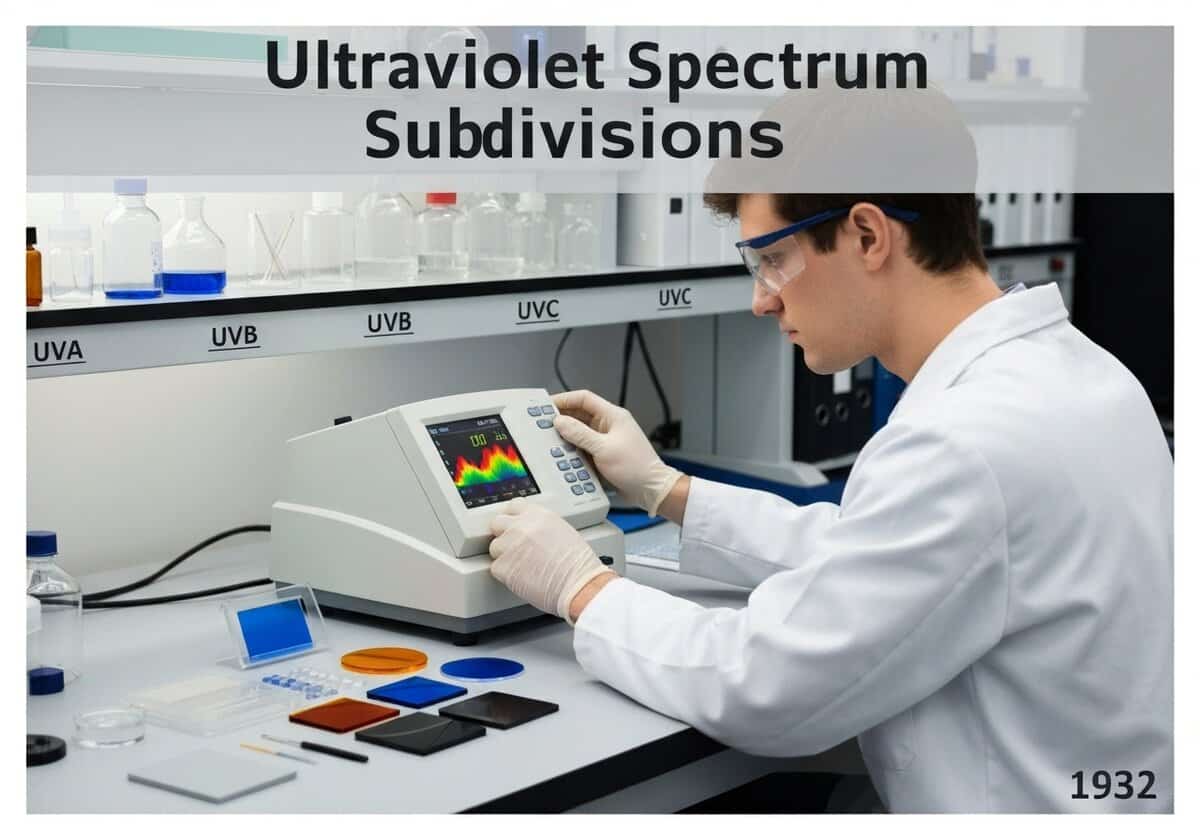
The division of the 紫外线 spectrum into distinct bands is based on their wavelength and corresponding biological effects. This classification, standardized by bodies like the International Commission on Illumination (CIE), is crucial for understanding UV’s impact on living organisms and materials. UVA (long-wave) is the most prevalent UV radiation reaching the Earth’s surface (~95%), as it is less affected by the ozone layer. It penetrates into the deeper layers of the skin (dermis) and is primarily responsible for skin aging (photoaging) and can contribute to skin cancer. UVB (medium-wave) is partially absorbed by the ozone layer. It primarily affects the outer layer of the skin (epidermis), causing sunburn, DNA damage, and is the main driver for most skin cancers, but it is also the specific wavelength range that initiates 维生素D production. UVC (short-wave) has the highest energy and is extremely dangerous to living organisms. Its photons have enough energy to break molecular bonds, making it a potent mutagen and germicide. Fortunately, UVC from the sun is entirely absorbed by oxygen and ozone in the stratosphere and does not reach the Earth’s surface. A further category, Vacuum UV (VUV), spans from 100 to 200 nm and is so named because it is strongly absorbed by air (specifically molecular oxygen), requiring a vacuum for it to propagate. These subdivisions are not just academic; they are fundamental to fields ranging from public health and dermatology to industrial applications like sterilization and polymer curing.