Product Design, Manufacturing & Innovation Resources
家 » 空気力学における動圧

空気力学における動圧

1910
  • Otto Lilienthal
  • Wright brothers
  • Ludwig Prandtl
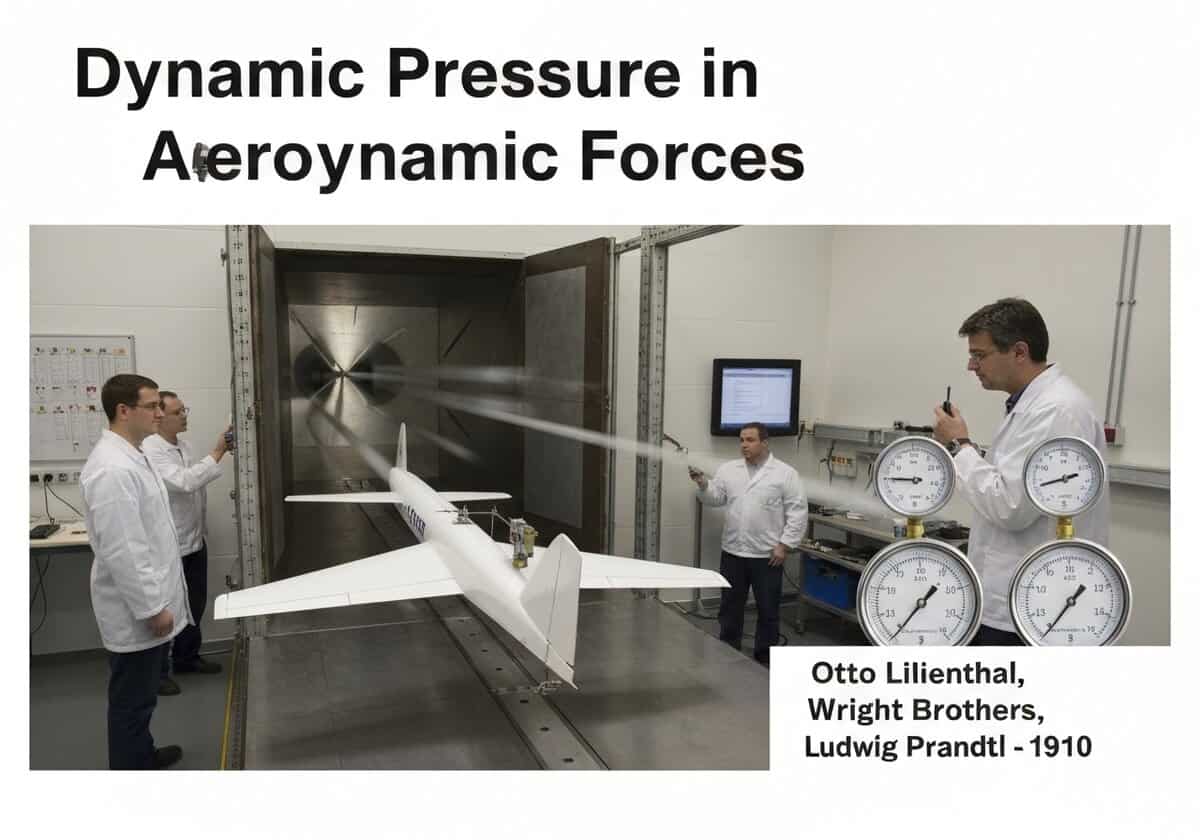
航空工学用の風洞および模型航空機の翼を備えた空力試験施設。

(画像はイメージです)

物体に作用する揚力や抗力などの空力は、周囲の流体の動圧に正比例します。式は [latex]L = C_L cdot q cdot A[/latex] および [latex]D = C_D cdot q cdot A[/latex] で、ここで [latex]C_L[/latex] と [latex]C_D[/latex] は無次元の揚力係数と抗力係数、[latex]q[/latex] は動圧、[latex]A[/latex] は基準面積です。


の使用 動圧 to define aerodynamic forces is a cornerstone of aeronautical engineering, enabling a powerful method of analysis called dimensional analysis. By expressing lift and drag in terms of dynamic pressure ([latex]q[/latex]), a reference area ([latex]A[/latex]), and a dimensionless coefficient ([latex]C_L[/latex] or [latex]C_D[/latex]), engineers can separate the effects of fluid properties and speed from the effects of the object’s shape. The coefficients [latex]C_L[/latex] and [latex]C_D[/latex] depend primarily on the shape of the body, its orientation to the flow (angle of attack), and the レイノルズ数 そして マッハ数この分離は非常に有用です。例えば、航空機の縮尺模型を風洞で試験し、測定された揚力係数と抗力係数を用いて、さまざまな飛行条件(高度の違い、ひいては密度の違い、速度の違い)における実物大航空機にかかる力を正確に予測することができます。

航空宇宙分野におけるこの概念の重要な応用例の一つが「最大Q」という概念です。これは、宇宙船が大気圏上昇中に動圧が最大となる時点を指します。ロケットが加速すると、速度(u)が増加し、動圧(q)が上昇します。同時に、高度が上がるにつれて大気密度(ρ)が減少し、動圧(q)が低下します。これら二つの相反する効果が合わさることで、動圧がピーク値に達します。これは機体にかかる機械的応力が最大となる瞬間であり、機体の構造はこれらの負荷に耐えられるように設計する必要があります。最大Q付近でエンジンの出力を下げることは、これらの応力を軽減し、機体の構造的完全性を確保するための一般的な戦略です。

UNESCO Nomenclature: 3301
航空工学および技術

タイプ

抽象システム

混乱

基礎

使用法

広く普及している

前駆物質

  • ベルヌーイの原理
  • 動圧の定義
  • ニュートンの運動法則と流体抵抗の概念
  • ジョージ・ケイリーのような先駆者による翼型に関する初期の実験的研究

アプリケーション

  • 航空機の翼と胴体の設計
  • ダウンフォースと効率性を高めるための自動車およびレーシングカーのボディ形状
  • 発電用タービンブレードの設計
  • ボートやヨットの帆のデザイン
  • 弾道学(飛翔体の軌道解析)
  • 建物の安定性を確保するための風工学

特許:

NA

潜在的なイノベーションのアイデア

  • morphing aircraft wings that actively change their airfoil shape to optimize the lift-to-drag ratio based on real-time dynamic pressure readings
  • smart parachutes that adjust their canopy area or porosity to maintain a constant descent rate regardless of air density at different altitudes
  • performance monitoring systems for professional cyclists that provide real-time drag coefficient data based on power output and dynamic pressure sensors
  • autonomous soaring drones that seek out and exploit thermals by detecting subtle changes in dynamic pressure and lift
  • wind turbine blades with active flow control surfaces (e.g., micro-flaps) that adjust to maximize energy capture across a range of wind speeds
  • formula 1 cars with active aerodynamic elements that reduce drag on straights and increase downforce in corners, controlled by dynamic pressure data
  • launch vehicle ascent profiles that are dynamically optimized in real-time to navigate through max q with minimum structural stress
  • advanced ballistic vests designed to better dissipate the dynamic pressure wave from a projectile’s impact
  • architectural glass for skyscrapers with embedded sensors that can predict and counteract wind-induced stresses by altering its stiffness
  • clothing for speed skaters that incorporates riblet structures whose effectiveness is tuned for the specific dynamic pressure range of the sport
Related to: aerodynamics, lift, drag, dynamic pressure, lift coefficient, drag coefficient, airfoil, fluid dynamics, 航空 engineering, max q.

歴史的背景

空気力学における動圧

1903
1906
1910
1910
1910
1920
1920
1900
1903-05-10
1910
1910
1910
1910
1920
1920

(日付が不明または関連性がない場合、例えば「流体力学」などでは、その注目すべき出現時期の概算値が提示されます。)

10年目 周年

フルサイズの画像とダウンロードは、登録会員のみが100%無料で利用できます。